

For many of us, removing weeds is on our spring-cleaning checklist. But what if some of those allegedly pesky plants could benefit your yard, and ultimately, the natural habitat around you?
If the idea feels counterintuitive, consider the current narrative surrounding weeds. “I think it’s important to reframe how we think about weeds, because the word itself already puts us in the wrong mindset,” says Bryan Quinn, founder and principal of One Nature, a native-plant nursery and environmental planning company serving the mid-Hudson Valley.
Many people use “weed” as a pejorative noun, using it synonymously with “bad plant.” A weed isn’t necessarily an invasive plant (which is one that’s not native to a region and causes ecological harm). But even a native plant can be considered prolific and unwanted. Yet “when we label something a weed, we tend to remove it automatically without asking what it actually is or what role it might be playing,” Quinn says. “We also miss opportunities that might allow our landscapes to evolve into something even better.”
In his work, Quinn tries not to use the word “weed” as a noun. Instead, he considers the verb (for example, “to weed”) to describe tending or stewarding the land. He also notes that many plants that pop up on their own can be helpful. “They can add nutrients to the soil, protect or insulate the ground, attract pollinators, or even provide food or medicine,” he says.
A similar sentiment is shared by Karen Washington, farmer, activist, co-owner of Rise & Root Farm in Chester, and co-founder of Black Urban Growers. “Believe it or not, most plants left in a garden over the winter [can] provide food and shelter for birds and beneficial insects,” Washington says. Come spring, these benefits can continue, helping our natural environments flourish.
Put another way, it’s about shifting away from control and toward stewardship. This mindset will help your garden thrive and, more broadly, support the health of the living world we’re a part of. To start, keep an eye out for the following plants, and try letting them flourish — just as nature intended.
Dandelions
As spring unfolds in the Hudson Valley, it’s common to find yellow dandelions studded across our lawns. It’s also a sign that warm weather is on the way, along with longer days and sunshine.
Unfortunately, the small flowers have earned a poor reputation over the last 100 years. “My understanding is that there was a narrative pushed by the herbicide and lawn care industries in favor of the perfect ‘American lawn,’” says Quinn. This effort made “weed-free” (and essentially, dandelion-free) lawns a status symbol in many communities.
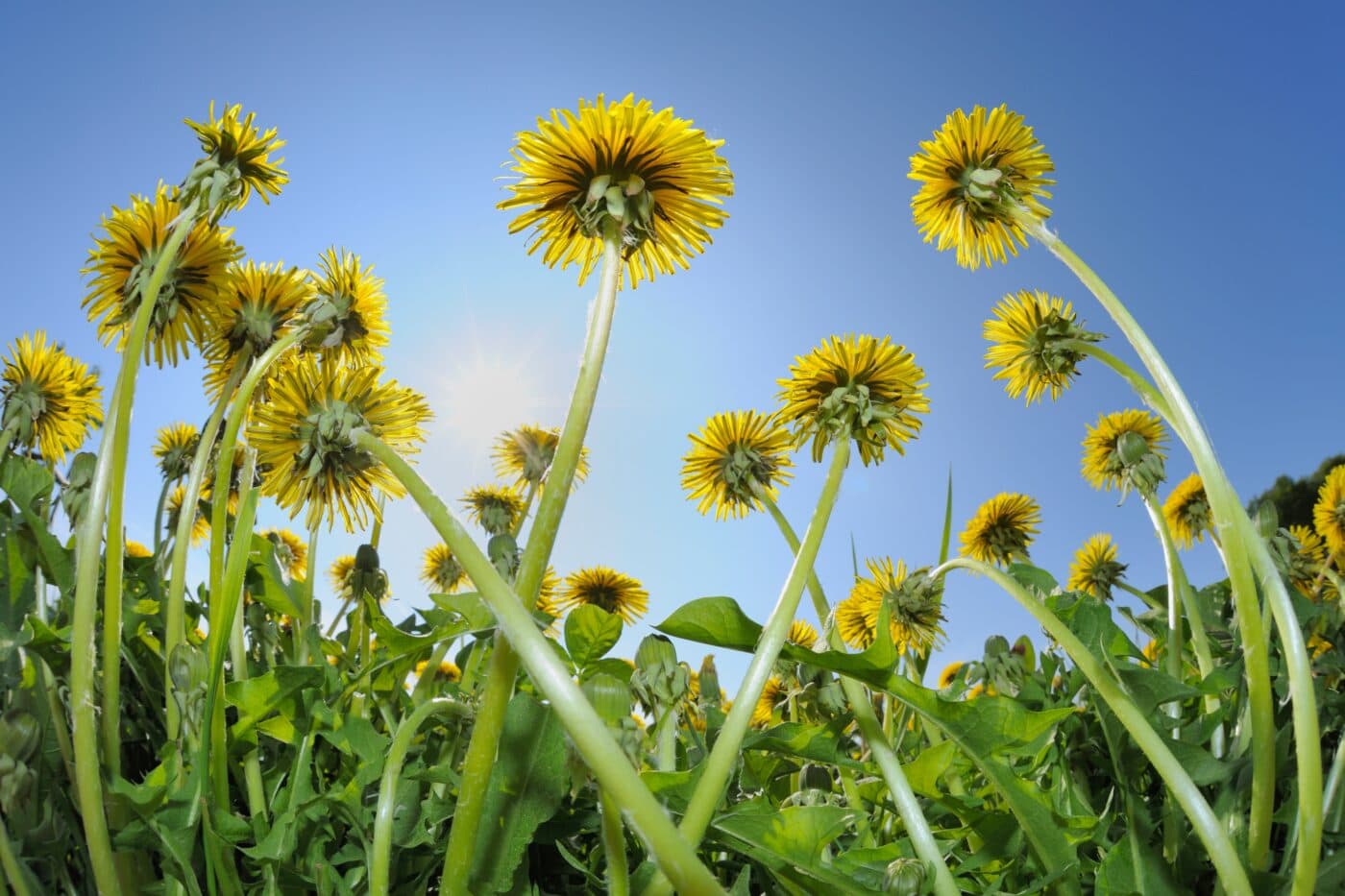
“In reality, dandelions are a very nutrient-dense food sold in many grocery stores,” Quinn says. “They also have nice hardy taproots that bring up minerals for other plants and are an important spring forage for some pollinators. He suggests people leave them in their lawns, asking: “Why worry about yellow flowers interrupting turfgrass?”
Dandelions can be difficult to identify before they bloom, “but you can look for a flat, rosette-like leafing pattern and deeply lobed leaves,” says Quinn. Eventually, they’ll give way to a daisy-like yellow flower, eventually dying and creating fluffy white puff balls.
Clover
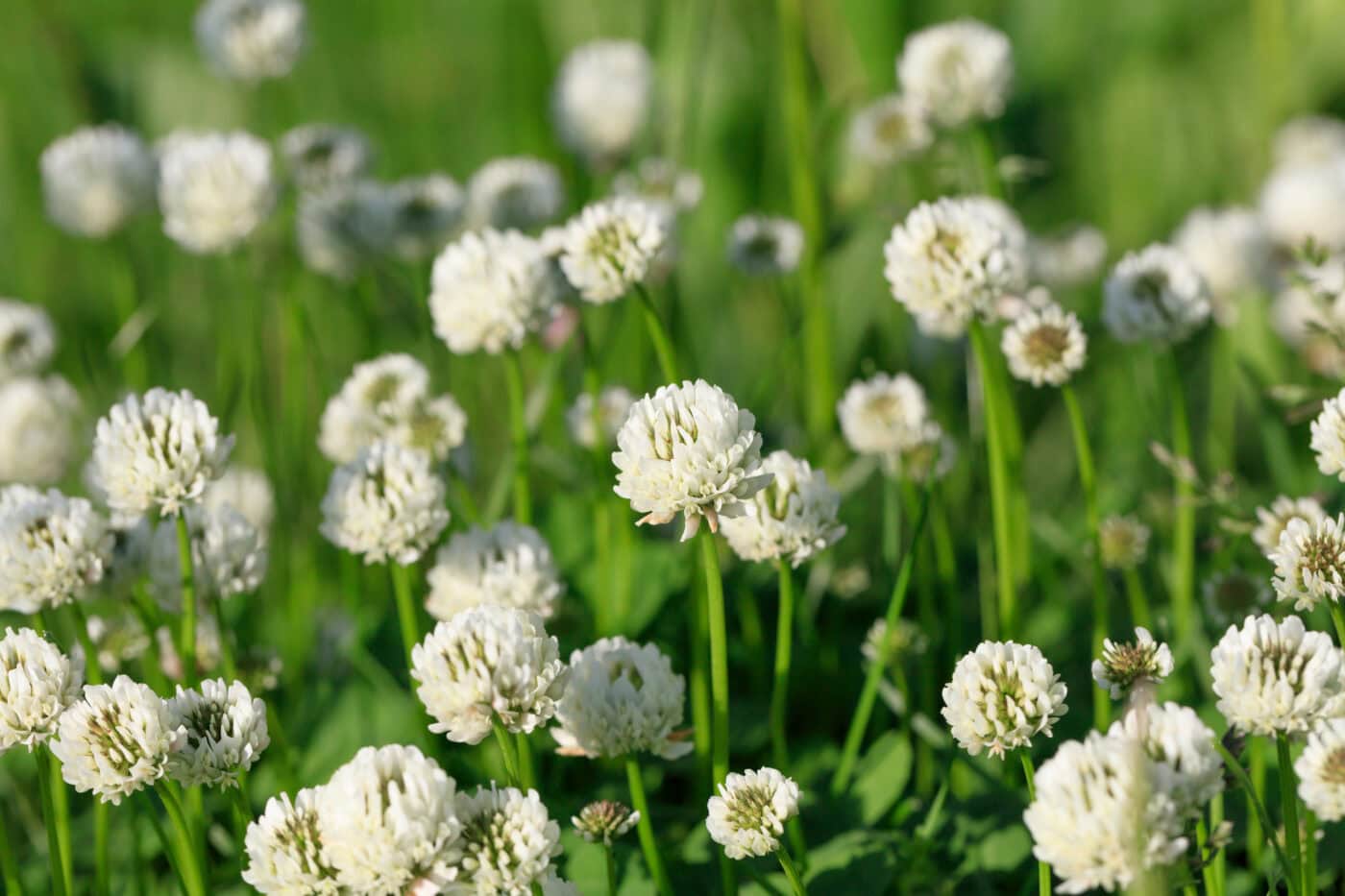
There are many types of clover, but they all tend to have three delicate leaves. The plant also produces a variety of flowers, which can be white, red, or yellow.
And though clover is often considered a weed, it deserves a spot in your lawn. It can be used as a pollen provider for beneficial insects such as bees. It’s also a great plant to place under certain vegetables because it does not compete with them for nutrients while stabilizing and shading soils.
Perhaps most importantly, clover can be used as a cover crop, meaning it can be mowed to add nutrients back into the soil, says Washington. Similarly, Quinn shares that farmers use clover to stabilize their soils while adding nutrients like nitrogen. “If you dig up the roots of a clover plant, you will see tiny nodules on their roots. Those nodules are where a lot of the nitrogen-rich biomass accumulates. When the plant dies, those nutrients are released into the soil and benefit other plants,” explains Quinn.
Goldenrod
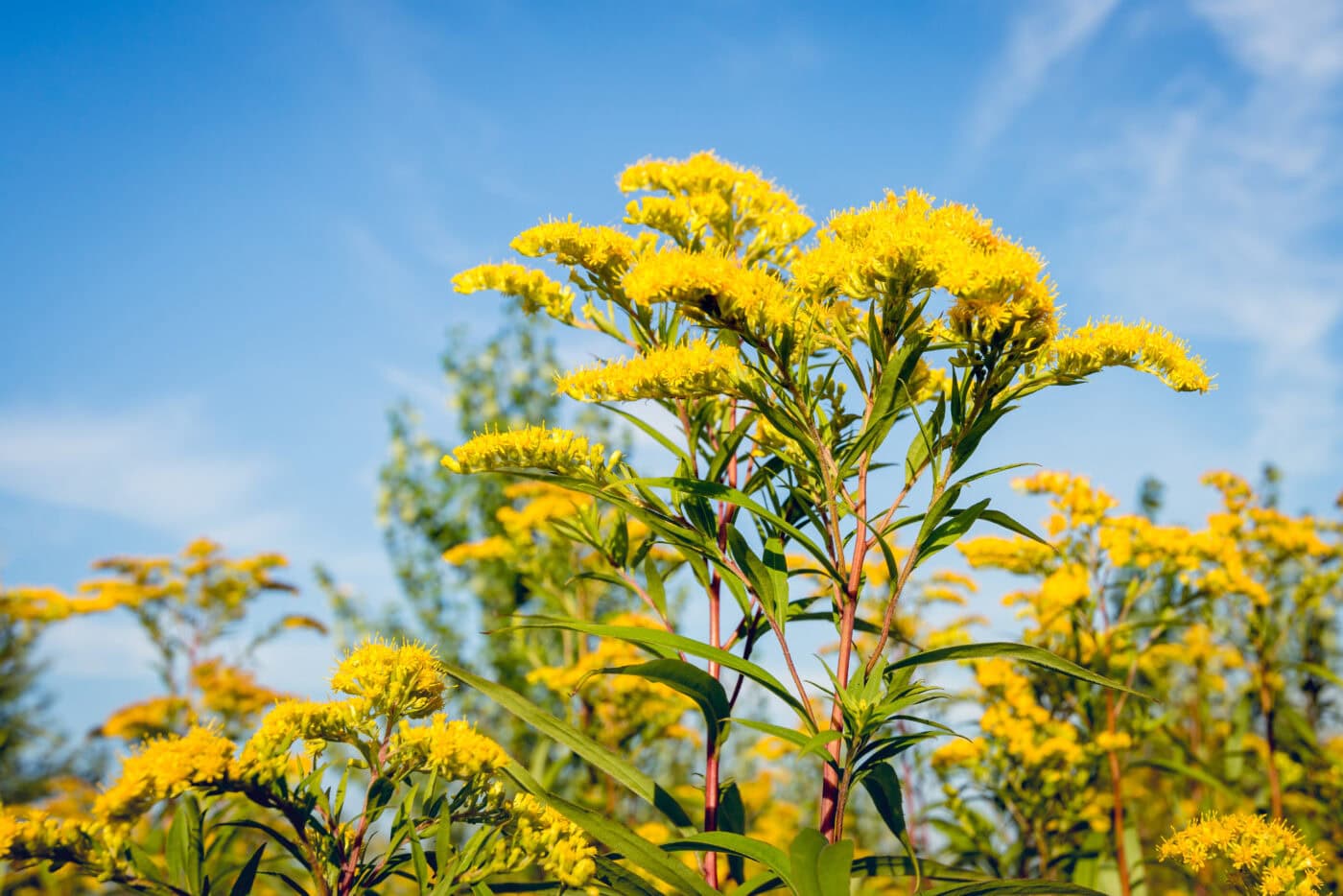
Washington calls goldenrod a beautiful cluster of yellow flowers on long stems. And while it’s often mistaken for ragweed, a major cause of allergies, the two are different. Whereas goldenrod’s flowers boast a golden hue, ragweed’s flowers stay green. Plus, goldenrod carries a very thick pollen, but it doesn’t mobilize in the air as easily as ragweed.
On that note, bees love the pollen of goldenrod, so it’s beneficial to let it grow. “Goldenrod is a native plant, and a foundational one at that. It provides food for pollinators almost until winter and, along with its close friend aster, is critical for the survival of bees and wasps,” explains Quinn. Washington also says that goldenrod provides food and shelter for birds and insects.
“It’s a very wild plant but is kind of pushy, so best to give it space in your garden alongside other tough pollinator attractants. It’s not something you would want to intermix with things like tomatoes or greens,” Quinn shares.
Chicory
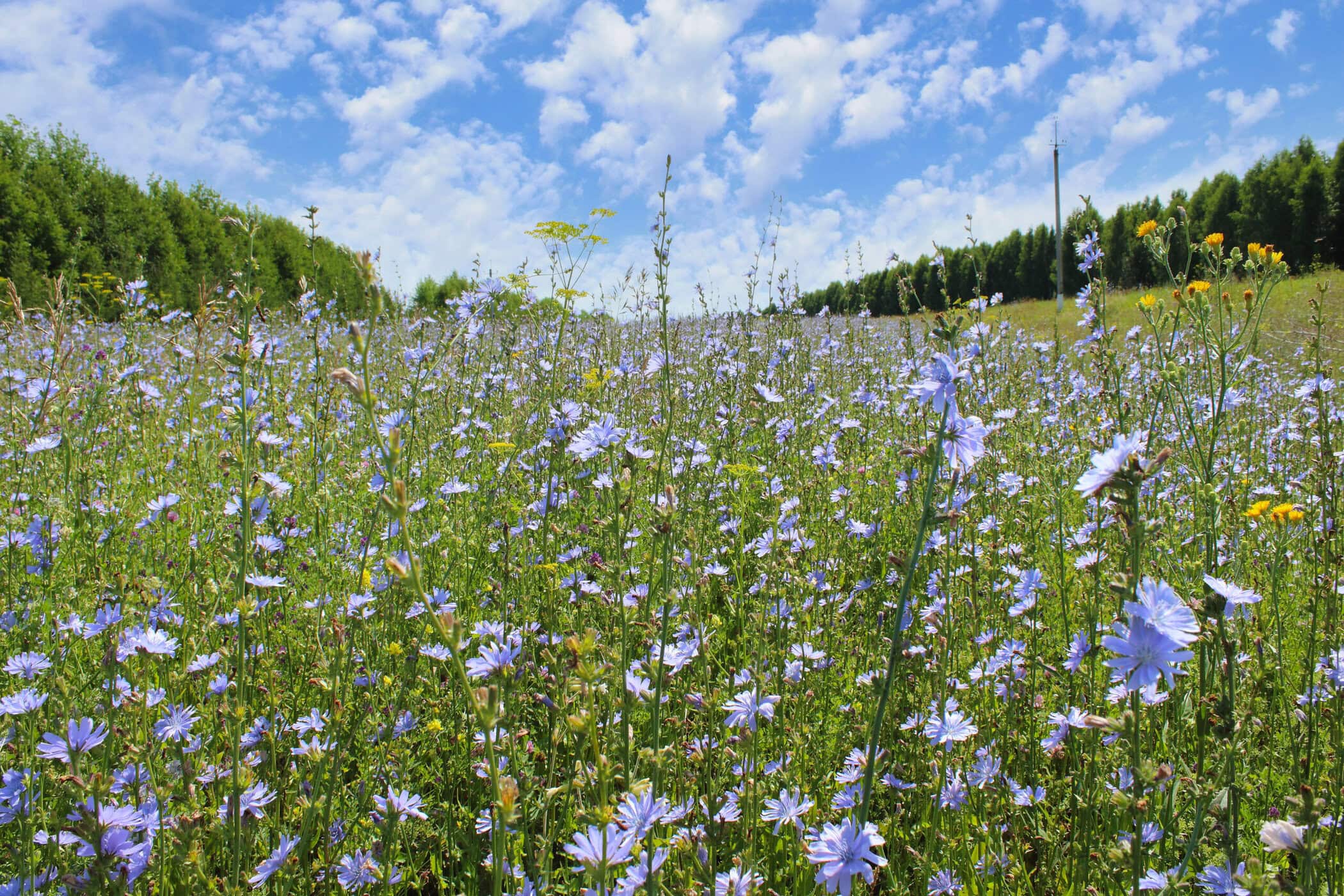
“Chicory has beautiful little blue and lavender flowers that open in the morning and close at night. The flowers last most of the growing season, too,” says Quinn. Its leaves also look like those of dandelions, but they’re rougher, hairier, and thicker. Additionally, “their stems can grow up to four feet tall, most often with a pronounced lean towards sunlight or open growing space,” Quinn says.
“We leave chicory in the gardens for lots of reasons, but the top one would be for aesthetics,” says Allyson Levy, horticulturist and co-founder of Hortus Arboretum and Botanical Gardens in Stone Ridge, referring to the wonderful color of the plant’s pale flowers. Chicory is also a pollen source for beneficial insects, according to Washington. Furthermore, it has a taproot that helps break up soil compactions and provide food and shelter for birds and insects over the winter, she says.
Yarrow
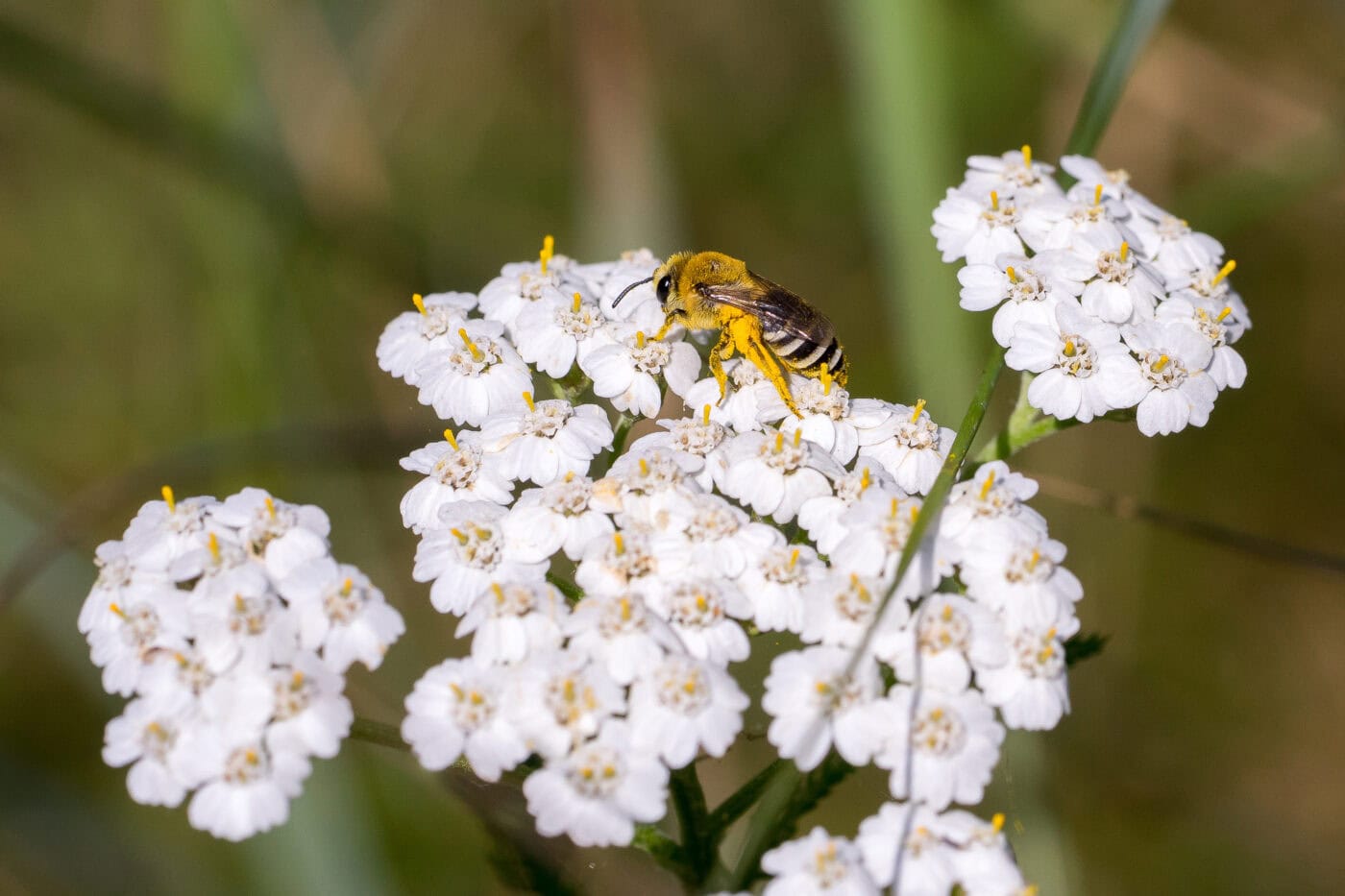
Another Hudson Valley weed worth leaving alone is yarrow. It features “really delicate little white flowers which look striking at sunrise and sunset when the angle of sunlight is lowest, kind of like a shimmering bright pattern,” says Quinn.
When allowed to grow, yarrow will help your garden flourish. “I like that it shades the soil and provides lush refuge to all sorts of beneficial insects, even when there has been no rain for a month,” Quinn says. Levy explains further: “The flowers have both pollen and nectar, and lady beetles, hover flies, and other pollinators are among some of the insects that visit.”