

Joseph Amsili holds up two jars he’s loaded with earth: one with dirt from a degraded field, and one with soil from a field left untilled under grass. He pours water over both. The first jar clouds over and browns, the dirt dissolving into the liquid. In the second, the water drips through the black soil, which holds as one big clump, before coming out clear at the bottom of the jar.
Ag educators have showed this trick over and over, but to a first-timer, it’s black magic.
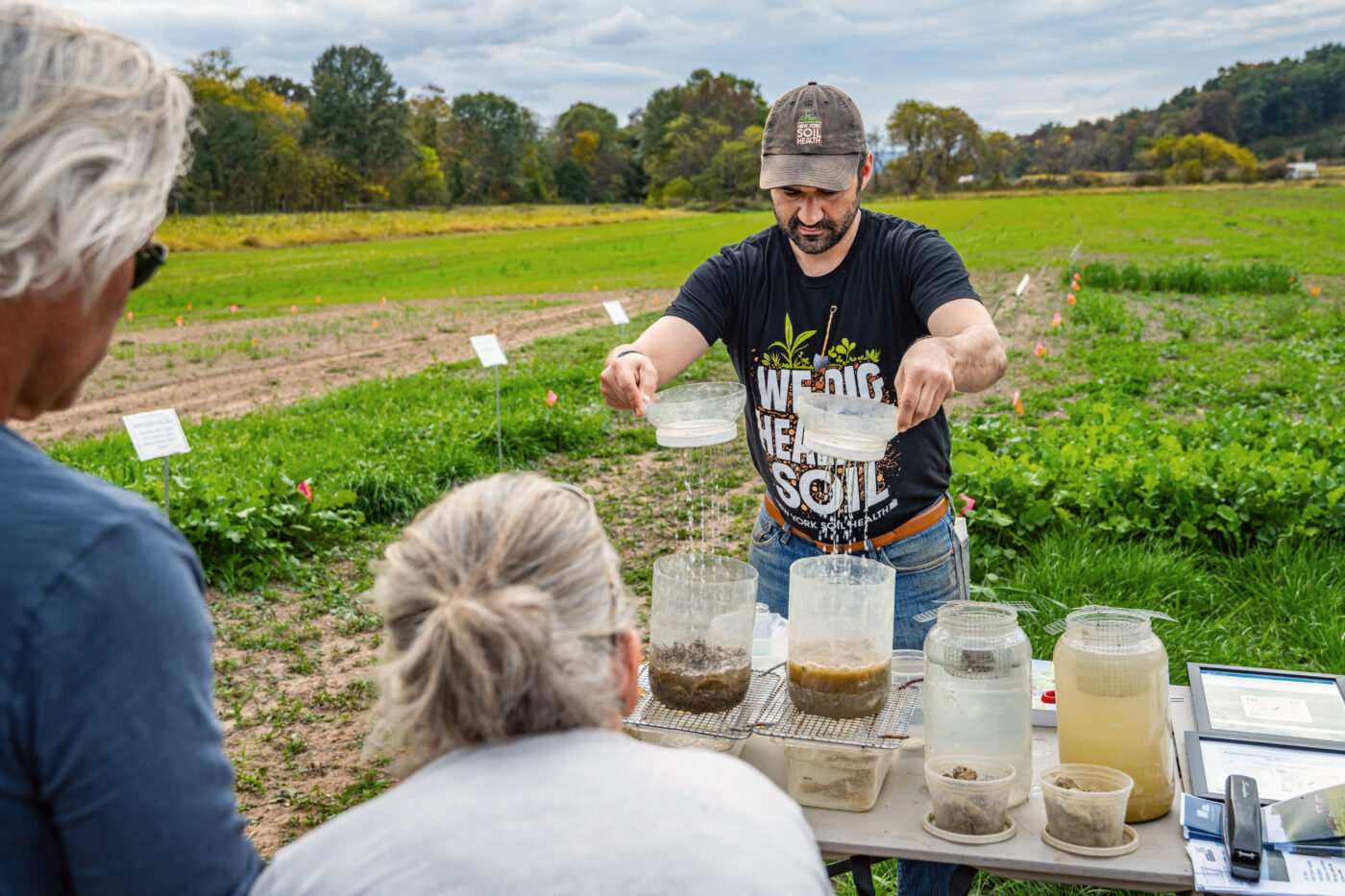
“You can read a bunch of books, but until you see it, it’s hard to understand,” says Amsili, program director for New York State’s Soil Health Program, speaking at a recent field day demonstration of cover crops at Kelder’s Farm in Kerhonkson. The soil samples in the jars are like twins separated at birth, he explains. One was collected from a degraded field, the other pulled just a few feet away from under grass next to that field. The higher organic matter and lack of tillage creates “crumbs” that stabilize the soil when it gets wet, he says — preventing erosion during rainfall, for instance.
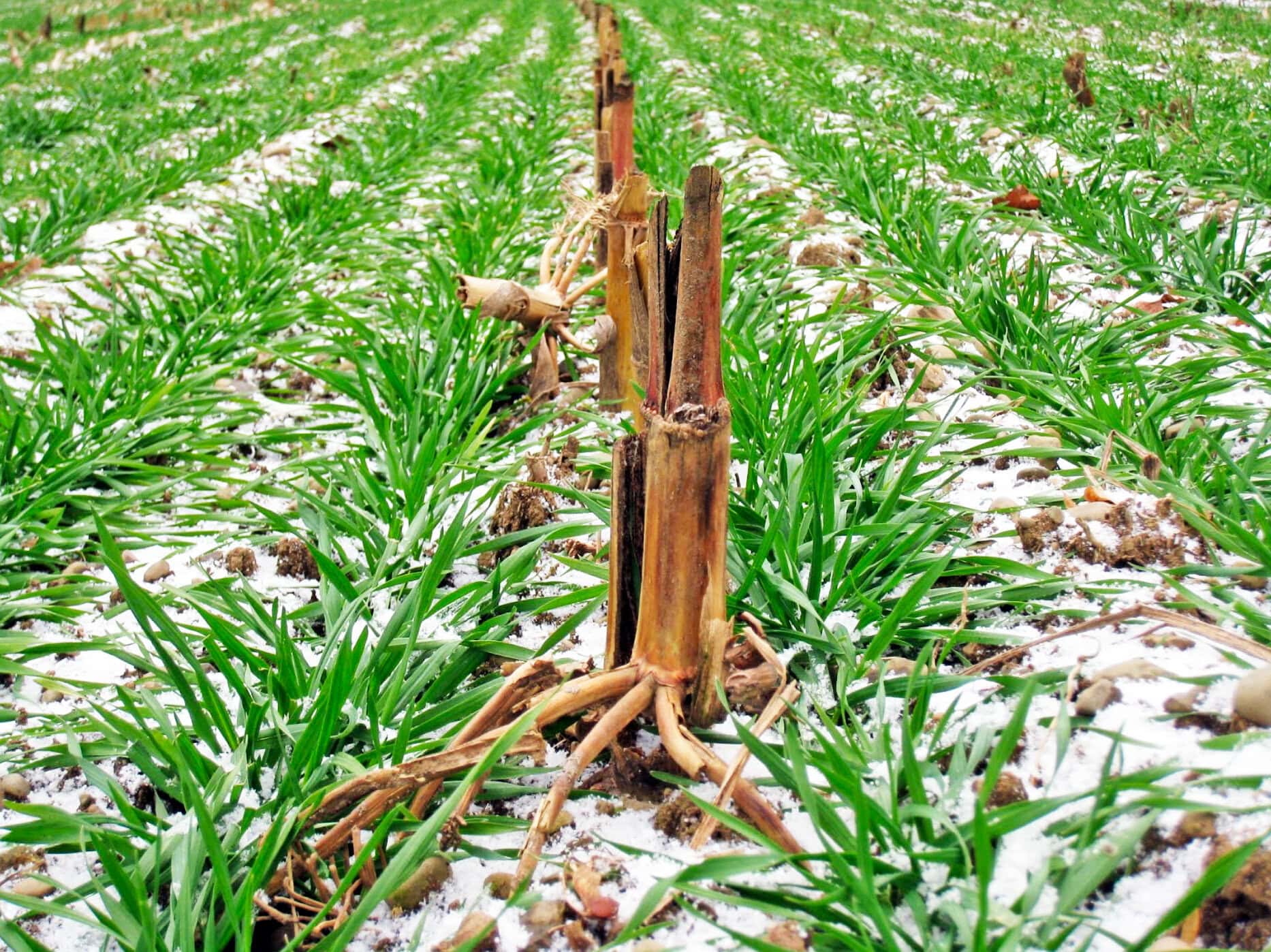
In recent years, cover crops have gotten fresh attention as a regenerative farming practice, with a long list of benefits. They include not only reducing erosion, but also improving water infiltration, building organic matter in soil, and fixing (or adding) nitrogen. All that leads to healthier soil, reduced costs on things like herbicides, better water quality, and higher biodiversity for pollinators and wildlife.
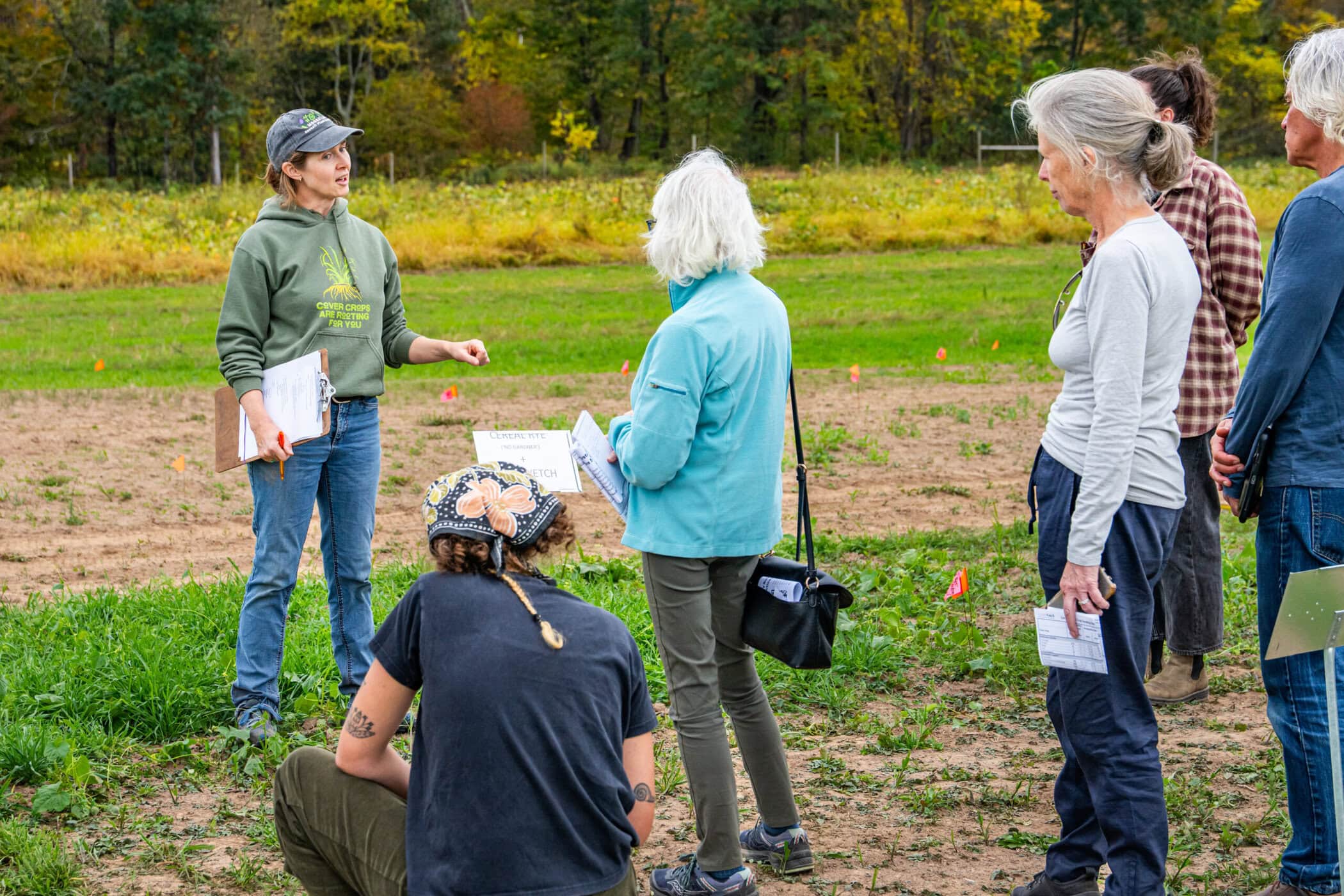
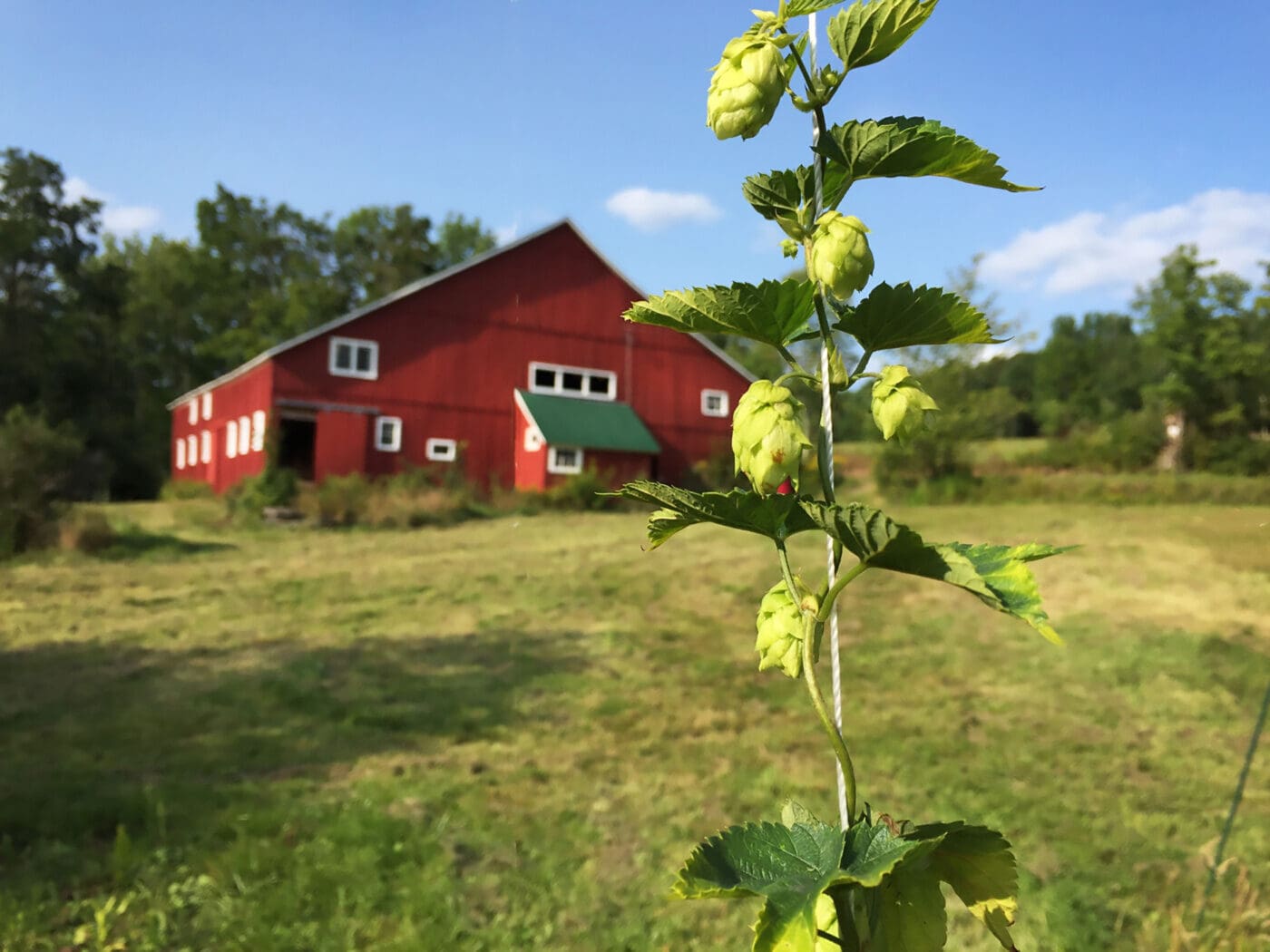
Chris Kelder of Kelder’s Farm hosted the field day for community members to come learn about cover crops and their benefits. Cornell Cooperative Extension grew 16 demonstration plots of various cover crops and mixtures for the event. Participants were also able to see the extensive cover cropping that Kelder had planted across his resting fields, like oats, peas, and rye and, most recently, crimson clover for its gorgeous spring color.
“We grew it last year for the first time, and it overwintered beautifully,” he tells the group of fellow farmers at the field day. “It’s gorgeous — and it fixes a lot of nitrogen, too.”
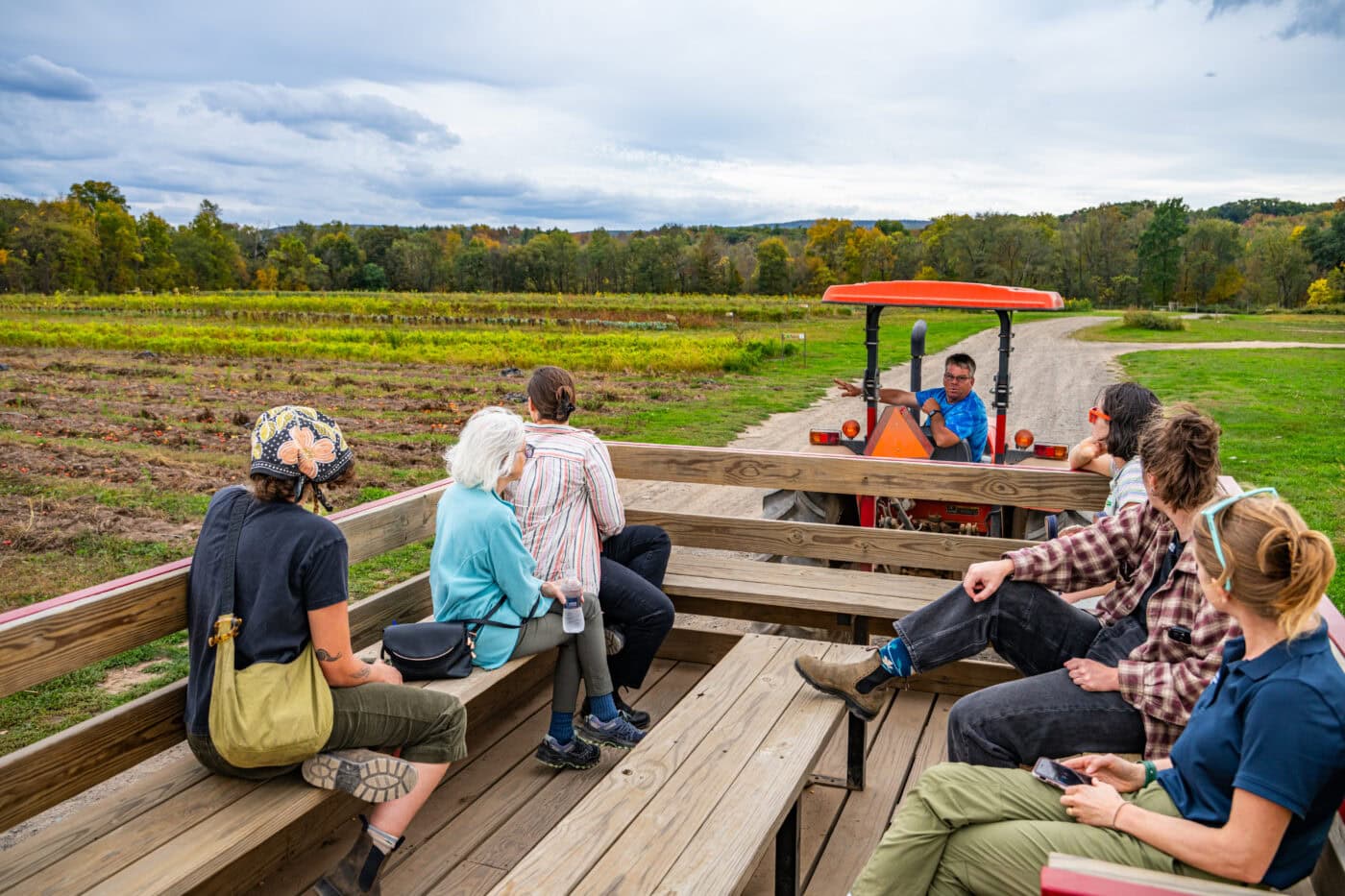
Solveig Hanson, network coordinator of the Cover Crop Breeding Network, takes the farmers through various cover crop options, from that crimson clover ( which “does fix some nitrogen, and it’s very manageable”) to oats, radishes, and field peas (“my favorite thing to talk about”).
Then there are what Hanson calls “cover crop cocktails,” which are mixes of many of those all-stars, plus others like ryegrass and turnips. Some get planted by mid-August; others at different times of year in different climates. The Hudson Valley farmers start to talk about what has worked on their land. “It’s easy to get overwhelmed,” Hanson says, “but a cover crop is better than no cover crop.”