


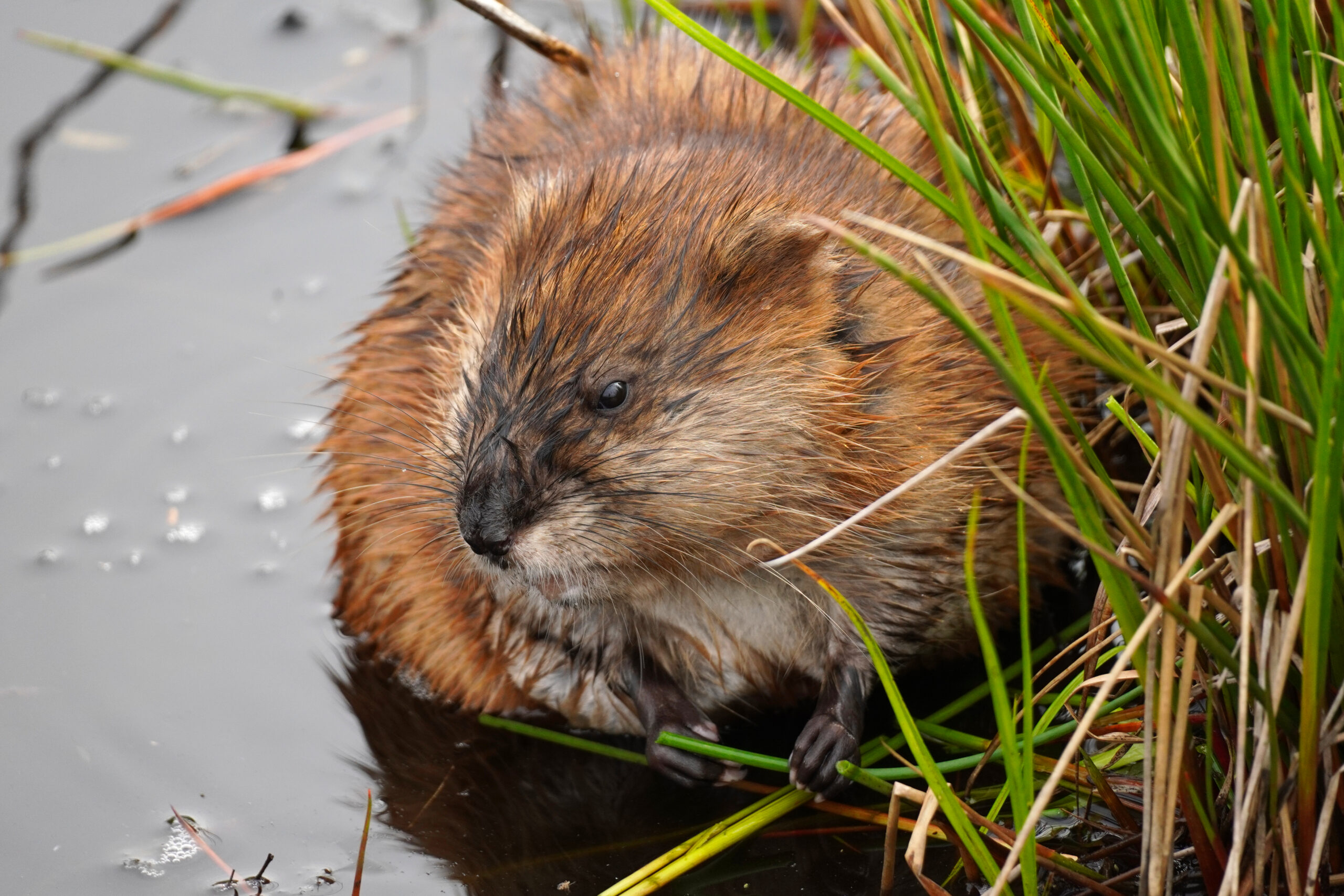
Muskrats are found all over New York and in different types of water: ponds, lakes, marshes, streams, and brackish habitats where salt and freshwater rivers meet the salty ocean. They are the most common semi-aquatic mammal in North America, but are often mistaken for beavers and easily overlooked.
They shouldn’t be. These midsized rodents have many interesting characteristics of their own.
Muskrats are much smaller than beavers, weighing between 2 1/2- 4 pounds and ranging from 23-26 inches long, with their tail making up half that length.
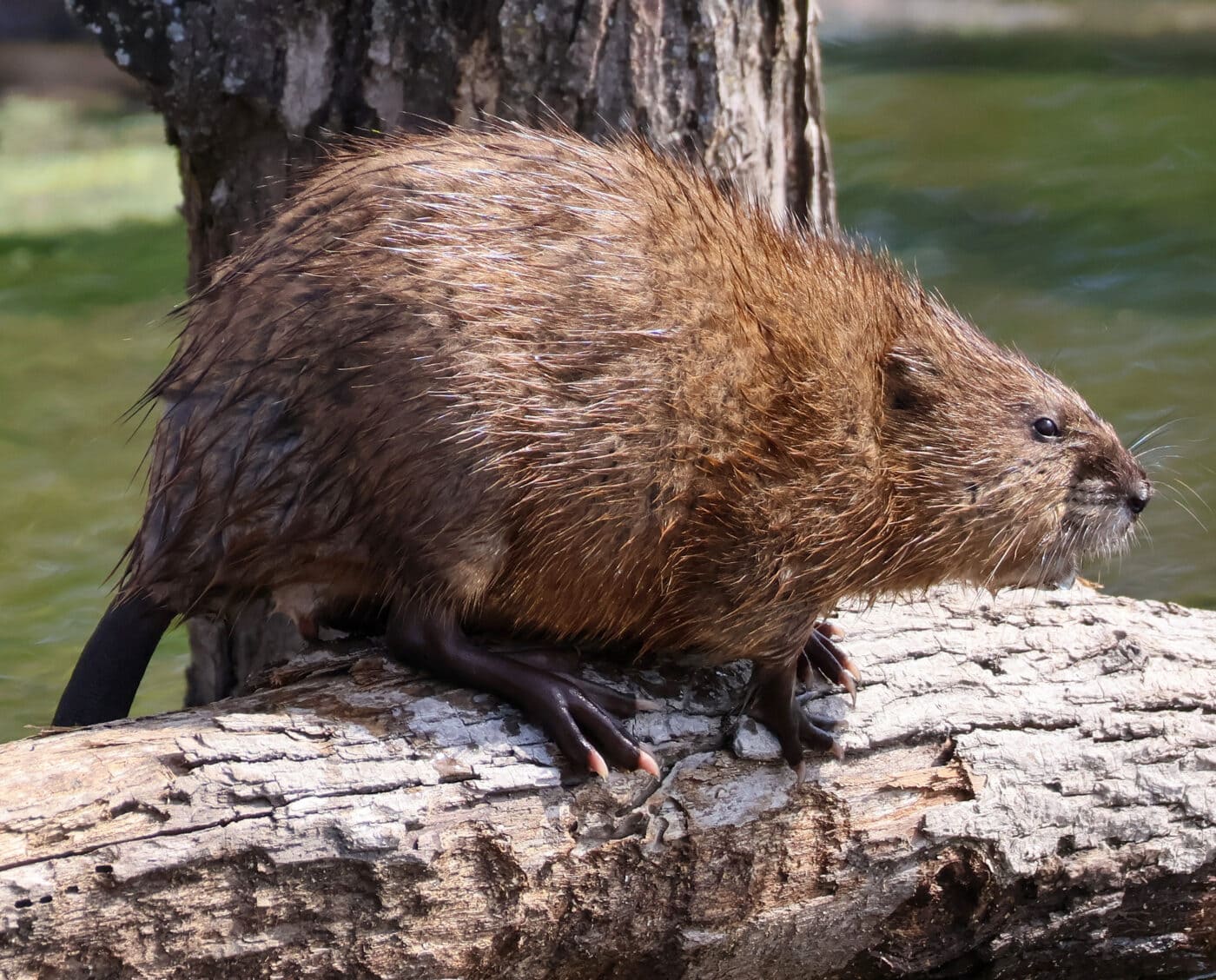
They have a scaly, laterally compressed (or flattened from side to side) tail with a fringe of coarse hair on the underside that, according to the New York State Department of Environmental Conservation, is a unique feature not shared by any of the state’s other mammals.
Like beavers, muskrats slap their tails when startled before diving into water. They also have large hind feet with partial webbing between their toes, and thick, soft, waterproof fur that allows them to keep warm and stay active year-round.
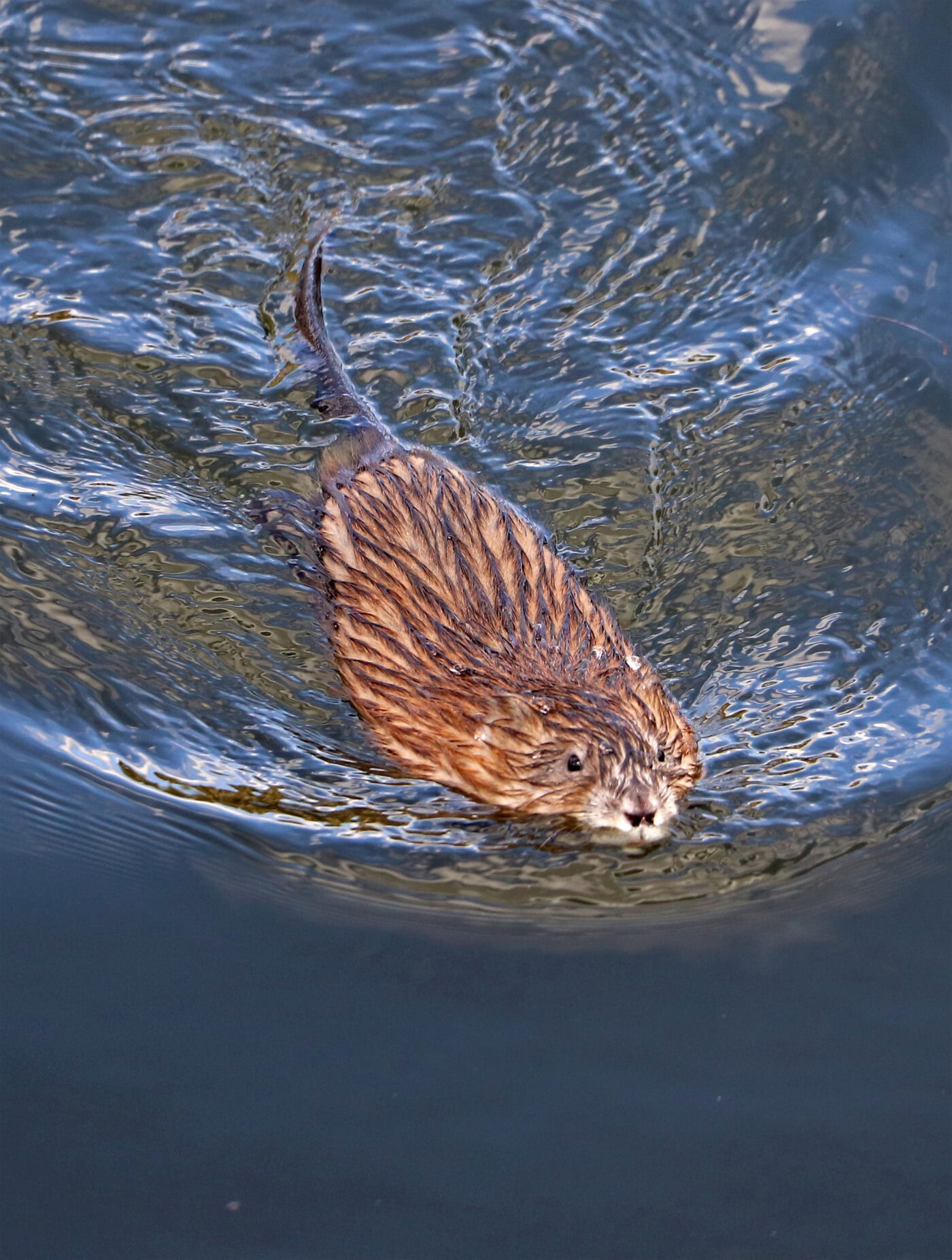
These features — the long tail, the paddle-like webbed feet — make muskrats excellent swimmers. They usually swim on the surface, but can remain underwater for up to 17 minutes by reducing their heart rate and relaxing their muscles, slowing the rate at which they use oxygen. They can swim for about 3 miles per hour.
According to the DEC, muskrat homes vary by habitat. Muskrats in stream habitats burrow into the banks to create dens; one or more entrances are hidden underwater and lead to chambers above the waterline.
During the winter, muskrats build small, cave-like shelters by opening a 10-15 centimeter hole in thin ice and pushing a pile of roots, submerged vegetation and other debris through it. As the pile grows, it forms an enclosed cavity on top of the ice, serving as a breathing hole and resting place for muskrats away from their dens. These push-ups freeze solid and collapse when temperatures warm.
Muskrats in marsh habitats build dome-shaped lodges 3-4 feet high using emergent plants — plants rooted on the lake bottom, but with leaves and stems extending above the surface of the water. If food is scarce during the winter, muskrats can eat their lodges. Unlike beavers, muskrats do not cut down trees to build dams and lodges, but they can still damage the banks of waterways and plant life with their dens.
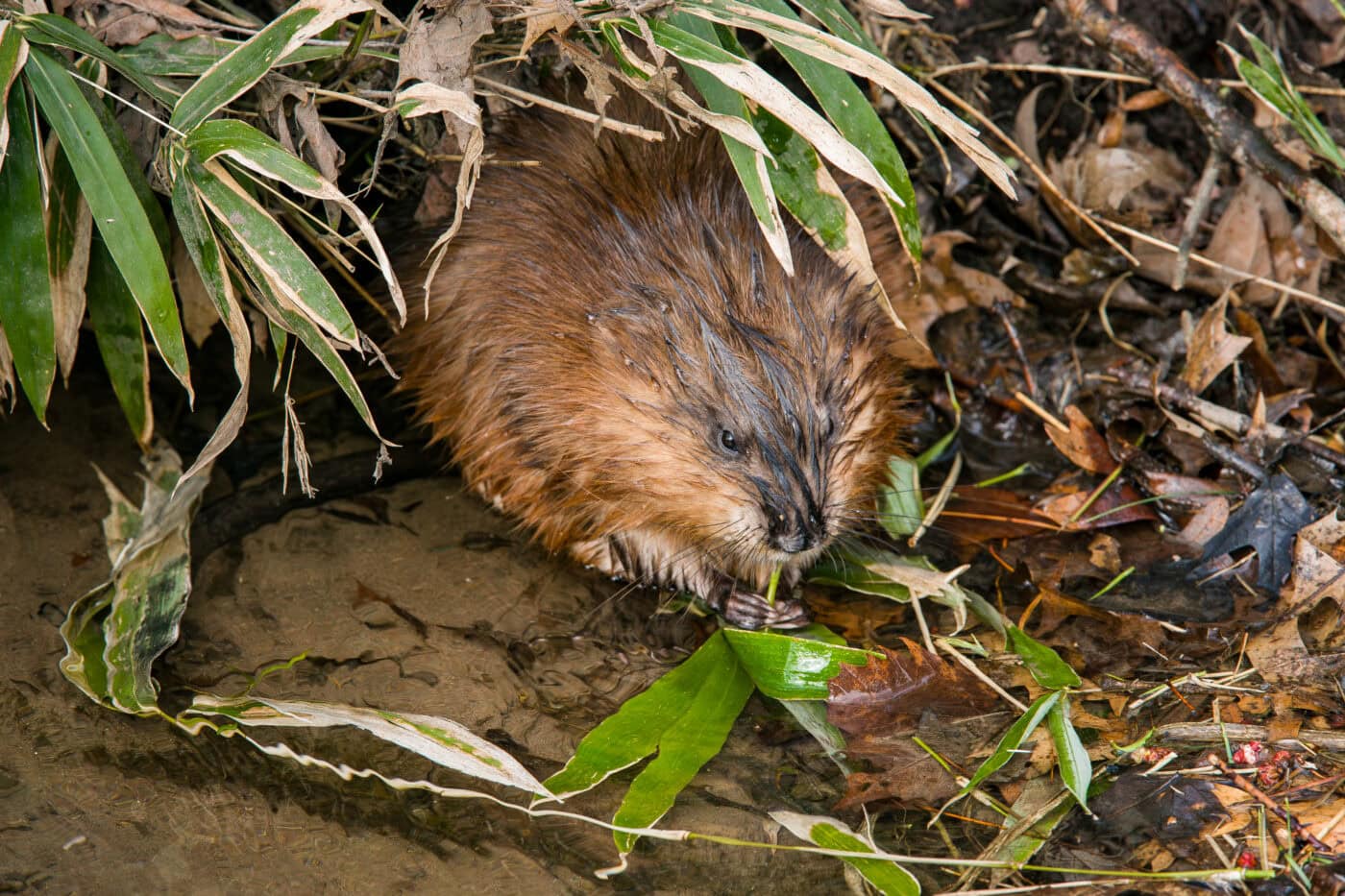
Muskrats are nocturnal and do not hibernate. They eat the roots and stems of aquatic vegetation — cattails, pickerelweed, pondweeds, arrowheads, etc. — but are also known to eat live animals such as insects, crayfish, slow-moving fish, amphibians and reptiles. Muskrats who live in marshy habitats might eat aquatic plants almost exclusively, while muskrats in lakes and ponds might have a more varied diet of plants and animals.
Muskrats are hunted by a number of animals, including raccoons, minks, foxes, great horned owls, and red-tailed hawks. Native to North America, muskrats are more closely related to voles and lemmings than rats or beavers.
As for the muskrat’s name, it comes from the strong, musky smell its anal scent glands produce during mating season to mark its territory.