


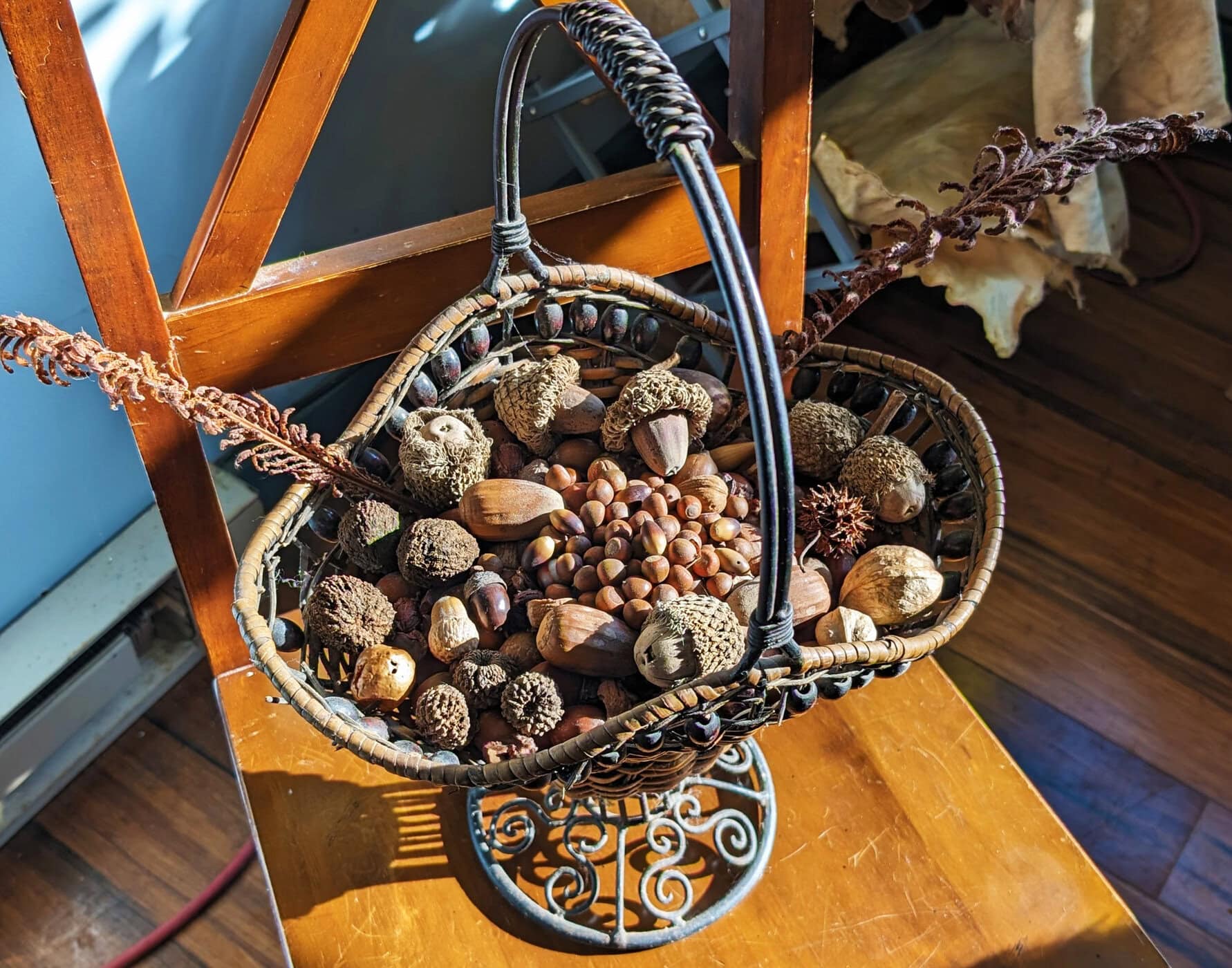
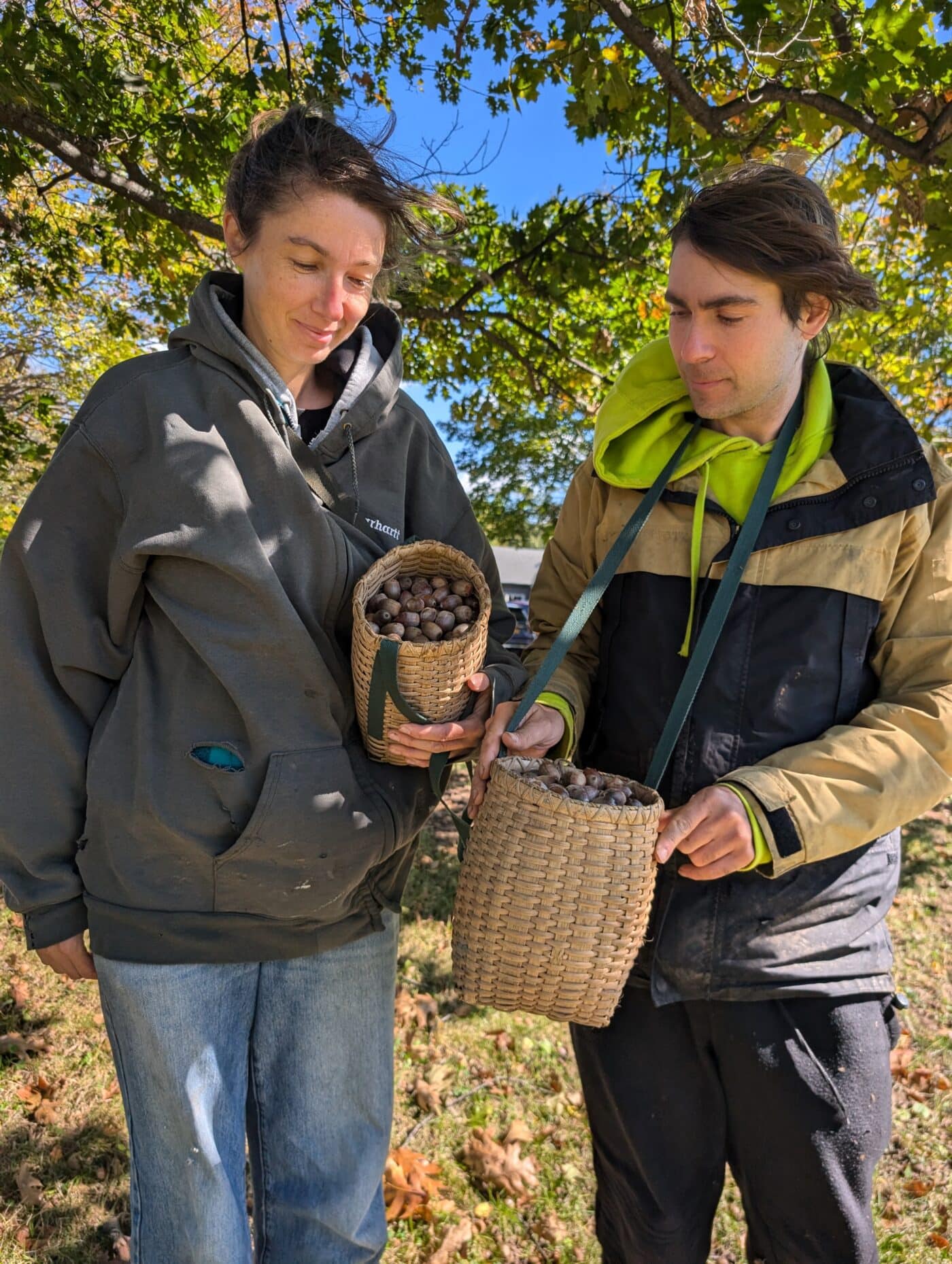
Acorn-filled baskets are spread across the home of Sage Jobsis and Mark Ressl in Rosendale. Some of the locally harvested nuts are in their shells, some have been cracked open with lemon squeezers. Ressl likes to keep his hands busy, so he multitasks, working on them while he entertains guests or talks with Jobsis, his partner.
Many people think of oaks as either gentle giants or mostly good for firewood, says Ressl. But when people try the couple’s acorn ice cream — which they sell along with acorn flour and other value-added goods through their small operation Giving Trees — a realization dawns, Jobsis and Ressl say. Suddenly, people understand that oak trees serve another beautiful purpose.
The fact that acorns can be processed into delicious treats inspires Jobsis, Ressl, and dozens of other farmers and researchers in the region. Even more so, though, they’re excited to grow food in harmony with the environment. Indigenous people have been harvesting and processing nuts in the region for thousands of years. Unlikestandard annual crop production, native nut trees can offer resiliency against climate change and pests, provide maximum habitat for pollinators, and sequester more carbon.
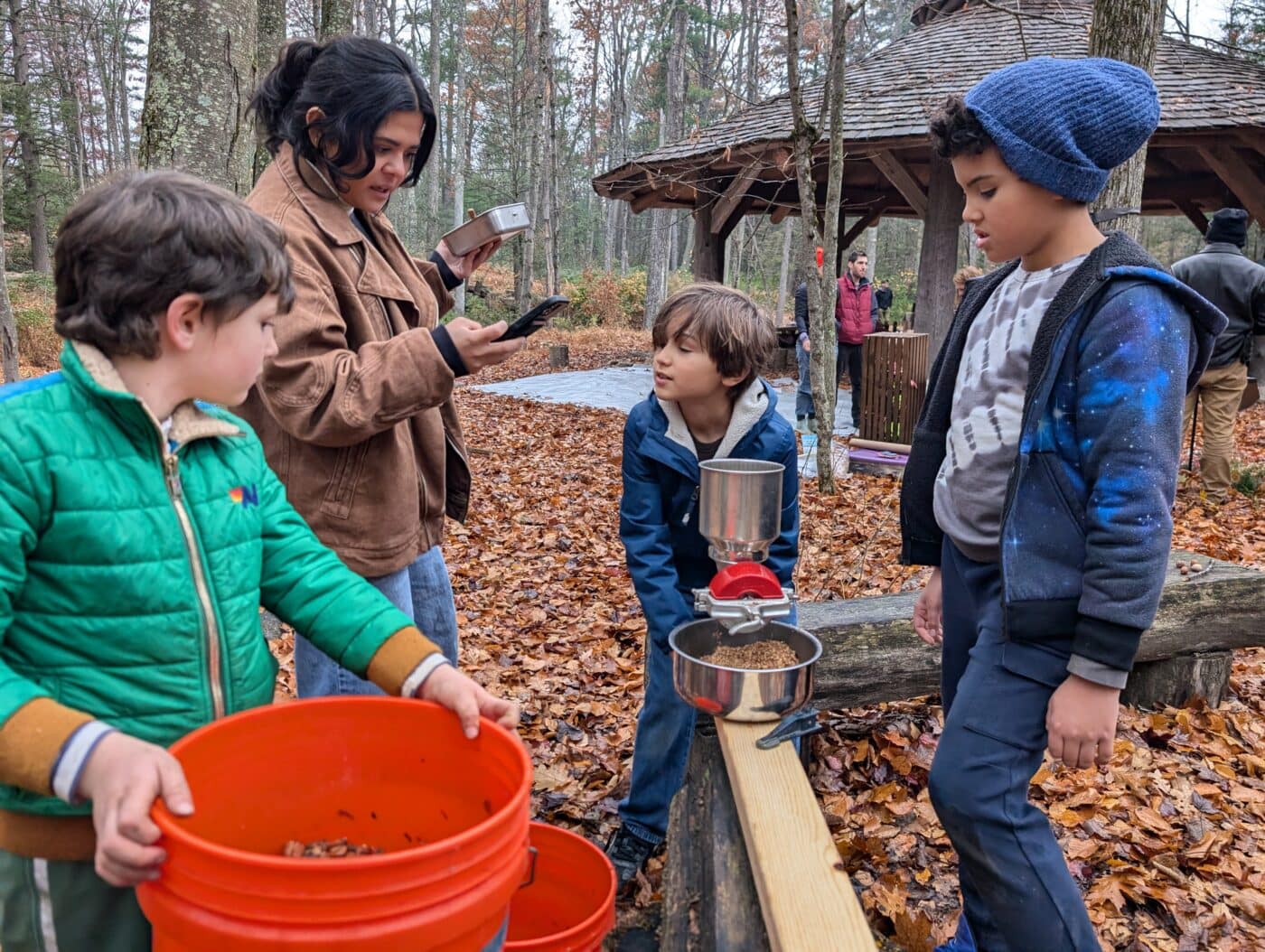
“These trees are so productive when they get to a certain age, and they’re so reliable, and they’re such a good part of the ecosystem,” says Eric Schellenberg, a passionate grower and the natural resources educator and commercial horticulture educator for Cornell Cooperative Extension Orange County.
Nuts can also grow on the same land with livestock or other agricultural products. This multi-pronged practice, called agroforestry, can make the land more productive and reduce erosion.
Costa Boutsikaris, co-founder of Mastwood, a farm that grows nut trees and shrubs on 50 acres in the Rondout Valley, says, “Instead of tilling the land and … creating more erosion into our lakes and streams and rivers, [we] can grow…all these amazing nutrient-dense foods … by holding more soil on the ground.”
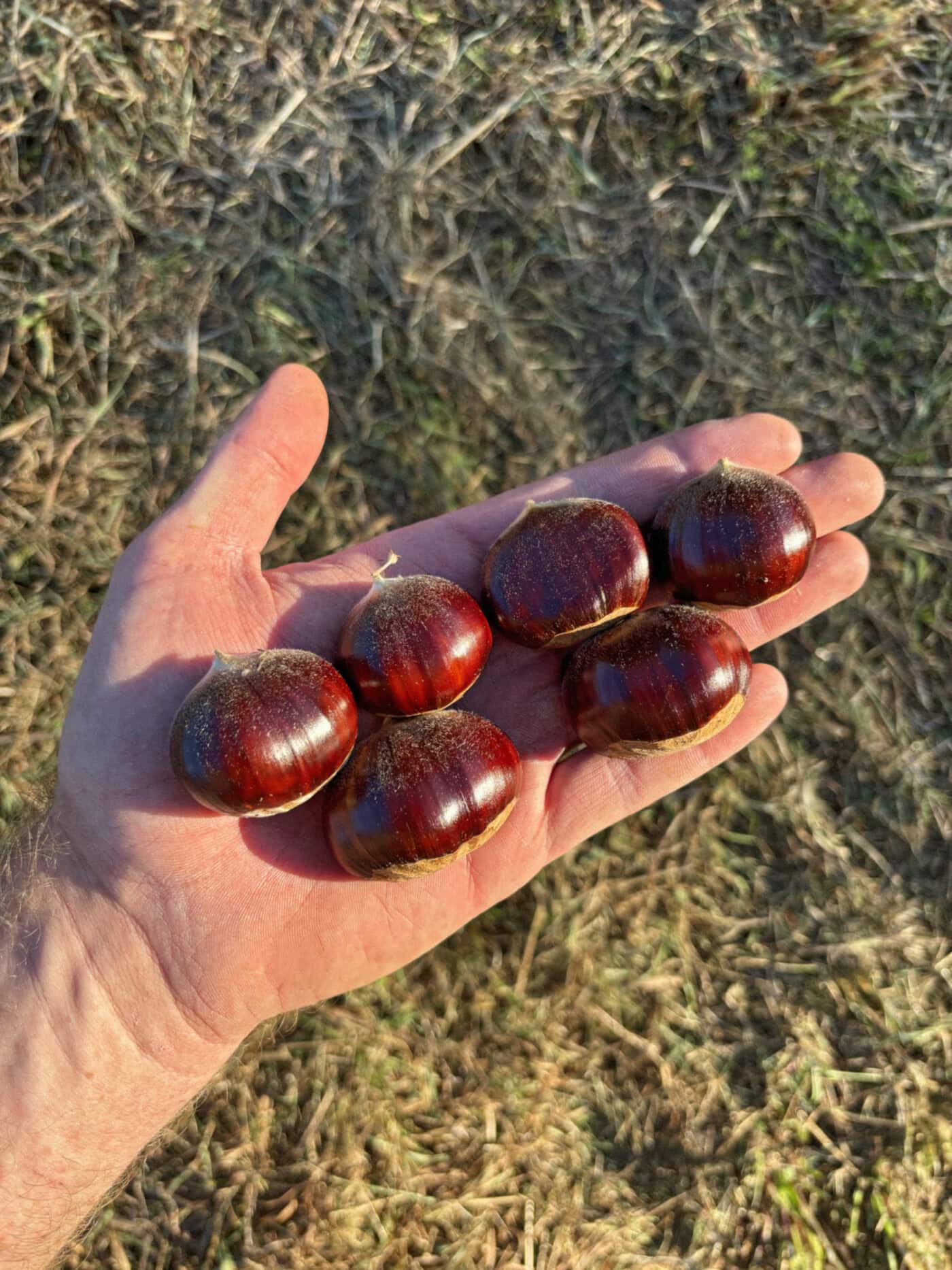
Many Hudson Valley growers agree that nut trees — like oak, chestnut, hickory and hazelnut — are a promising pathway for reliable, nutrient-dense food production in the region, especially when paired with grazing animals or other crops. Chestnuts, which are now grown as a hybrid between American and Chinese chestnuts due to a blight that wiped out the American chestnut, are a carbohydrate that could be a substitute for wheat flour. And the yellow bud hickory produces an oil that some are calling “the olive oil of the North.”
“Most people don’t feed themselves from apples and pears and peaches and plums,” says Schellenberg. “And so the kind of impetus behind nut trees is … they really fill this niche of a very long-term, long-lived plant that can produce huge quantities of staple foods.”
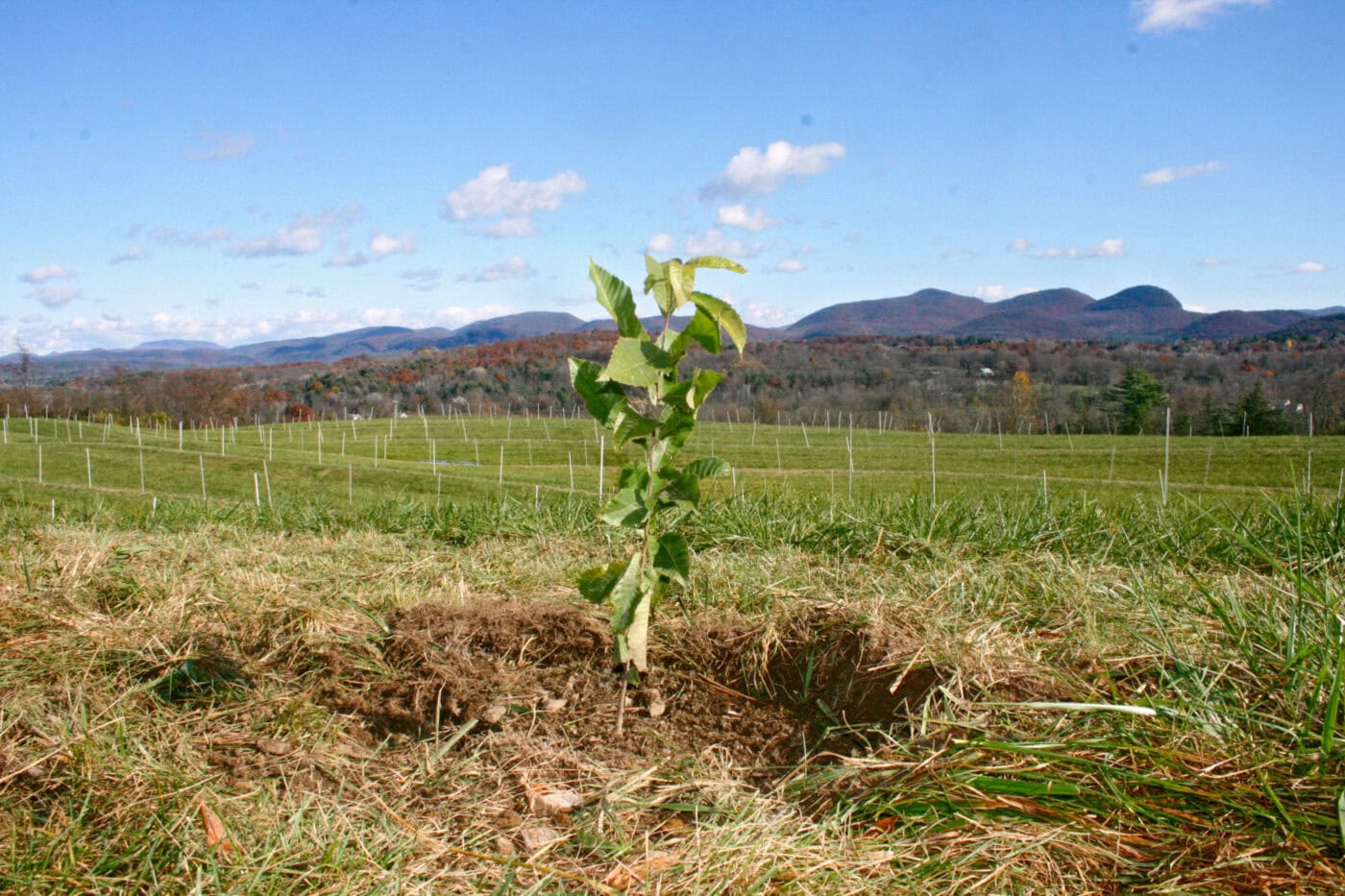
But it takes time for nut trees to mature and bear fruit. For chestnuts, a limited harvest is possible in about five years from planting, but it’s about 10 years to mature production. It also takes investment to develop the infrastructure to bring nut production to scale.
Breadtree Farms, which operates in the northern Hudson Valley and southern Vermont, has been successful by taking advantage of private investment and grants. They steward over 25,000 food-producing trees and shrubs on 800 acres. While they still harvest by hand, Bug Nichols, the farm’s director of engagement, says it’s inevitable that they will be using machine harvest equipment in the future.
One of their grants from the USDA is allowing them to renovate their barns into what they believe will be the largest organic chestnut processing facility in the United States. “Part of why it makes so much sense for this to be grant funded is that we’re building it at a scale that’s much bigger than our business actually needs, because processing is such a bottleneck for other people,” says Nichols. “We’re really hoping that it can be a way that more people can plant trees and know that there [are] things being done.. to grow the market for this product.”
Schellenberg echoes the fact that it’s difficult for growers to scale up without knowing how their product will be processed, who will buy it, or if their business will be profitable.
“The biggest challenge is that there are just so many question marks,” Schellenberg says. Take yellow bud hickory, for example. Growers can look at pecan production as a guide, because it is a similar crop and is grown around the world. “But even though there are these models out there,” he says, “we still don’t know how it’s all going to play out in the Northeast. There certainly is no history of commercial [hickory] production here.”
Support needs to come from funders, Schellenberg believes — not just because it takes a long time to establish nut trees, but because ecologically-minded processes for growing nut trees are not always the most streamlined or most thoroughly researched. Breadtree Farms, for example, received a grant to trial an intensive form of agroforestry.
“I think that [with] funders, the goal should be to help these farms that want to do this,” Schellenberg says. “Because if you’re trying to do something that’s a little bit more complex and a little bit more involved … it may take a little bit longer to get to a coherent system that works for them economically.”
Nichols says that a revolving loan fund could be another solution for helping growers with upfront costs while they wait for their operation to generate profit.
Despite the obstacles, these growers are dogged about growing nut trees to produce food for the region. “Having harvested from a lot of these trees, and having been under such an enormous tree with so much production every year,” Schellenberg says, “you get this feeling of, how could this not work?”