


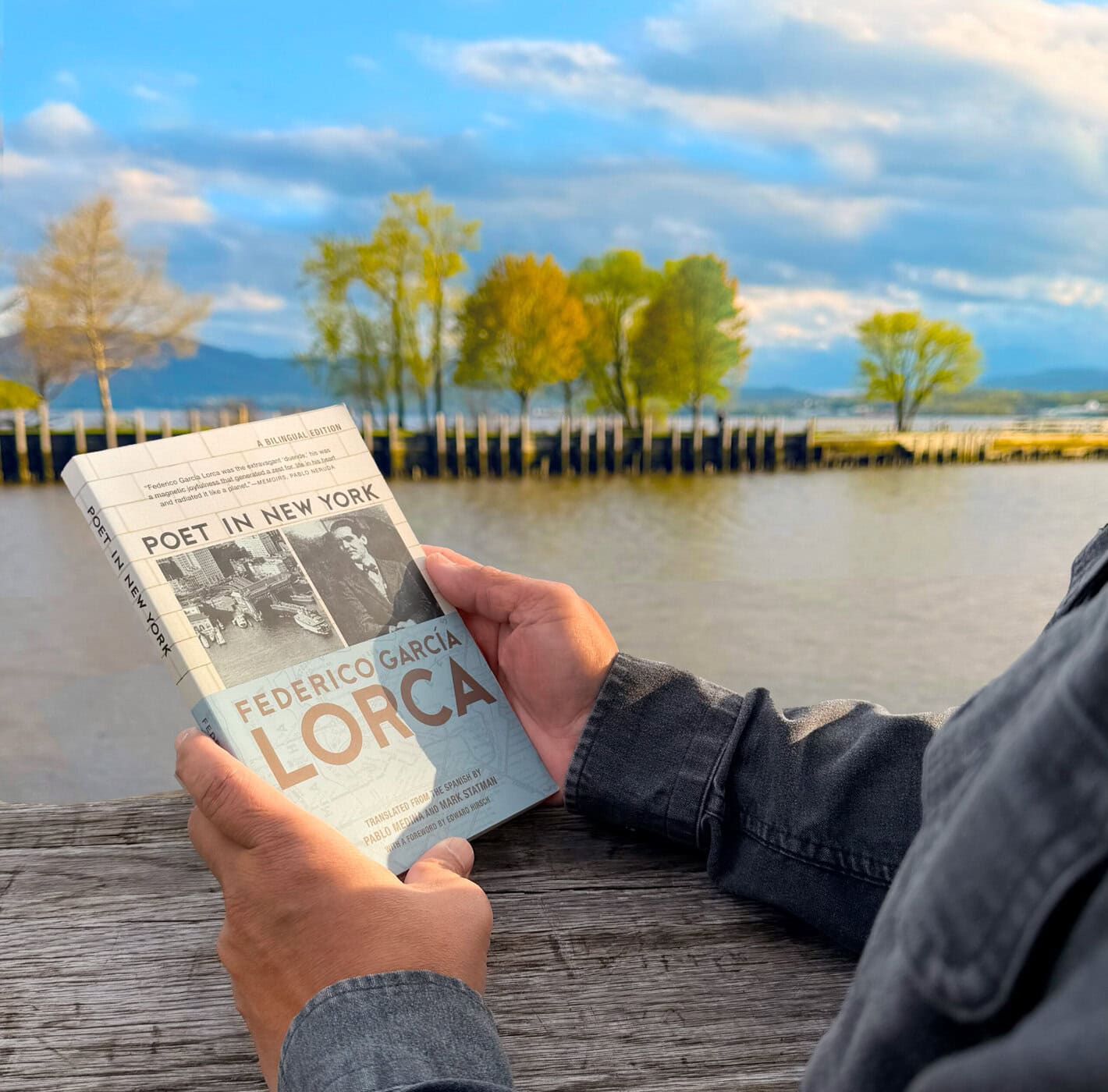
Poetry is more than just rhyming verses — it’s a form of human expression and can also be a useful tool for historians, showing different human perspectives throughout time. For thousands of years, we have used this oral and written art to describe the world around us and our experiences in it.
Over the centuries, the local landscapes have continued to inspire artists and poets. The poet and journalist William Cullen Bryant composed the poem “A Scene on the Banks of the Hudson” (Una escena a orillas del Hudson). Walt Whitman mentioned the river in some of his poems and described visiting the valley in his book Specimen Days and Collect.
The valley was famously home and inspiration to poets such as Edna St. Vincent Millay. And former U.S. Poet Laureate Billy Collins refers to the Palisades in the poem “The Brooklyn Museum.” It is quite possible that the first verses about the Hudson Valley and published in Spanish were composed by renowned Spanish poet and playwright Federico García Lorca (1898-1936) during his stay in New York in 1929.
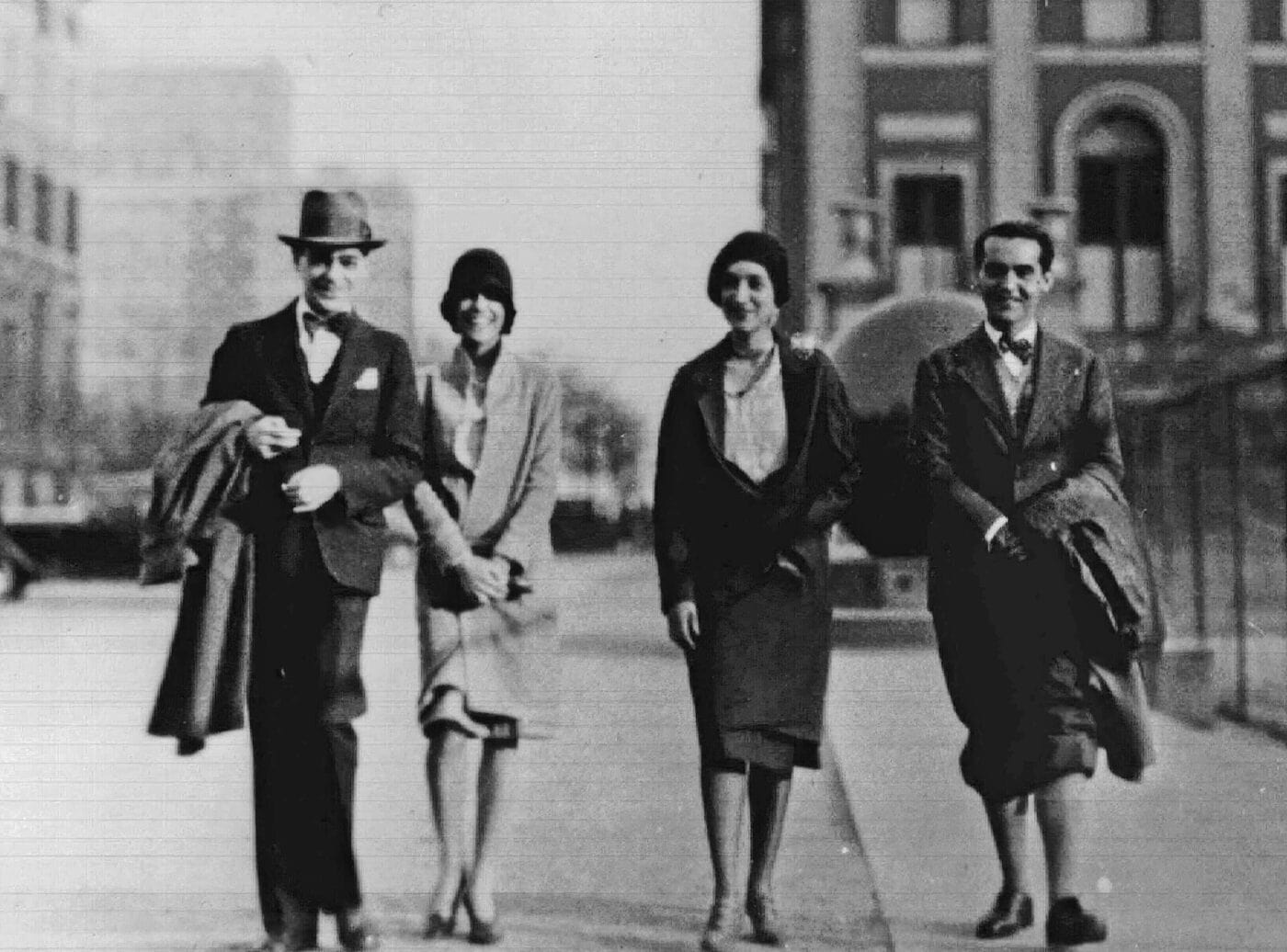
García Lorca’s verses, beyond reflecting his surrealist style of poetry and observations of the city — they attack modernism, Wall Street, and the racism he saw in Harlem — also show how the landscapes and people of the Hudson Valley served as inspiration for expressing his ideas, feelings, and memories.
The year 1929 was one of the most successful for the Andalusian poet. His book Romancero gitano (Gypsy Ballads) was a major commercial success, making him one of the most celebrated poets in Spain. His play Mariana Pineda continued to draw acclaim in Barcelona, Madrid, and Granada. Yet not everything was bright. According to biographer Ian Gibson, García Lorca resented his new fame, as it forced him to conceal his homosexuality in public.
Even more significant was his deteriorating friendship with surrealist painter Salvador Dalí, who had designed the sets and costumes for Mariana Pineda. When Dalí moved to Paris and began collaborating with Luis Buñuel on the short film An Andalusian Dog, García Lorca became convinced that the title and the male character — gay and impotent — were inspired by him. Perhaps most devastating of all, Dalí described García Lorca’s verses as “old-fashioned poetry” and “full of clichés.”
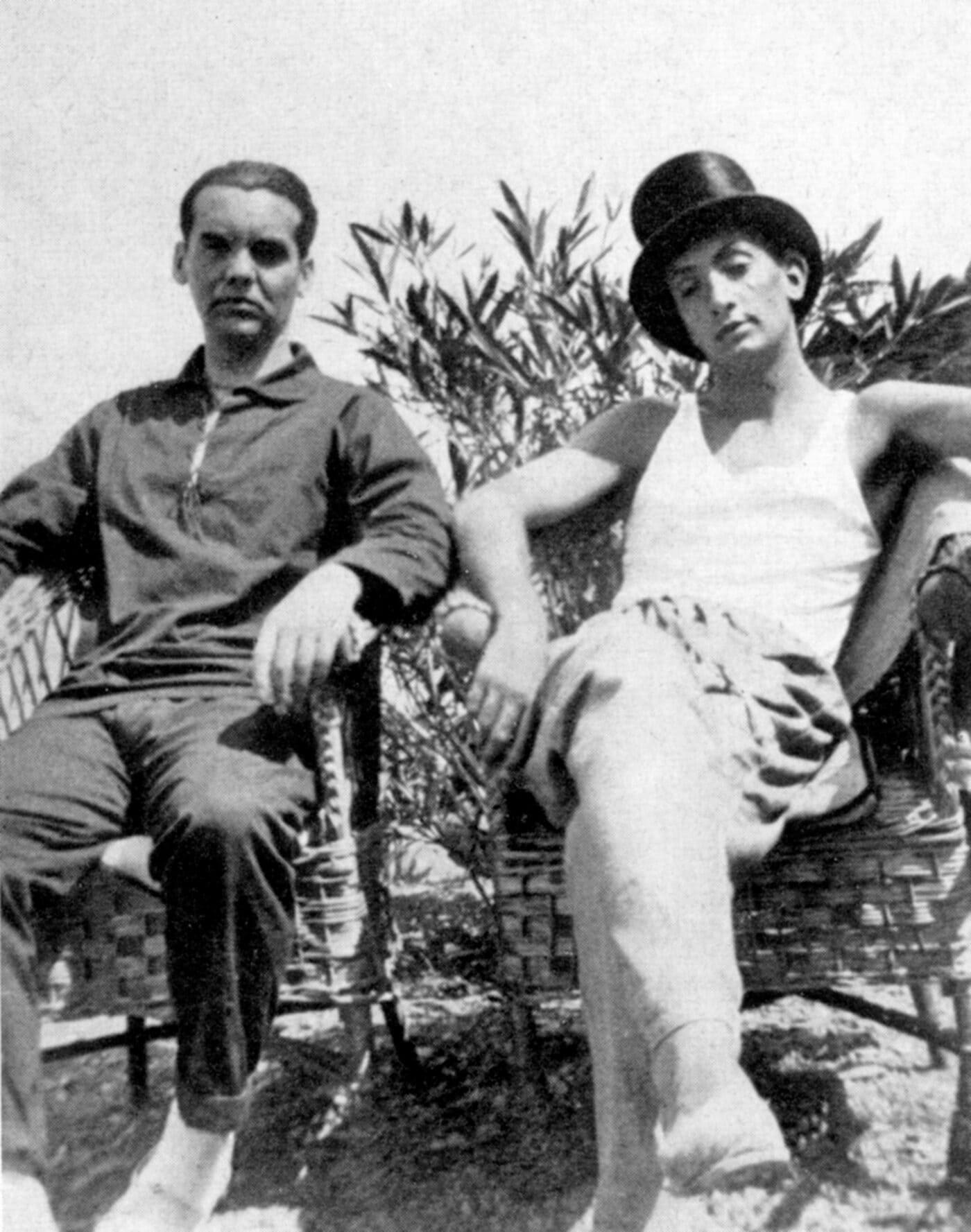
Buñuel had made his dislike of García Lorca known for years. In his book Buñuel, Lorca, Dalí: The Endless Enigma, Spanish film historian Agustín Sánchez Vidal reproduces letters written years earlier, in which the filmmaker refers to the poet and the painter as “disgusting,” believing them to be lovers. In another letter, he expresses his wish that Dalí join him in Paris so he could “recover, far from García’s disastrous influence.”
Seeking rest and a chance to get away from his troubles, García Lorca decided to travel to New York to study English at Columbia University for a time, with financial support from his parents. In a letter, his mother reminded him that they were sending him $100 a month to cover his expenses (the equivalent of about $1,879.91 today).
The poet never learned English, but he devoted himself to exploring the city. His first poems reveal his awe at the great metropolis (he was especially captivated by Harlem), as well as reflect his personal depression — the first section of the book is titled “Poems of Solitude at Columbia University.”
In August, the poet decided to escape Manhattan and explore the countryside and forests north of the city. He first spent a few days in Vermont with the family of Philip Cummings, a journalist and Spanish professor (and possibly lover). In late August and early September, he spent three weeks at a country house in Bushnellsville, a small village near Shandaken (Ulster County), with the family of Ángel del Río, a Spanish professor at Columbia University.
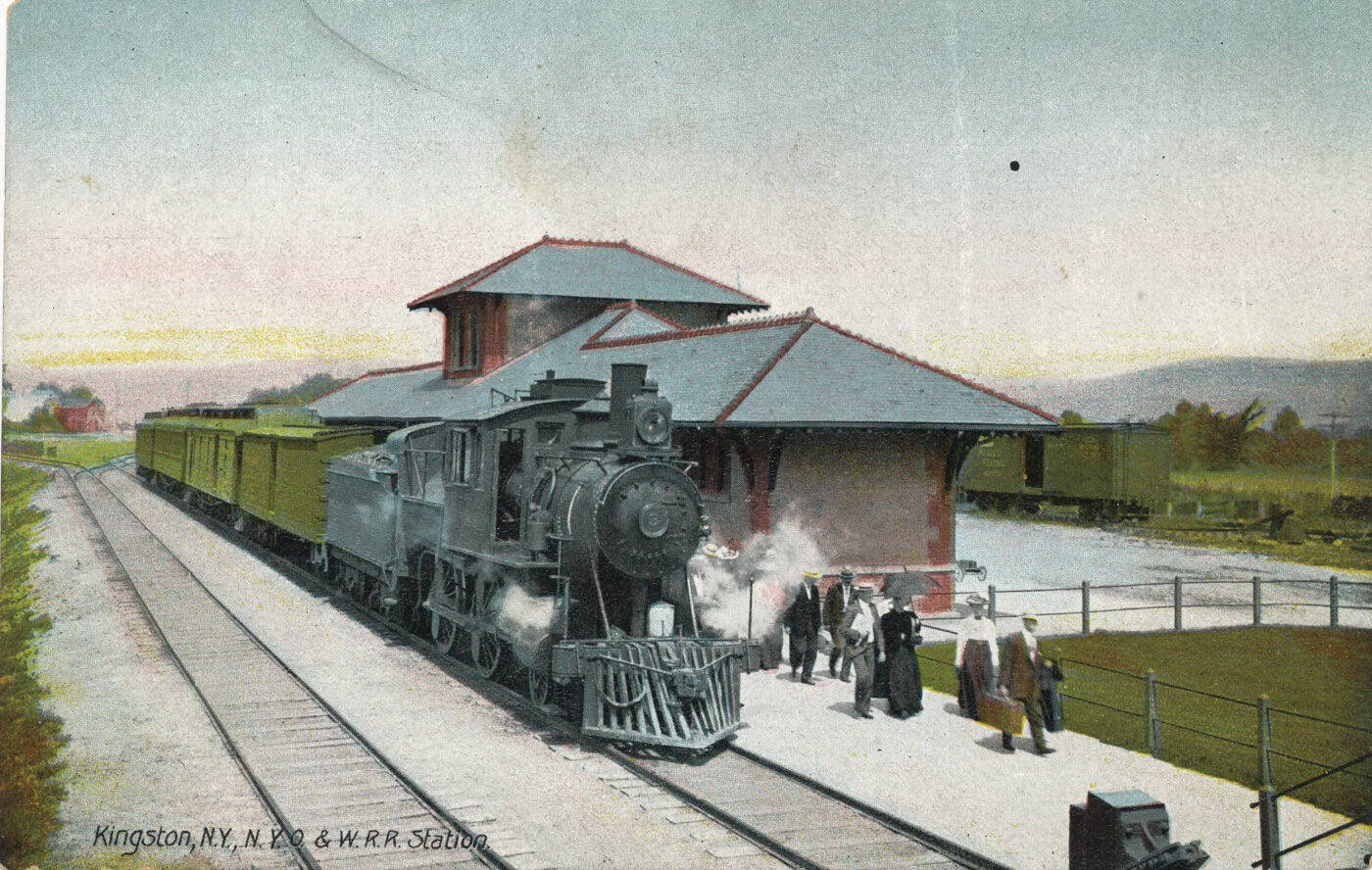
In 1955, Del Río recalled asking García Lorca to send a telegram with his arrival time at the Kingston (Ulster County) train station. García Lorca never sent the telegram; he arrived unexpectedly one night after spending hours lost with an angry driver who didn’t speak Spanish. A neighbor finally helped them find the house. The professor had to pay the driver $15 (the equivalent of $278.73 today), since the poet didn’t have any money on him.
During his stay in Bushnellsville, he composed several poems, including “El niño Stanton” (The Stanton Boy) and “Niña ahogada en un pozo” (Girl Drowned in a Well), inspired by the children of the owner of the cabin where he was staying. The first begins with the following lines:
Cuando me quedo solo
me quedan todavía tus diez años,
los tres caballos ciegos, tus quince rostros con el rostro de la pedrada
y las fiebres pequeñas heladas sobre las hojas del maíz.
The blind horse and the corn leaves are things García Lorca actually saw in Bushnellsville, but the poet also took several creative liberties. For instance, later in the poem he laments Stanton’s cancer diagnosis — but it was actually the boy’s father who was ill.
In the poem “Niña ahogada en un pozo,” García Lorca writes that Stanton’s sister has died, yet Del Río later confirmed that the girl, named Mary, never died — nor was there any report of a girl drowning in the area that summer. The poem “Ruina y paisaje con dos tumbas y un perro asirio” (Ruin and Landscape with Two Tombs and an Assyrian Dog) was apparently inspired by a large dog that terrified the poet, according to Del Río’s later recollections.
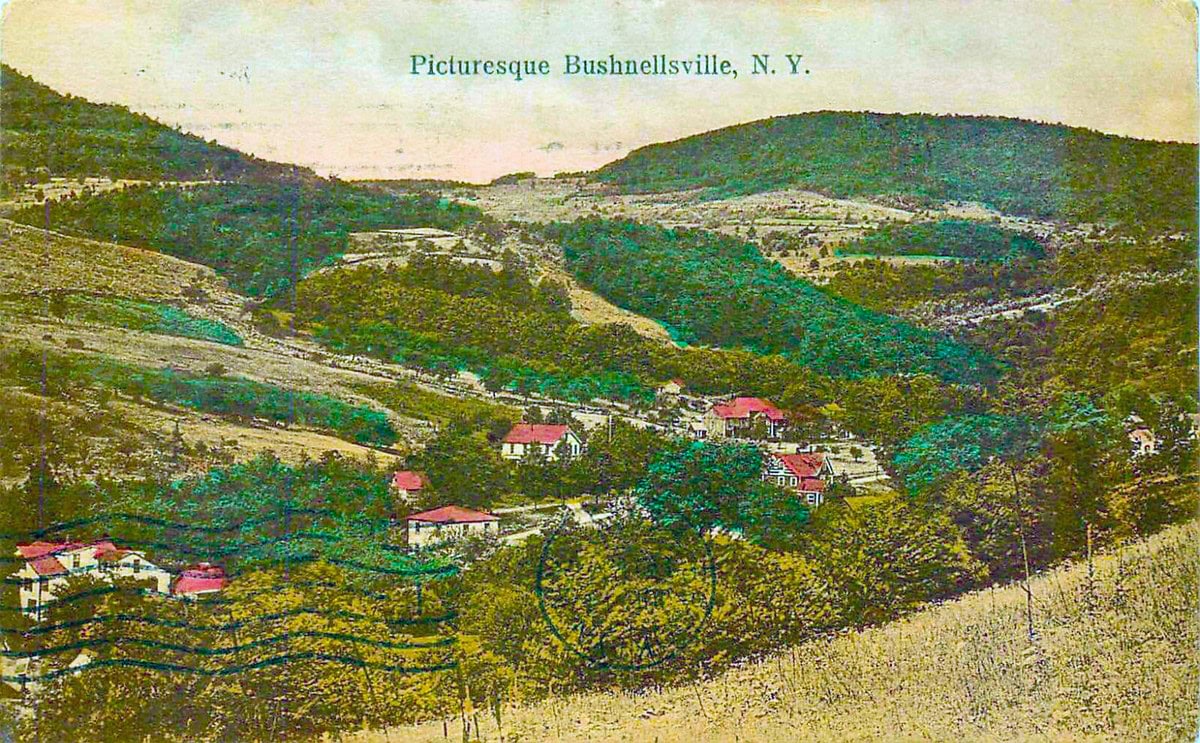
While in Bushnellsville, he also wrote poems such as “Nocturno de hueco” and “Ruina,” though they appear in the section titled “Introduction to Death,” which some critics believe was to be the original title of Poet in New York. Del Río noted that García Lorca drew inspiration in part from the many abandoned quarries near the farm.
Las nubes, en manada,
se quedaron dormidas contemplando
el duelo de las rocas con el alba.
Vienen las hierbas, hijo.
Ya suenan sus espadas de saliva por el cielo vacío.
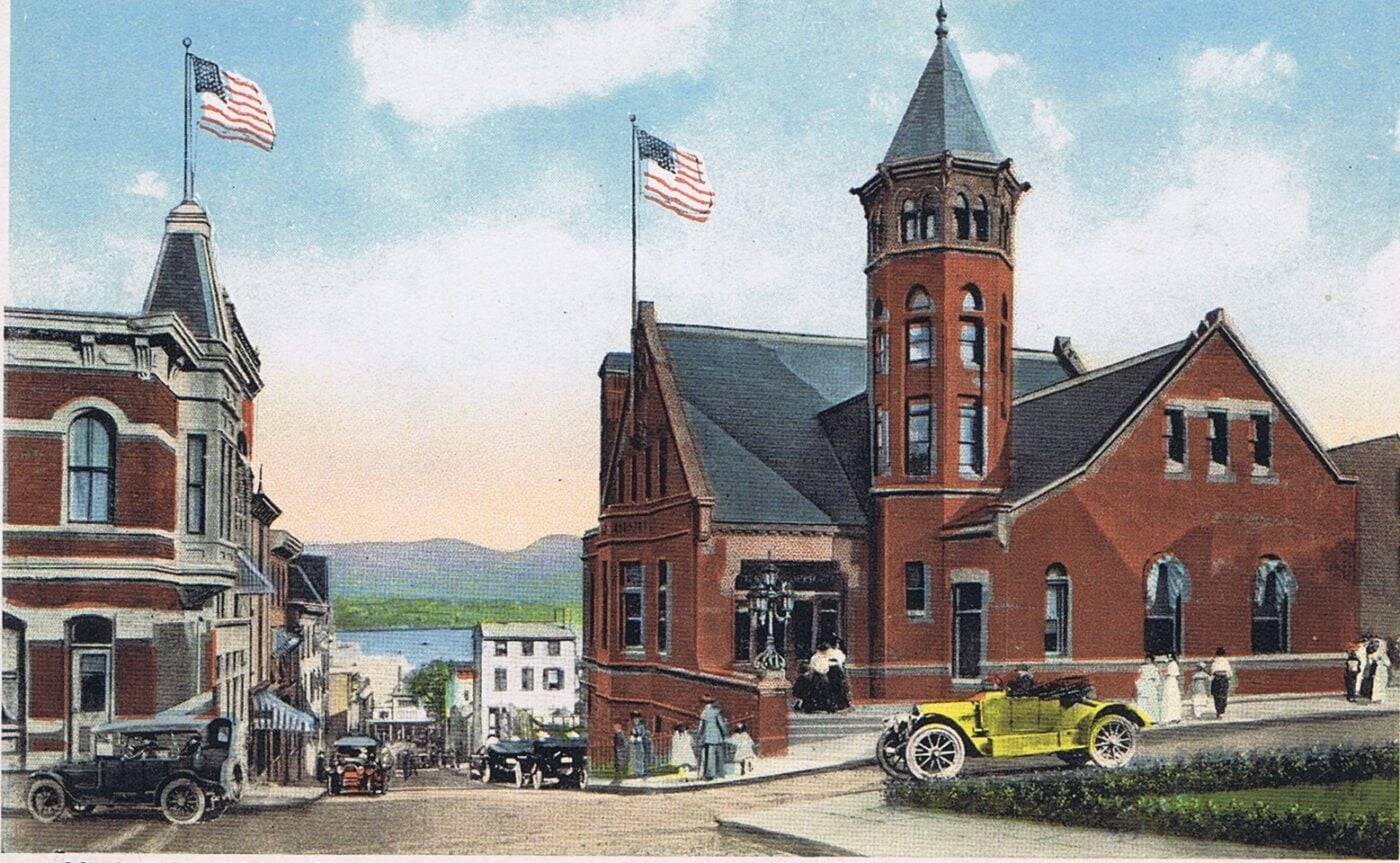
After spending a few weeks with the Del Río family, the poet traveled with Federico de Onís — another Spanish poet and professor at Columbia — to a cabin in Newburgh (Orange County). There, he met Spanish poet León Felipe, whom he greatly admired. Felipe was translating Leaves of Grass, the magnum opus of New York poet Walt Whitman, and shared his work with Lorca. It was very likely there that García Lorca began writing his poem “Ode to Walt Whitman,” in which he celebrates nature, critiques modernity, and reveals the sexual repressions of his time.
In July 1930, García Lorca left New York to give a series of lectures in Havana. Upon returning to Spain, he devoted himself to his plays and chose to continue working slowly on his poetry collections. The book containing the poems he wrote in the Hudson Valley was published posthumously in 1940 as Poet in New York.
In 1936, García Lorca had given the manuscript to his publisher, who almost immediately was forced to flee Spain as a political exile under Francisco Franco’s dictatorship. A few months later, García Lorca was murdered in Granada by soldiers allied with the generalísimo. According to Ian Gibson, he was arrested and executed for being a government official, a communist, and gay.
His verses remain — such as these from “Ode to Walt Whitman” — possibly among the first poems written in Spanish in the Hudson Valley and inspired by it.
Y tú, bello Walt Whitman, duerme a orillas del Hudson
con la barba hacia el polo y las manos abiertas.
Arcilla blanda o nieve, tu lengua está llamando
camaradas que velen tu gacela sin cuerpo.