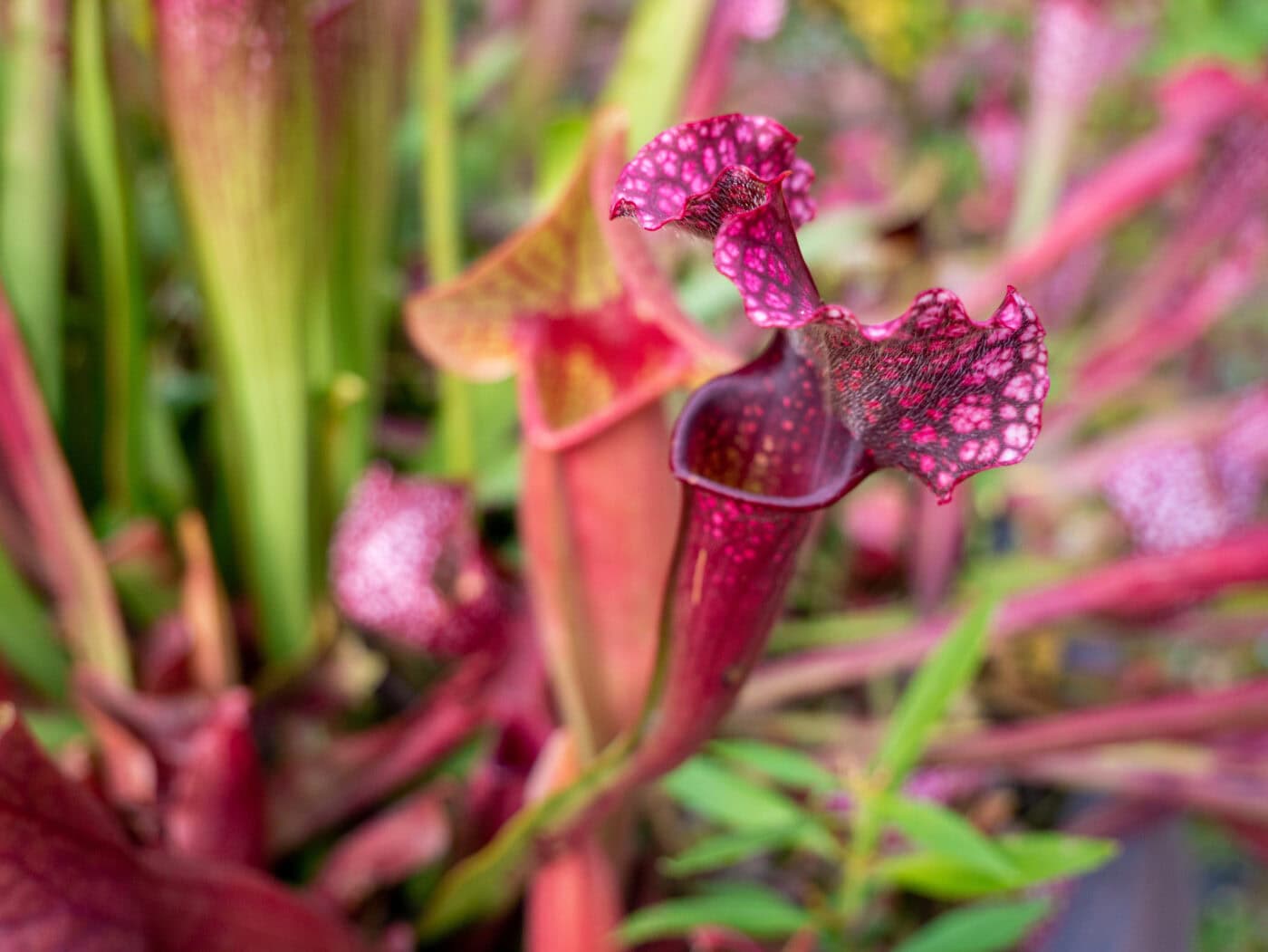


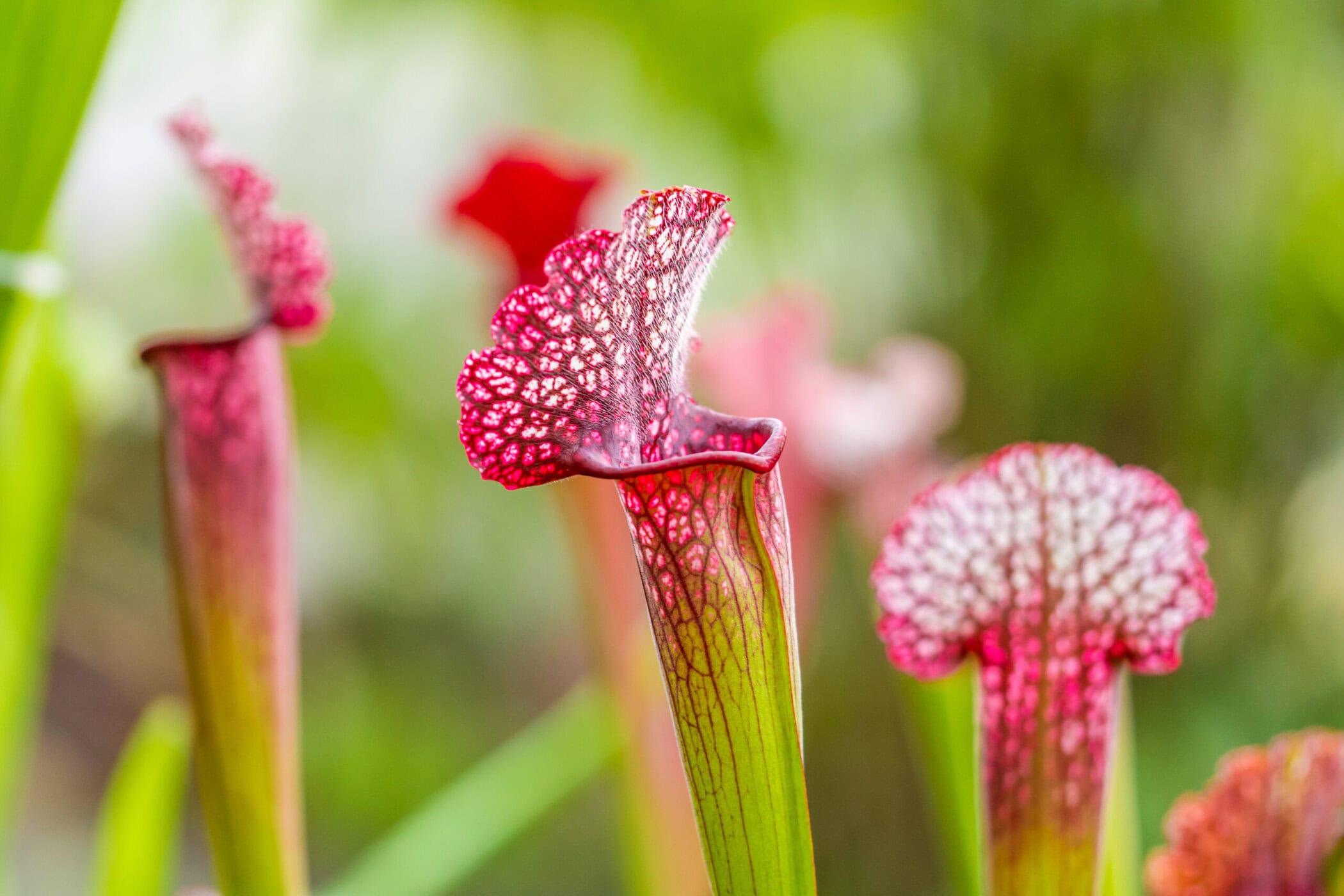
Every hunter knows a proper trap must feel welcoming at first. So the purple pitcher plant offers the very opposite of a knife: cups of sweet juice mixed with cool water. As with any hunter, just because it kills does not mean it doesn’t contribute to its ecosystem.
Eastern North America sees the highest diversity of carnivorous plants in the world. From bogs to fens, where nitrogen is scarce and acid is high, a mess of tan roots anchor the plant in nutrient-poor soil. Sucking into the soil, the roots extend in murky clutches. Purple pitcher plant is the signature of the bog.
To supplement the lack of nutrients, purple pitcher plants consume insects. Sometimes even small rodents, birds, or frogs who find their way into the pool of water and digestive enzymes.
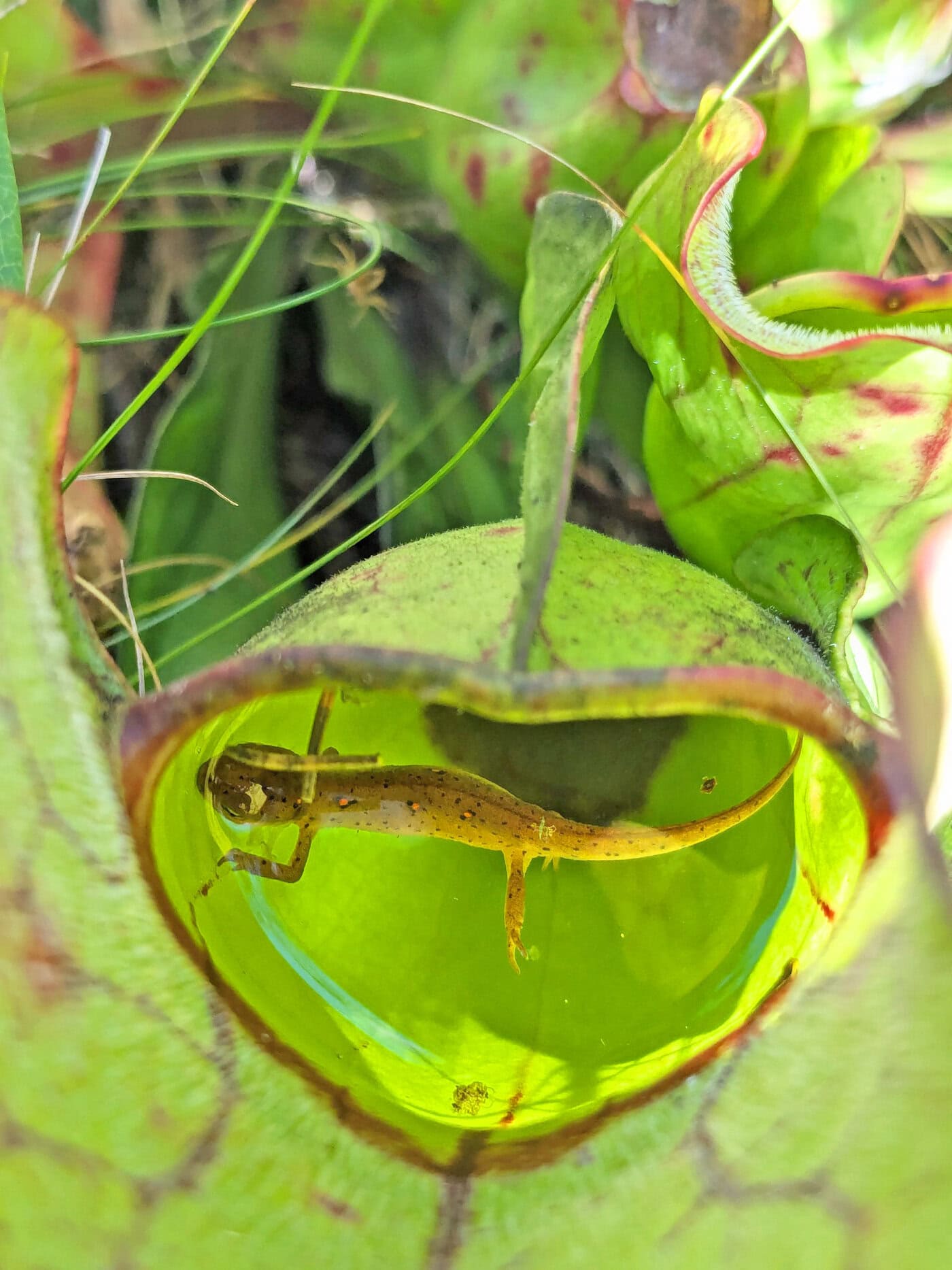
Though not much taller than a foot, the entire plant makes a mansion of itself to these small beings. Narrow bowing flowers rise up on a stem in the center, called a scape, as if intently watching an array of cup-shaped leaves surrounding it. Botanically, these shades of purple often appear in plants looking for carrion flies. Webs of venation look exactly like that: blood-filled veins.
Here come the flies. Hairy filaments carpet the rounded leaves drawing the insect to the plant’s nectar in the basin: the pitcher of the pitcher plant. Thick downward hairs make it difficult for the thread-like feet to grab hold. Once the insect is submerged in the leaf’s cup, those same hairs prevent them from escaping. Nectar intoxicates and anesthetizes the prey.
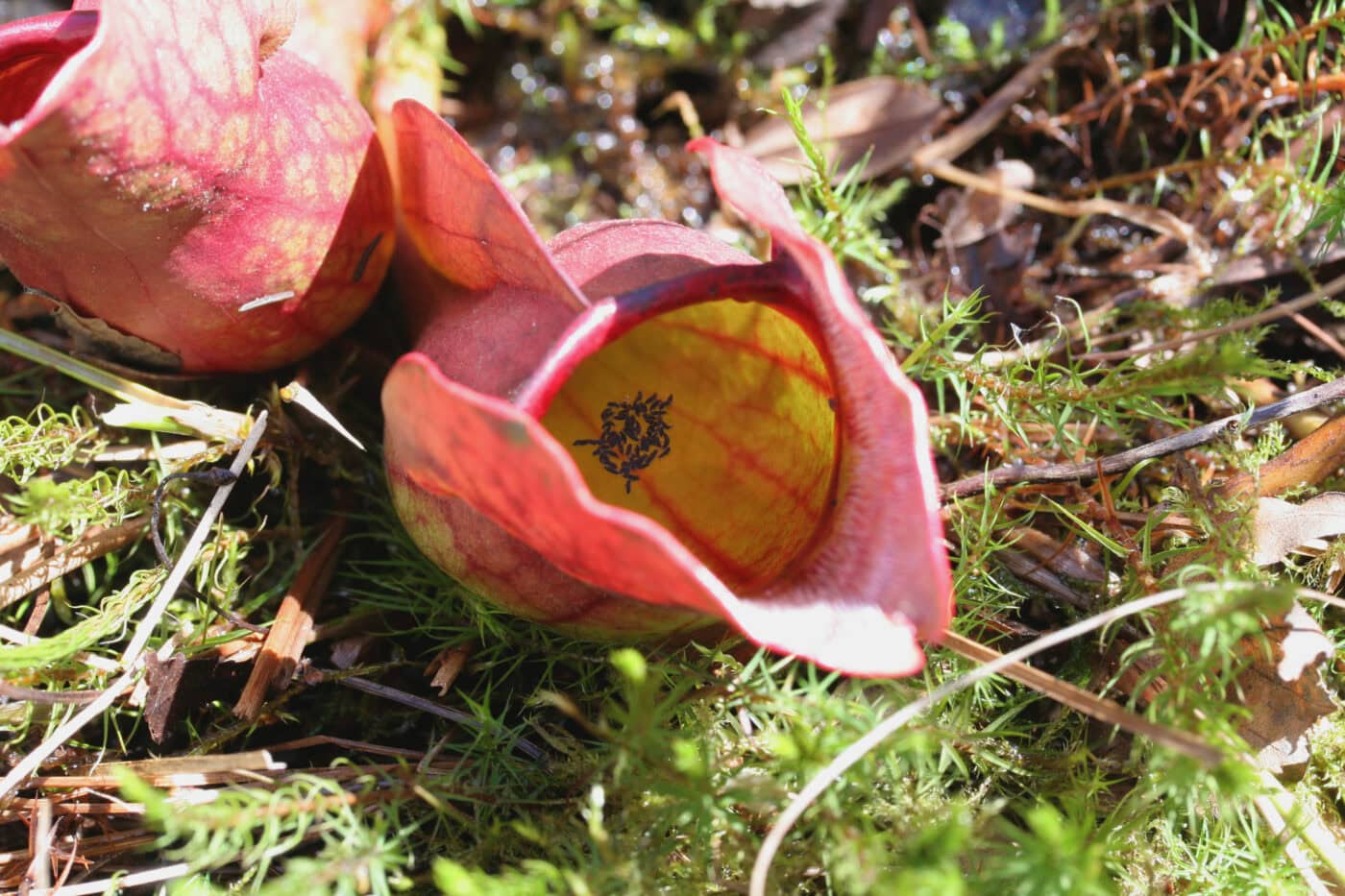
While purple pitcher is distantly related to cranberries, the scarlet flower is unlike any other. The bowed flower head blooms in June as a chamber like an upside-down umbrella. Where the anthers are usually exposed, the purple pitcher plant hides its pollen to protect from self-pollination. The insects crawl into the flower by way of a “v” along the side of the umbrella where the stigma sits. Inside the pollen is dusted on the ground like the Sunday morning after a party. The insect will not be able to leave the same way it came, but from under a hanging petal, with pollen in tow. Once pollinated the flower will turn up. It has no face, just a flat style the shape of a turtle’s belly over the pocked texture of the land.
To an insect, the pitcher plant is less of a serial killer and more of a ride on a lovely summer road — it’s just as dangerous. Anecdotal evidence suggests the pitcher plant will eat about 1% of the insects that fly to it. It doesn’t need much more than that little extra nutrient to survive.
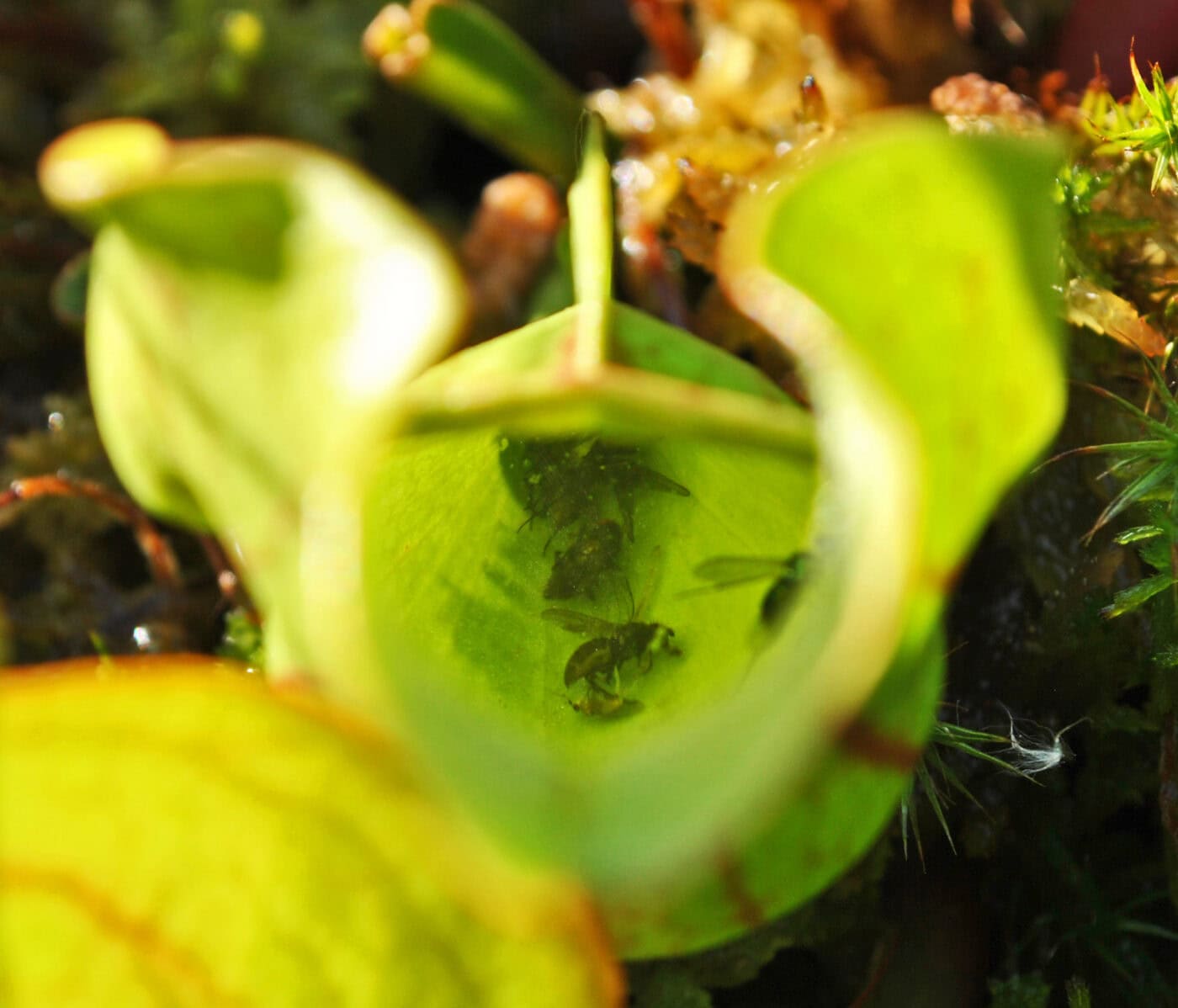
While bogs have a bad rap for being diseased and unclean, wetlands are places of potent medicine. Accordingly, the purple pitcher plant is considered to hold medicinal value throughout the Northeast and Canada as a remedy for fever and diabetes. The bog is alive with mosquitoes and midges, some of them breed in the pitcher’s cup, unconcerned and unaffected by the intoxicating deadly enzymes.
The insects will grow and fly away. And the pitcher plant moths who call it home will emerge from the welcoming home of their breeding pool and pollinate the flower. That may be why it almost looks open-mouthed: to kiss moths.