

Just the way jewels are buried in the deepest corners of the earth, the floral world has a way of evolving stunning plants out of the dankest corners of the forest or swamp. A lotus, treasured in Buddhist ideology, essentially grows from the murkiest layers representing the enlightened spirit, being always connected to the soil from which it was delivered. Jewelweed rises like a crystal from mud: a delicate, nearly translucent structure.
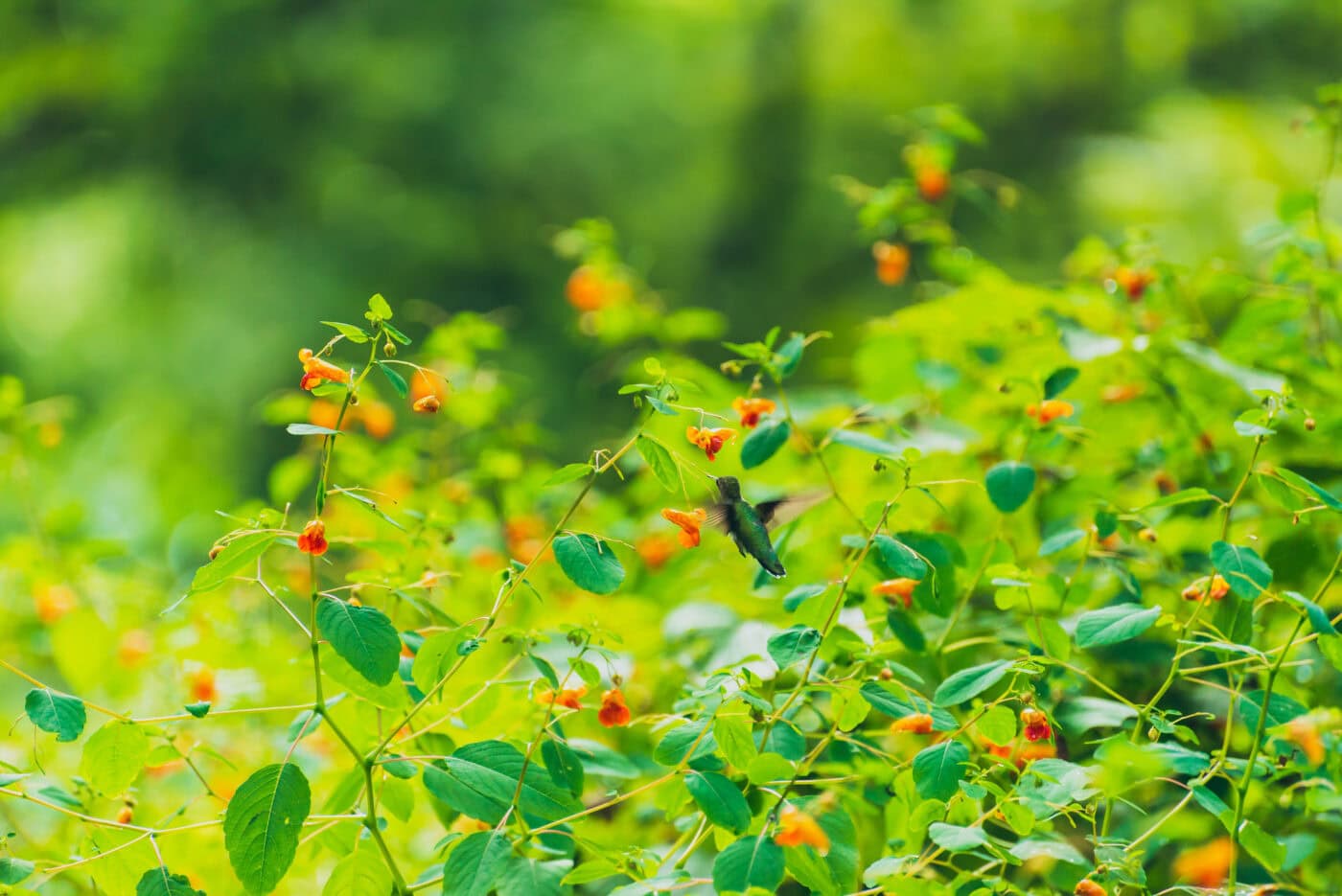
Growing in moist soil and shade, near streams or brooks, or in swampy areas, colonies of jewelweed can stand nearly shoulder height. Though native to anywhere in North America where there is wetland, jewelweed is a tenacious species and has naturalized in Europe and Asia.
There’s a saying that the antidote usually grows next to the poison. While this may be superstition, jewelweed provides comfort for people affected by its neighbors — poison ivy, stinging nettle, and mosquito larva. Within its mucus it has saponins, which act like soap, breaking apart the urushiol, the skin-irritating sap in poison ivy and poison oak.
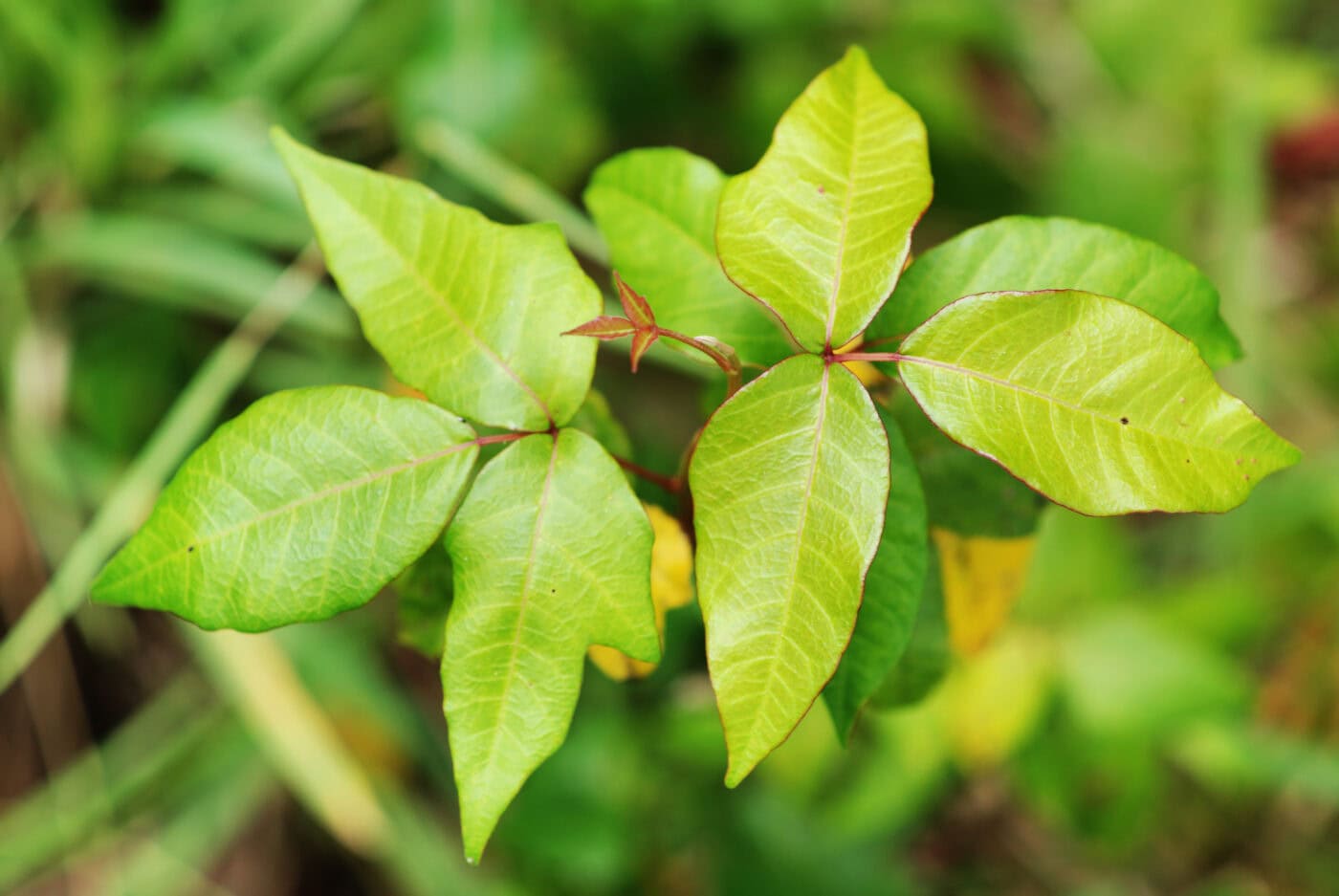
To have the best effect, jewelweed should be applied within a few minutes after interacting with either of its poisonous counterparts. The succulent stem is filled with a mucus containing lawsone, which gives the jewelweed antihistamine and anti-inflammatory properties, that enhance it as a balm for stings or allergic dermatological reactions.
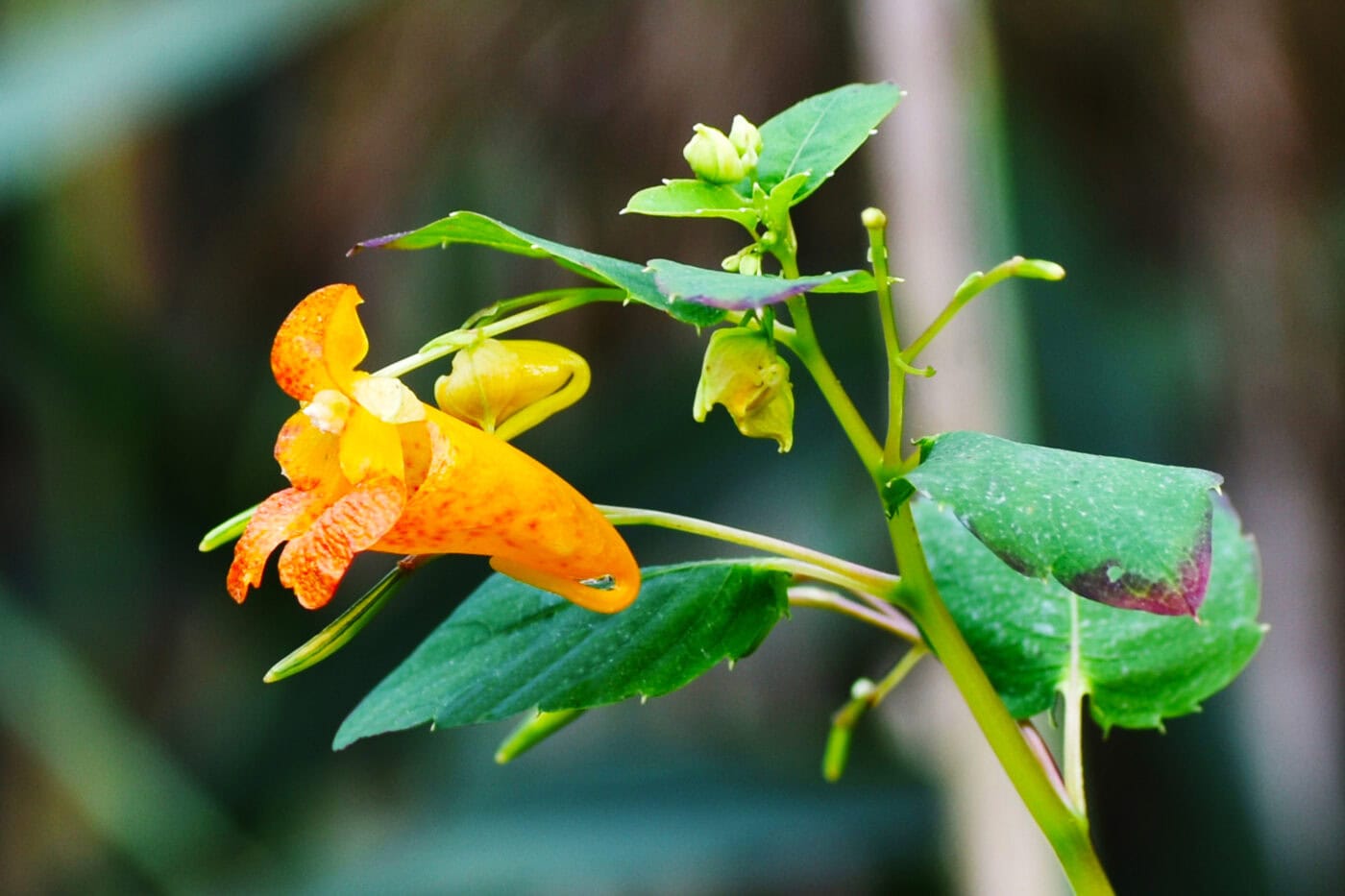
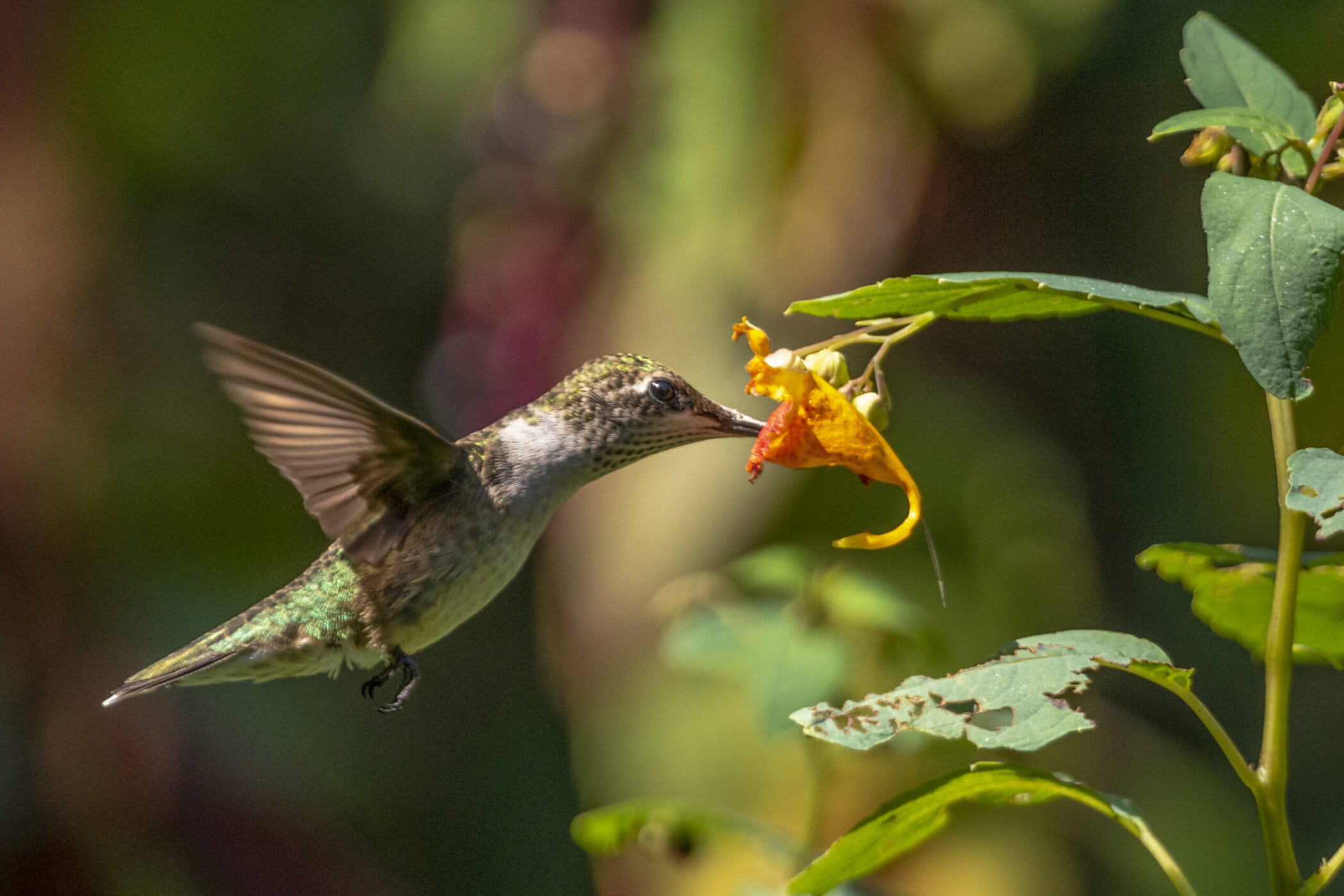
The plant has pouch-like flowers, each merging five fused petals to form a cocoon, the perfect size for a wandering bee. In addition to a spotted interior and an orange body, a tiny curly pig’s tail, called a spur, curls off the back of the flower and is filled with nectar. Hummingbirds, with their long, fine bills, are also big fans. These flowers appear to be doing a backflip. This is called resupinate, which means they open upside down, in the way that orchids do, appearing more like suspended creatures — dangling earrings.
One of jewelweed’s delightful surprises are its late-summer seed pods, which develop high pressure like a coiled spring. When fully ripe, just a light touch or breeze can trigger the five-chambered capsule to curl back instantly, burst open, and fling seeds up to 6 feet away.
The seed pods are not the only way the plant reproduces, though. Once frost settles, it dies back, leaving their seeds to germinate the following year. Since jewelweed is an annual without rooted rhizomes or thousands of seeds, it has adapted to have an insurance policy. An inconspicuous flower develops along the stems, one that is neither orange nor filled with nectar. These flowers will never even open but will self-pollinate and seed. So even if there are no insects or the right seasonal conditions, the plant will reproduce. These structures are cleistogamous, and though they produce seeds that are not as genetically diverse, in a pinch, they’ll keep the jewelweed going.
Walk through them and hear the wet, hollow crack as the fragile stems break. Despite its delicate form and shallow taproots, however, jewelweed can even compete in the right climate with the widely prolific garlic mustard. At the edge of wetlands, jewelweed leaves play with water. When fog settles in the woods, water will adorn the waxy edges of thin, scalloped leaves.
But underneath is the real treasure. Hidden under the leaves is a glaucous layer that resists the water. So submerge jewelweed in liquid and it will glimmer like quicksilver or a wild fish in the current.