


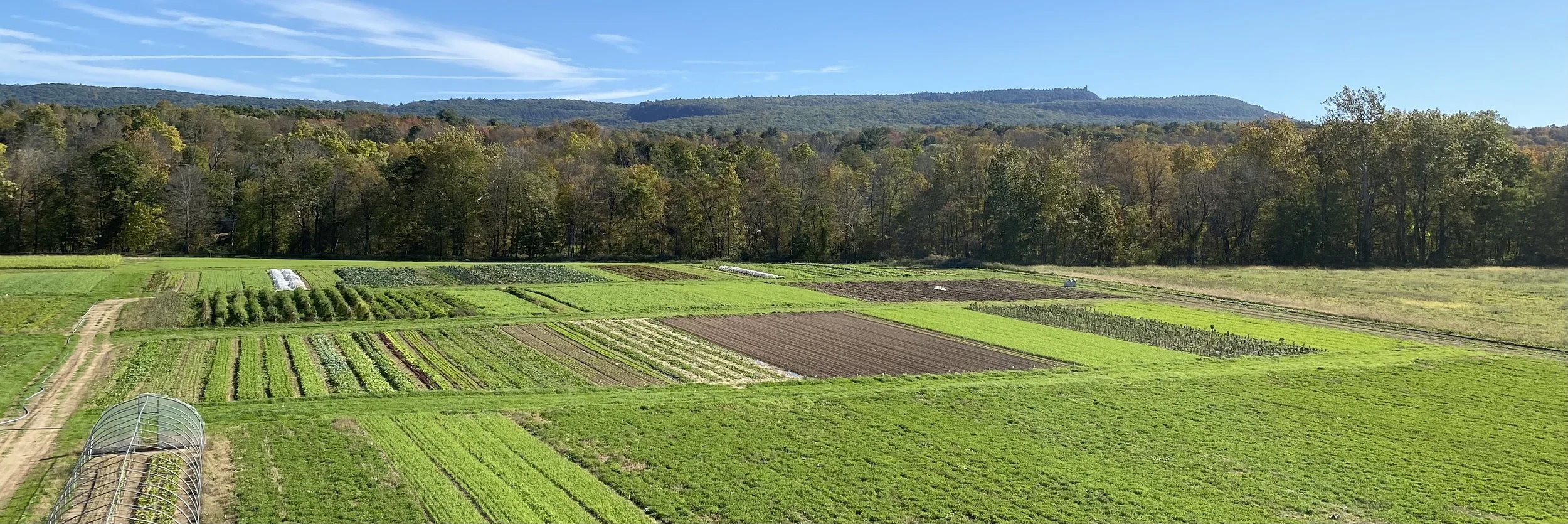
There are a lot of things to love about Tributary Farm, which Scenic Hudson partnered with farmer Jesse Goldfarb to conserve in High Falls, N.Y., in summer 2026.
For one thing, almost the entire 83-acre farm is on prime soil — a farmer’s way of saying that it’s the perfect growing environment for food. And with much of the farm sitting in a floodplain, it’s also land that would be risky for development.
“It’s a perfect example of prioritizing agriculture where it should be,” Goldfarb says.
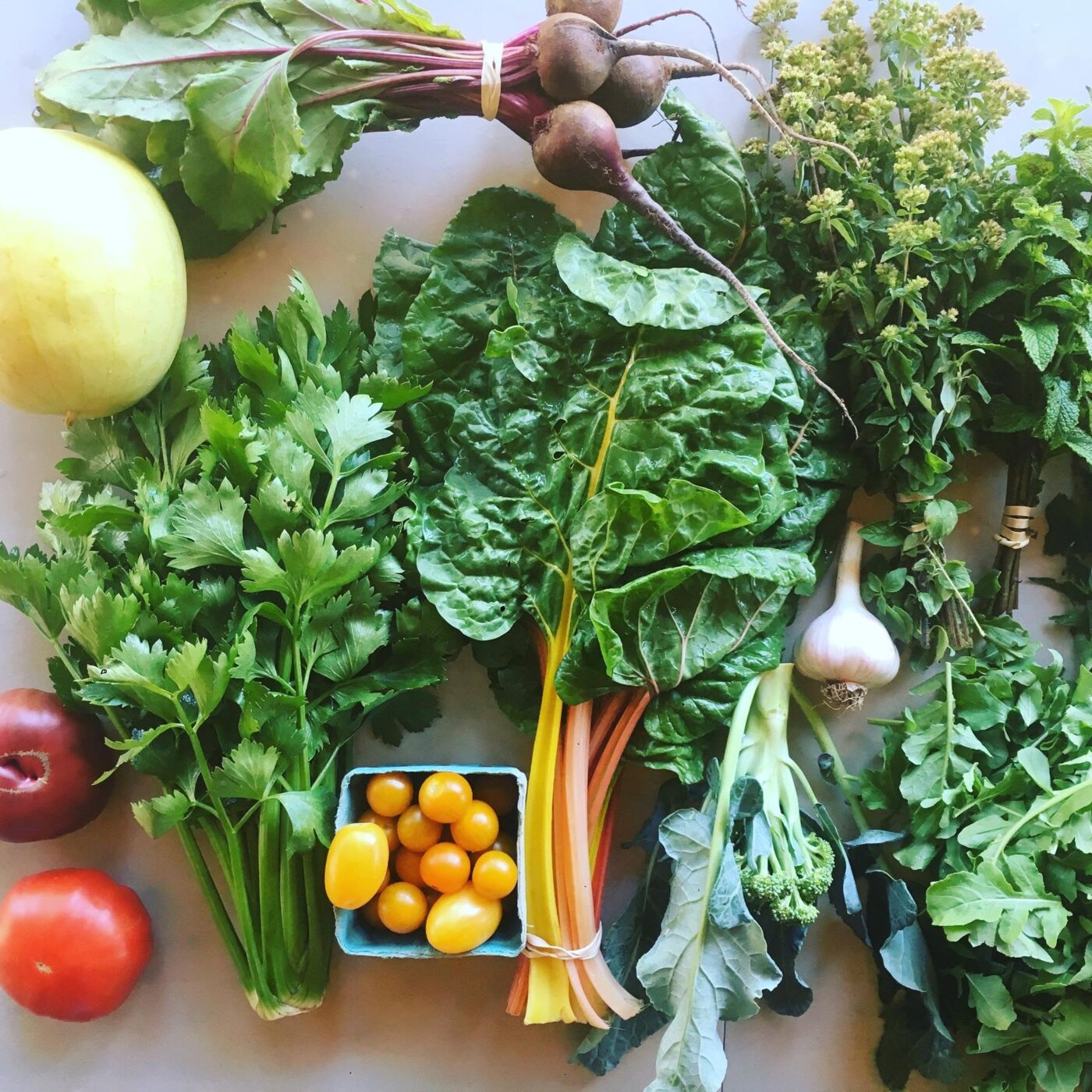
Goldfarb and his team use organic and regenerative practices to grow more than 50 different crops, from vegetables and small fruits to honey. They plant cover crops to continually protect and enrich the soil and naturally crowd out weeds.
With support from Scenic Hudson, they’ll soon be experimenting with installing fencing to keep deer from eating crops, and planting a buffer zone of native trees between the farm and the Rondout Creek. This could not only help protect and sustain the farm, but also reduce flooding in the broader area — a growing concern due to climate change.
“With room to experiment, farmers can adopt new practices and explore other markets and opportunities,” says Scenic Hudson agricultural specialist Annie Christian. “Through our regenerative agriculture program, we work to improve not only soil health and water quality, but also farmers’ bottom lines.”
Then, of course, there’s the Tributary Farm community: What started with the goals of growing great food and taking care of the land has organically grown into a gathering place to “enjoy the beauty and the bounty,” Goldfarb says.
Goldfarb doesn’t tout it, but his farm’s Community Supported Agriculture, or CSA, is designed so that anyone who is interested can take home fresh, local food. When members sign up for their share of the harvest, they pick the price they want to pay — with some members pitching in extra to cover subsidized shares for those who need to pay less. SNAP payment is accepted and anything left over goes to pantries weekly throughout the season.
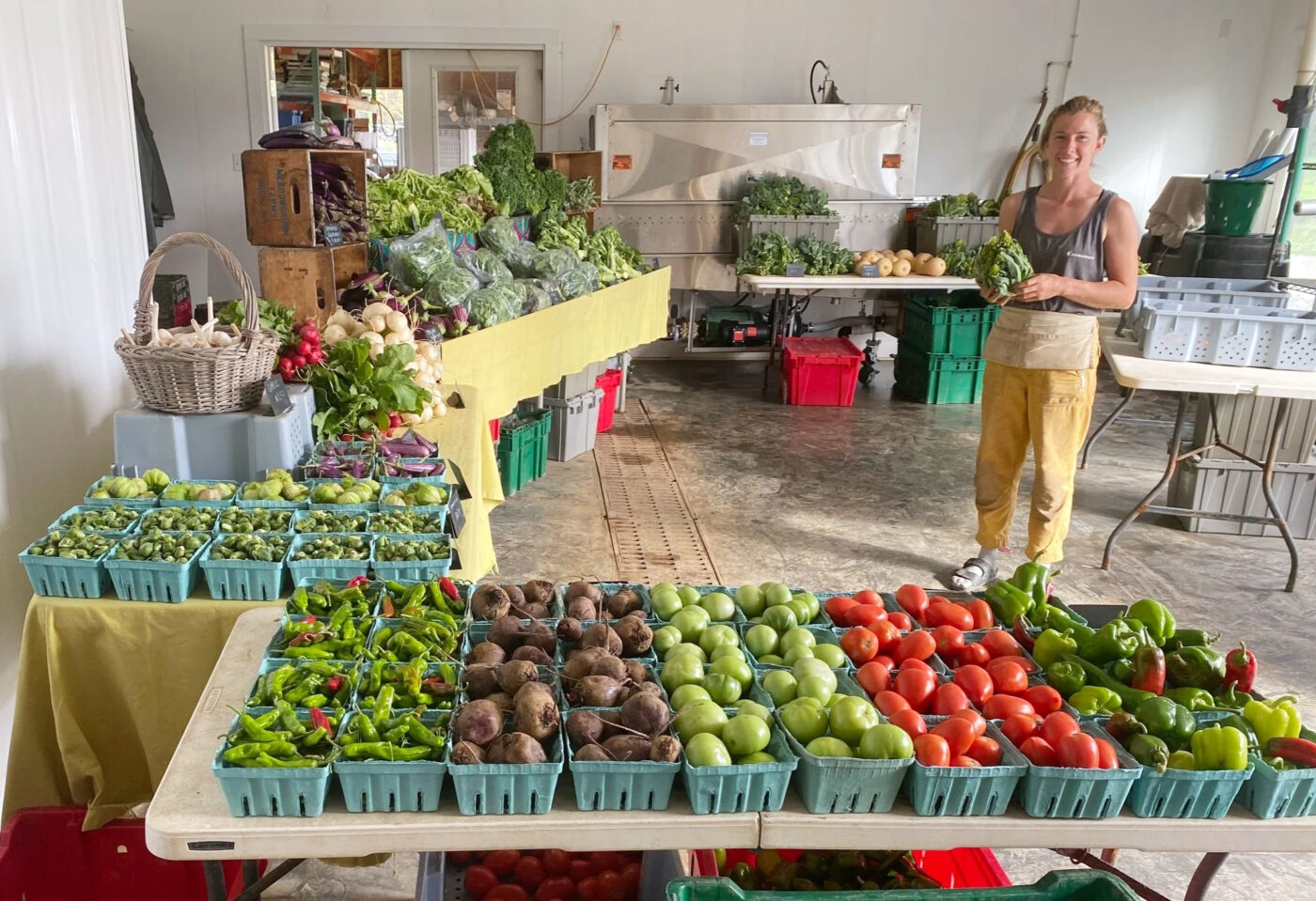
“You don’t want anybody to be turned away due to price,” Goldfarb says.
Now thanks to the partnership between Goldfarb and Scenic Hudson — with critical support expected from the USDA’s Agricultural Conservation Easement Program — this farmland is permanently set aside for agriculture. It’s one of dozens of farms Scenic Hudson has partnered to conserve, helping keep farmland affordable and supply fresh, local food to the Hudson Valley.
“It’s part of what makes our region special. It’s part of what connects us to our ecosystem,” Goldfarb says. “It’s the pairing of the great food and the community together.”