


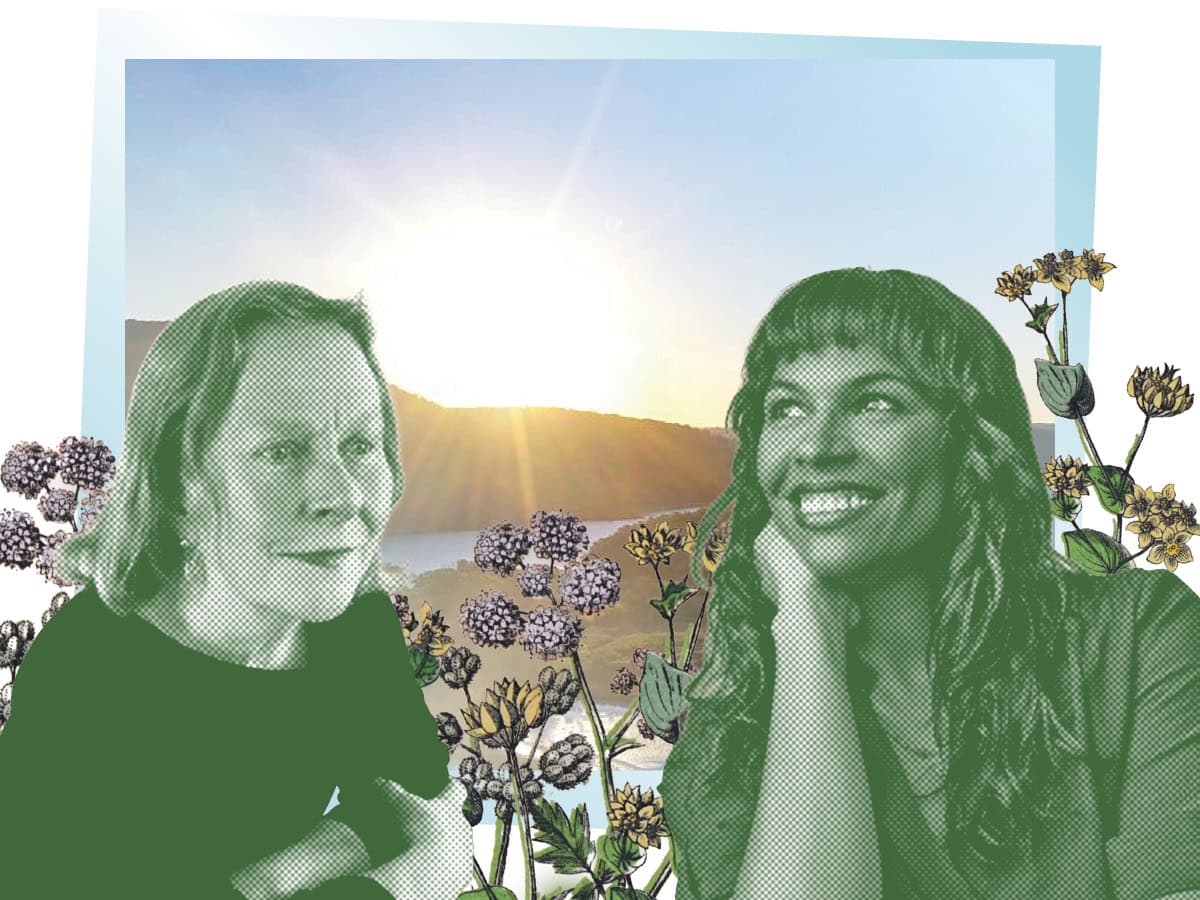
We brought together two environmental luminaries to talk about climate storytelling — what it is, where it’s gone wrong, and (gulp) what the fossil fuel industry got right. Maya Lilly, senior producer of The YEARS Project, and Melissa Everett, executive director of Sustainable Hudson Valley, take a bird’s-eye view before zooming in on the Hudson Valley to discuss the region they call home.
For a deeper dive, join them on Fri., Oct. 2, 2026, at Climate Solutions +: A Summit on Creating Our Future at SUNY Orange, where Maya will be the keynote speaker.
Melissa Everett: We are living through a complex and stressful time, with obvious climate change impacts like the melting glacier crashing in Nepal. You and I have connected around the idea that framing the right story can be empowering. What is your thinking about the role of story and how it works?
Maya Lilly: Stories are important for humans. They’ve been important for humans from time immemorial. That’s because, from a scientific level, the human brain needs meaning. We need to understand why things are happening to us. Why did the tribe get away from the woolly mammoth? Why did Frodo avoid the orcs and survive to throw the one ring into the fire? In stories, we get to see the cause-and-effect connections between things that impact our lives. It’s like we get to peek under the veil of what’s happening in life.
Storytelling is not opining. A lot of people think story is just telling their opinion on something and I kind of blame the YouTube generation for this. It’s not.
My background is as a documentary feature producer, films like Amazon’s first theatrically released feature documentary called Generation Wealth. I’ve also done TV docuseries, like with Dwayne “The Rock” Johnson’s company, and then moved to a staff position at The Years Project, where we are literally storytelling for climate.
A good story is someone confronting a problem and overcoming that problem. Somebody has a goal, there’s a conflict that gets in the way, and they overcome that. Luckily, the climate movement has nonstop conflict and really good villains, which is also helpful for a good story.
Everett: So it’s a little different from reality or providing data. It’s also a little different from political position-taking, right?
Lilly: It is 100% different from both. I would argue that the fossil fuel industry has done storytelling very, very well, and we’ve been losing the climate fight with them for decades and their billions of dollars that they’ve invested in storytelling.
Everett: Tell us about some of those stories. I can think of “they’re coming for your furnace.”
Lilly: “Drill, baby, drill.” “Now we’re cooking with gas.” They’ve used simple, sticky soundbites. They have done identity and values-based appeals so you are connected to this. They’ve made climate a political issue when it wasn’t. They also have these short stories, as opposed to these long explanations that the climate movement has with frames that can feel really alienating to a large swath of the public. They also have been doing a really good job of talking about kitchen-table issues, and we haven’t.
I would add that I think climate scientists have not done us any service. They’re vital in terms of the information, but they have not been good messengers. Most people don’t understand what 1.5 degrees Celsius means and what overshooting that means. They haven’t “story-told” that well. We’ve known that for a long time now and they still haven’t gotten that story right.
Everett: So you’re talking about over-complexity and missing the explanation of key points. What’s missing?
Lilly: Covering Climate Now did a study of 194 news reports about last summer’s heat. ABC, CBS, NBC — not a single one connected the heat to climate. Not a single one.
There’s a really great company that we’re in partnership with called Potential Energy, and we’ve been working with them on connecting the messaging of a disaster with climate change. They did a study of G20 countries to see what messages ring true the most for people that would get them to care more about climate overall. What they found was the frame of “protecting what we love” crossed all divides. It crossed the political spectrum. It crossed generational age divides. It was unanimously the winner of the messaging.
If we can reframe things as, we need to protect this community or this state or this neighborhood for future generations, we need to protect the areas that we love.
Kitchen-table issues also span political divides, like soaring utility bills. Can you share how much your utility bill was, Melissa?
Everett: Mine has been $200 a month because I have solar, heat pumps, and superb insulation. And my house is on the market, and it is a major selling point for my house.
Lilly: Oh, look at you. I’m not even going to share what mine is then. Solar is on my list of next big purchases.
Everett: Solar is driving prices down and nobody understands the way energy prices are set. Is that a strategic area to help people understand?
Lilly: I don’t think people care to understand how energy prices work. I think it’s too technical and wonky for the majority of people. I think it’d be more interesting to simplify it and find a story of a community, for example, that is supplying community solar — how they did it, how it saved lives, how communities are able to afford high grocery bills because of that.
We did a story about that on the indigenous island of Molokai in Hawaii. Basically, they fought their monopoly utility for solar that was community-owned and run so that the Native Hawaiians could have control over what they’re doing with their very high utilities — some of the highest in the nation.
Everett: I can see how you’re setting up the conflict and then the victory.
Lilly: That’s what I mean by good storytelling. We want to follow someone that’s having a problem and how they overcome that because then we can see that in our own lives. In the climate space, we’re making things too complex for people.
Everett: I know you’re on the road a lot, but I also know you’re active in your local Conservation Advisory Council in Shandakan. What do you see as the state of play of the climate and energy narrative in rural New York State?
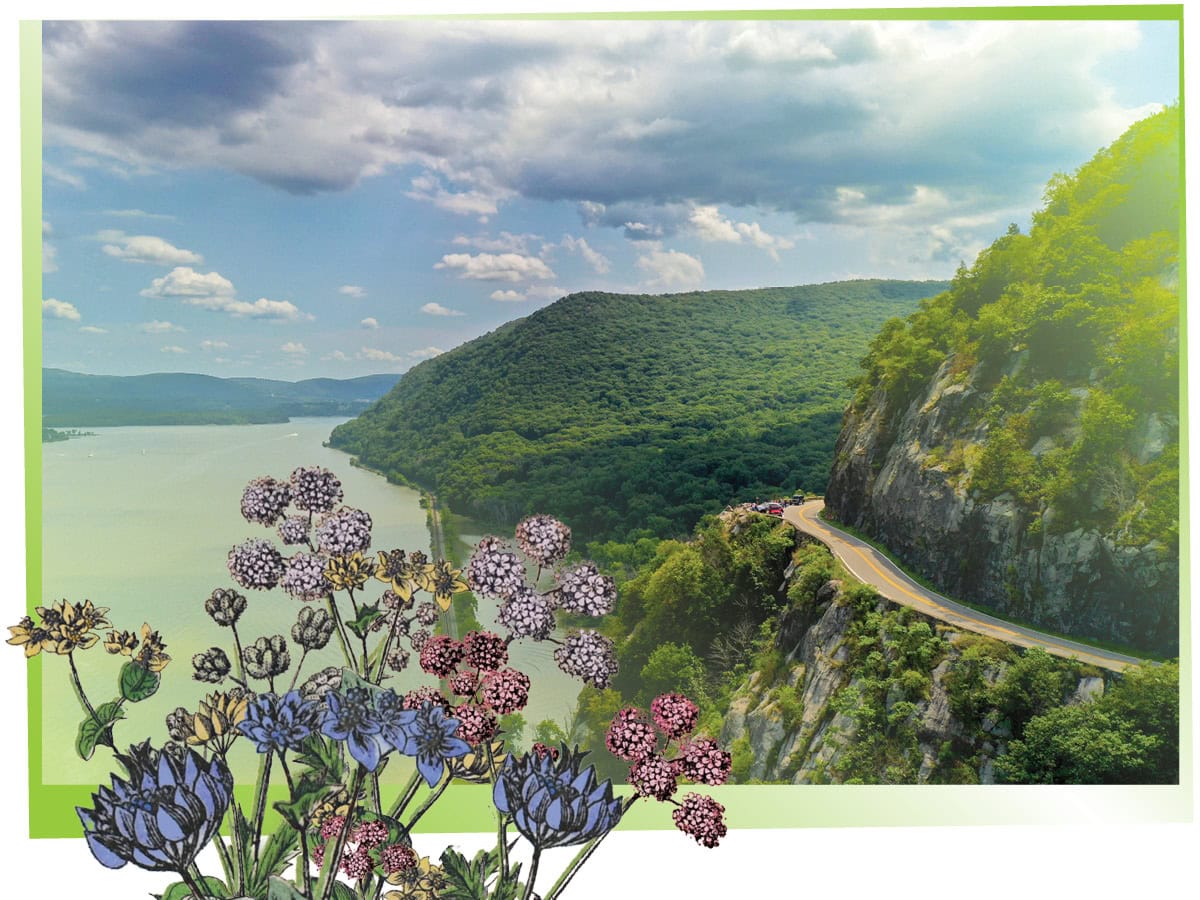
Lilly: I haven’t been here that long, so give me a little grace — but something I saw right away is, it seems like people move up here a lot from New York City for a better way of life. Also, everybody I know is talking about upstate as their backup plan if New York goes underwater. I’ve had no less than five people tell me, “Maya, you know you’re my backup plan.” To connect that to protecting what we love, I would love to position Hudson Valley as the place where we could be safer in a changing climate. Granted, the Hudson is going to rise with sea level rise, and we’re going to have to change that train line right on the water.
Another idea that I think is just really salient right now, especially with federal grants being taken away from climate groups, is talking about extreme weather and response to extreme weather as opposed to climate change.
Everett: I have become a profound fan of a guy named Scott James. He’s on Bainbridge Island, Washington, and he’s been part of a group that’s been doing emergency preparedness from the perspective of love and compassion and creativity rather than fear. I think we have to be inventive about how to make it sobering, but not so scary that people crawl under the bed.
Lilly: You need both hope and doom. People are not interested if everything goes well and everybody’s getting along because that’s just not how our brains work.
Everett: There’s one other piece about the upstate New York climate narrative that’s been on my mind a lot — the Earth Mother persona that is going to fight those solar developers to the teeth because they’re going to take our land. Whether it’s solar or battery storage, there are people who would call themselves environmentalists who don’t want the technology because they fear some sort of short-term impact. But they’re not thinking about the climate impact that we’re trying to protect the place we love from.
Lilly: Like not wanting solar panels on their land because they want the land to be untouched.
Everett: And fighting the Office of Renewable Energy Siting.
Lilly: I think what you’ve identified is a really good specific story — and figuring out who the audience is, what are their values, and then how do you storytell it within their values.
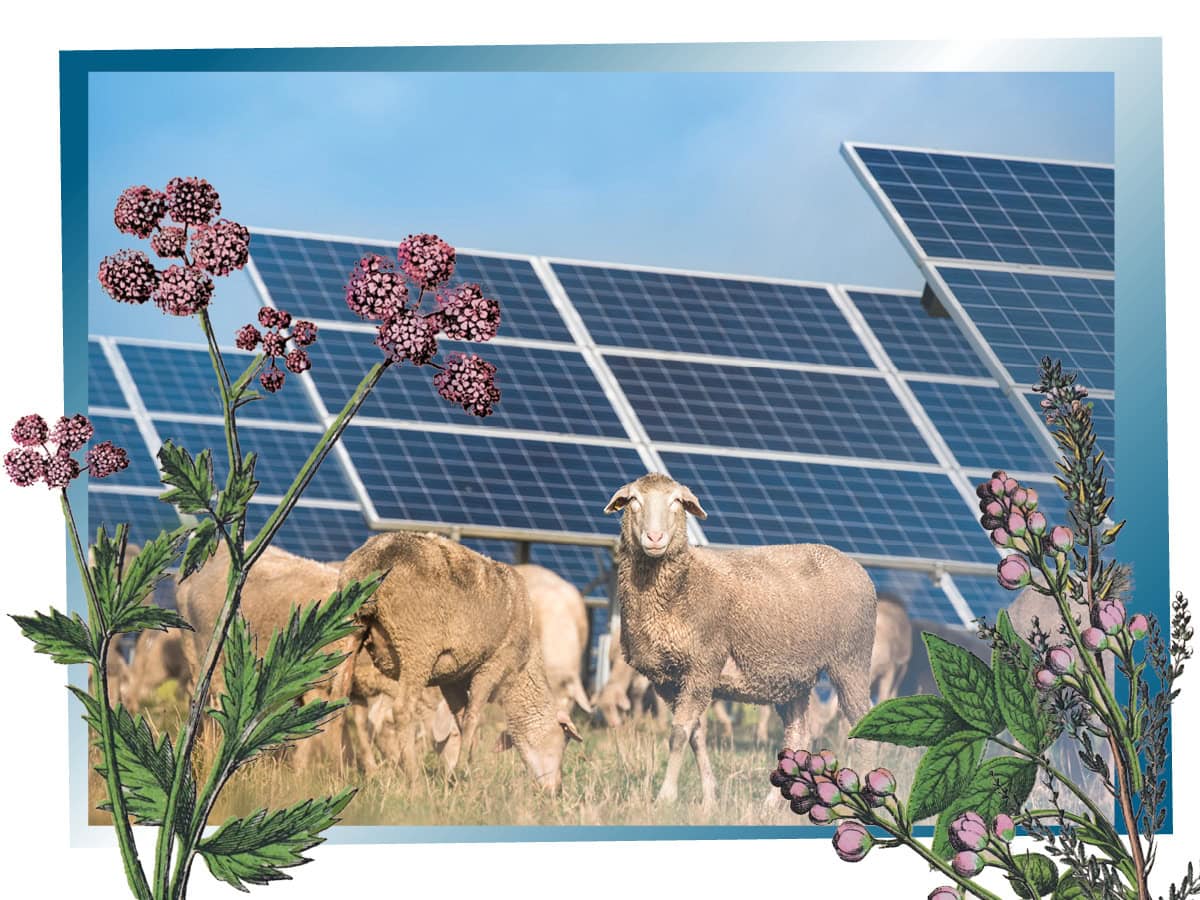
Everett: There’s a wonderful LinkedIn influencer doing that, Rebekah Pierce. She is a farmer in the northern Adirondacks and a writer and part of her farming work is grazing sheep on solar fields. It’s one of the revenue streams for her farm. She does these beautiful, detailed narrative posts about making a living as a farmer and farmers knowing their land best.
Lilly: I think it’s important to emphasize that climate is an everything, everywhere, all-at-once situation. Climate is such a big scenario that individual changes can’t really impact it. I think that’s why people get frustrated — like, for years I was told about my individual carbon footprint and I had to change my car, my light bulbs, and X, Y, and Z. That idea was created by British Petroleum. When I was in college, they came up with the idea because they wanted people to focus on their individual actions instead of the huge footprint of the fossil fuel industry.
I think some of the stories can be: How do we change the bigger systemic levers that are making more of an impact than just a single mom with two kids? How do we use the biggest levers to change systems? How do we divest from fossil fuels with our banks?
Everett: We’ve been attracted to the lever of medium-scale change that is big enough to matter but small enough that groups can implement. How can we get the land use and utility grid planning systems to talk to each other so that there are more places where people will mine solar, where the grid can absorb it? That’s one kind of system barrier.
New Paltz and Hyde Park both have closed landfills that would be ideal for solar. They’ve tried to put solar on but the interconnection fees are exorbitant. Changing those practices at the level of a utility and a group of communities is my fave one right now.
Lilly: If I were filming that, for visual storytelling, I would look for the conflict.
Everett: I could line up the volunteers who spent three years getting the solar proposal in New Paltz for the landfill, only to learn that it was going to cost $1.7 million to interconnect it.
Lilly: That’s a great story because it’s a rising arc. You’ve already got all of the movement of the story built in and the action. You don’t have a happy ending.
Everett: So far. We’re working on it.
Lilly: There’s this quote by the climate scientist Michael Mann that I love. He says there is no threshold beyond which we should stop trying. There’s no point at which we could just throw up our hands and say, “Well, that’s it. We lost the planet. We lost all species. We lost the human race.” Because every tenth-of-a degree change affects the extent of climate disruptions, so the sooner we accelerate our efforts, the better.
Why I like this is, I think it incorporates both hope and doom. It’s like a thrutopia as opposed to creating a utopia. It also relates back to the idea of protecting what you love. What I love about that framing is “protecting” is a verb and it could be fierce, like a mother bear protecting her babies. It could mean, this is going to be the fight of our lives — which is good storytelling.
This interview has been edited for length and clarity.
Melissa Attias is media relations coordinator and staff copywriter for Scenic Hudson. A former D.C. journalist, she knows her way around a deadline and appreciates a good story. Off-duty, find her on a Hudson Valley trail with her two mini-explorers searching for sparkling rocks and tiny pine cones.
Images: (1) Headshots courtesy Melissa Everett / Yellowbelly, Landscape photo: Tyler Blodgett; (2) Tyler Blodgett; (3) iStockphoto