


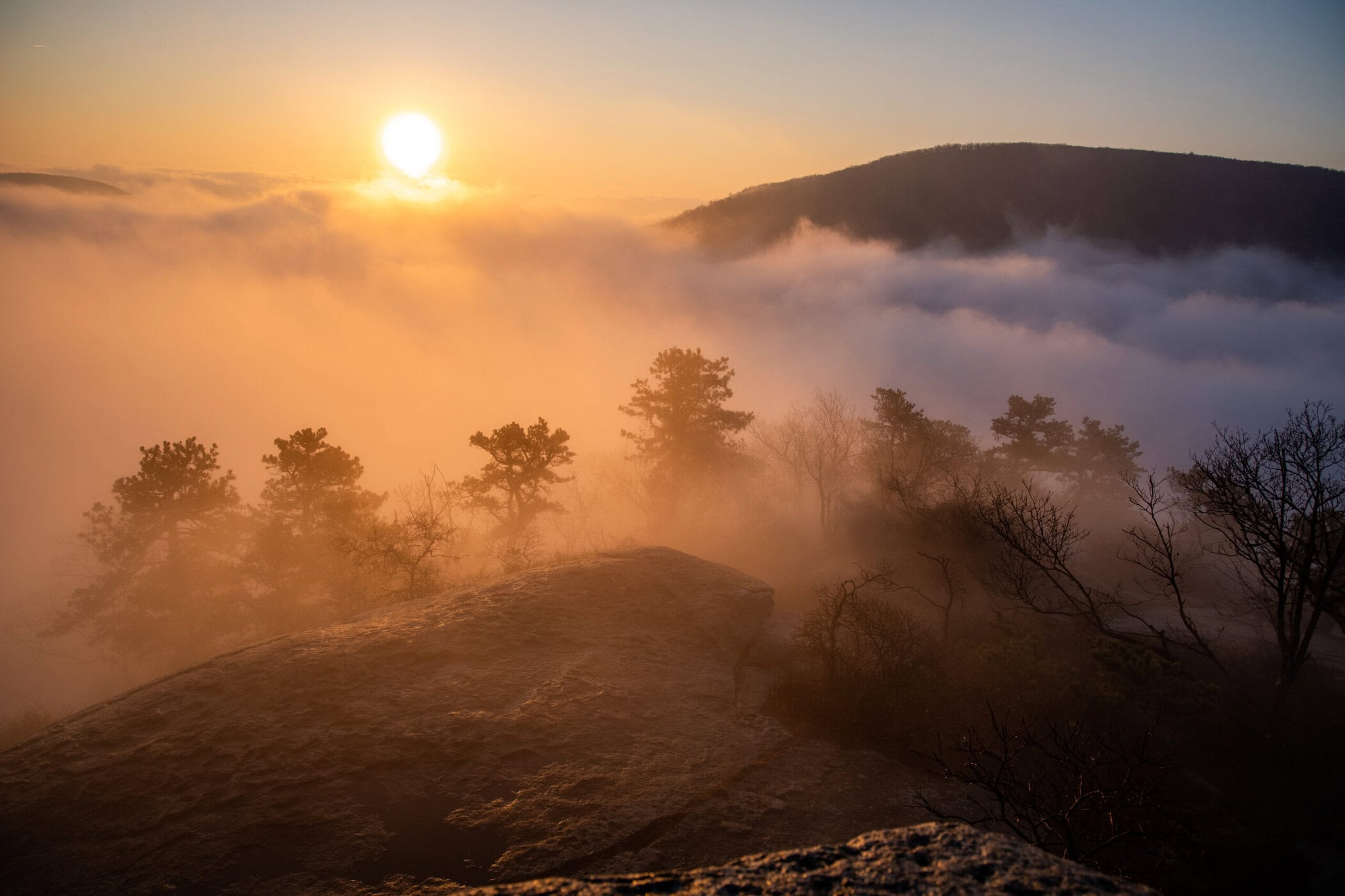
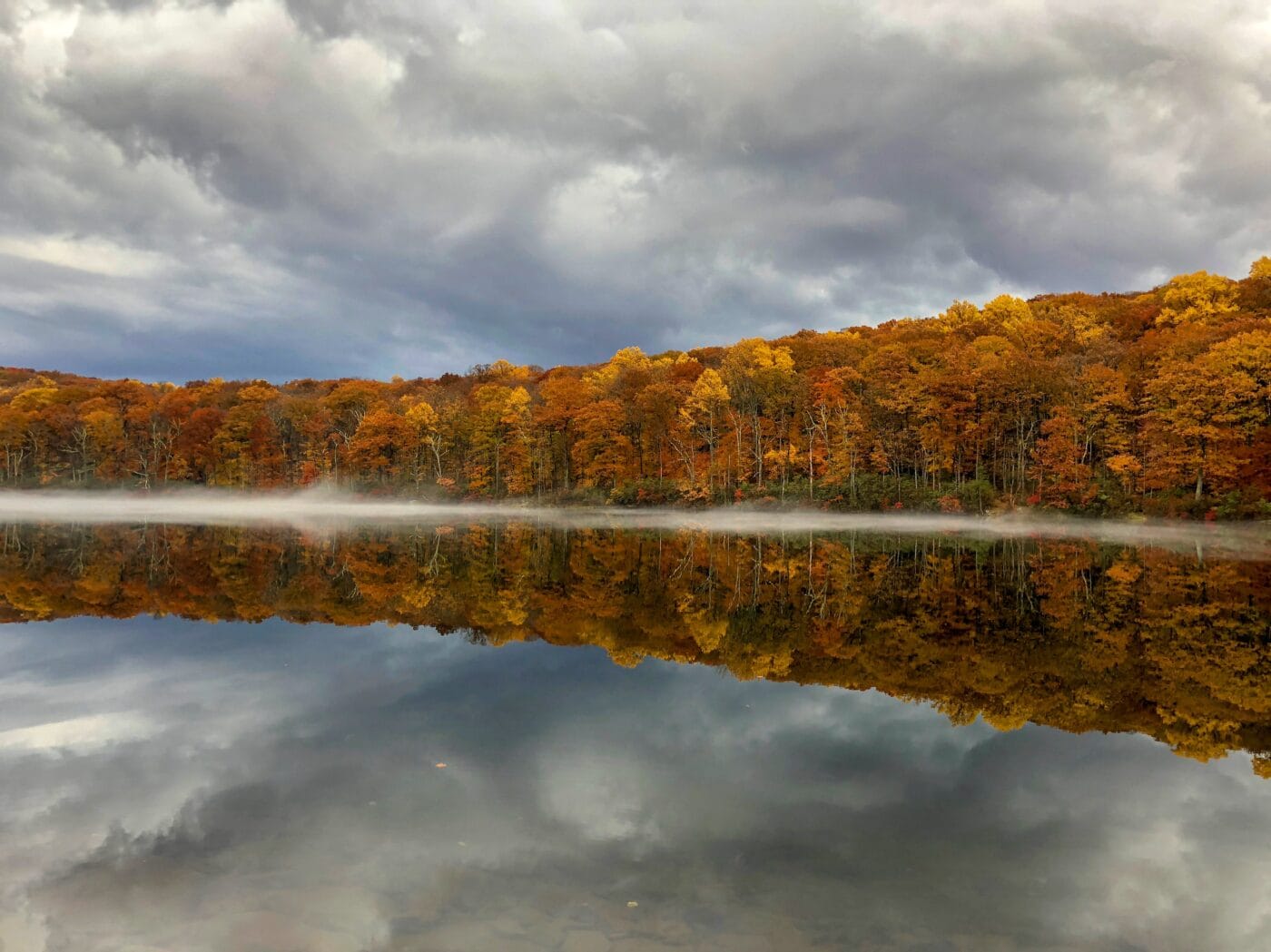
During the night, blankets of fog occasionally get pulled over the Hudson Valley only to vanish with the sunrise.
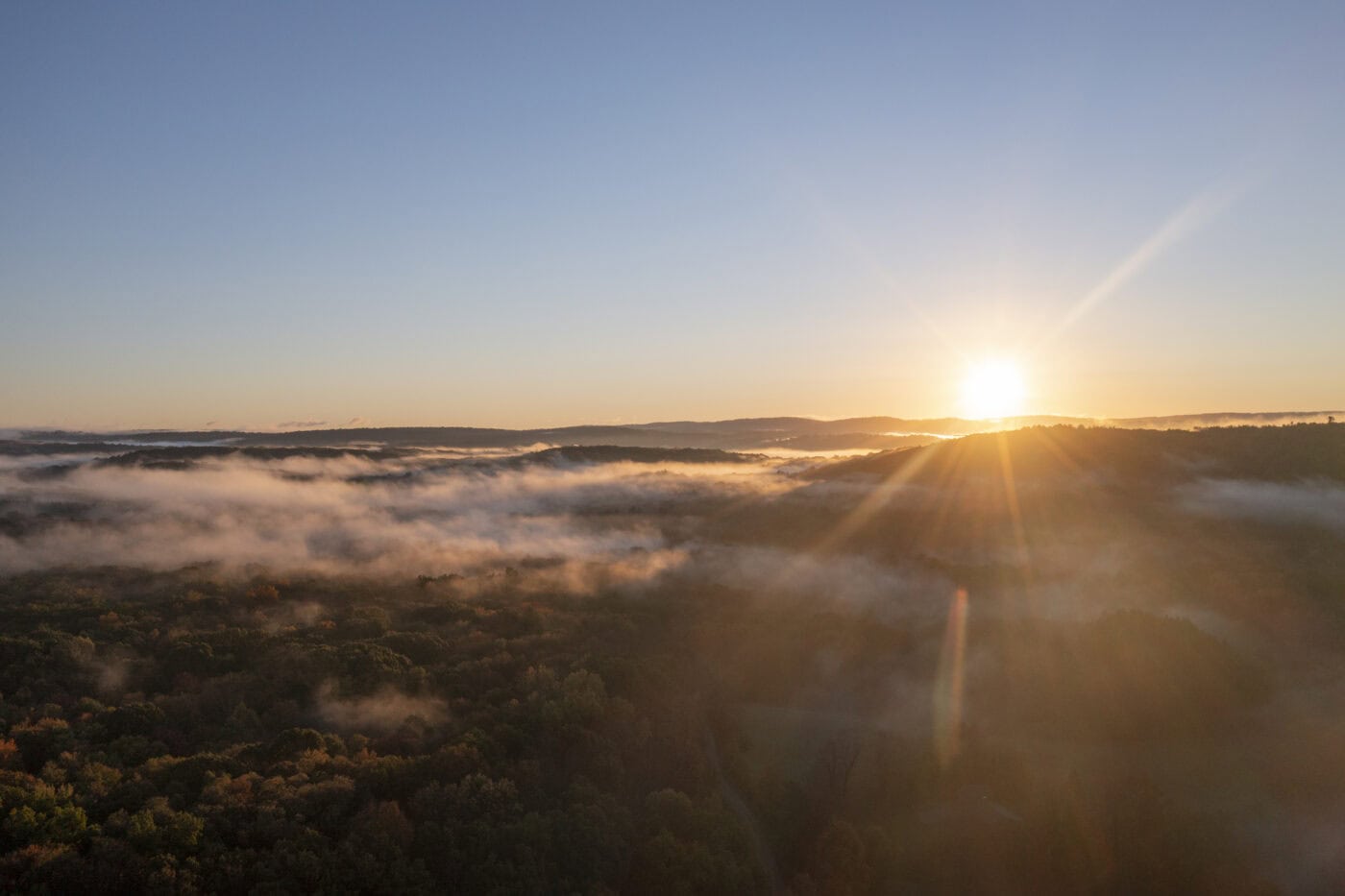
It can be otherwise difficult to predict exactly when or where fog will appear. But we do know that fog formation is more frequent with the change of seasons. “Valley fogs occur often overnight, especially in spring and fall with temperature changes in land, water, and air, and enough moisture in the atmosphere to condense,” says Kathleen Weathers, a distinguished senior scientist at the Cary Institute of Ecosystem Studies.
Having studied fog’s mysteries since the 1980s, Weathers remains particularly interested in how it interacts with the surrounding environment. She has discovered that fog is much more than just a cloud of moisture. It is a medium that connects the atmosphere to land and water ecosystems, all of which influence the chemistry of each floating droplet. Plant nutrients like nitrogen and phosphorus are present in fog’s moisture, and at significant levels. “The chemistry in those droplets is more concentrated than the chemistry of rain,” she says. But unfortunately, the same goes for pollutants from the atmosphere, which Weathers is also tracking in her studies.
In many forest ecosystems that fog envelops, the canopy captures that moisture, and everything with it, then channels it to the plants and soil below via fog drip. Scientists call this process occult precipitation. Weathers says this is most likely to occur locally in the higher elevation forests, where fog usually comes in the form of a low-hanging cloud that is heavy with moisture. “I’ve been able to show in mountains around the world, including the Shawangunks and Catskills, that it can deliver a fair load of nutrients and pollutants, even if they only bring a little bit of water over the year,” she says.
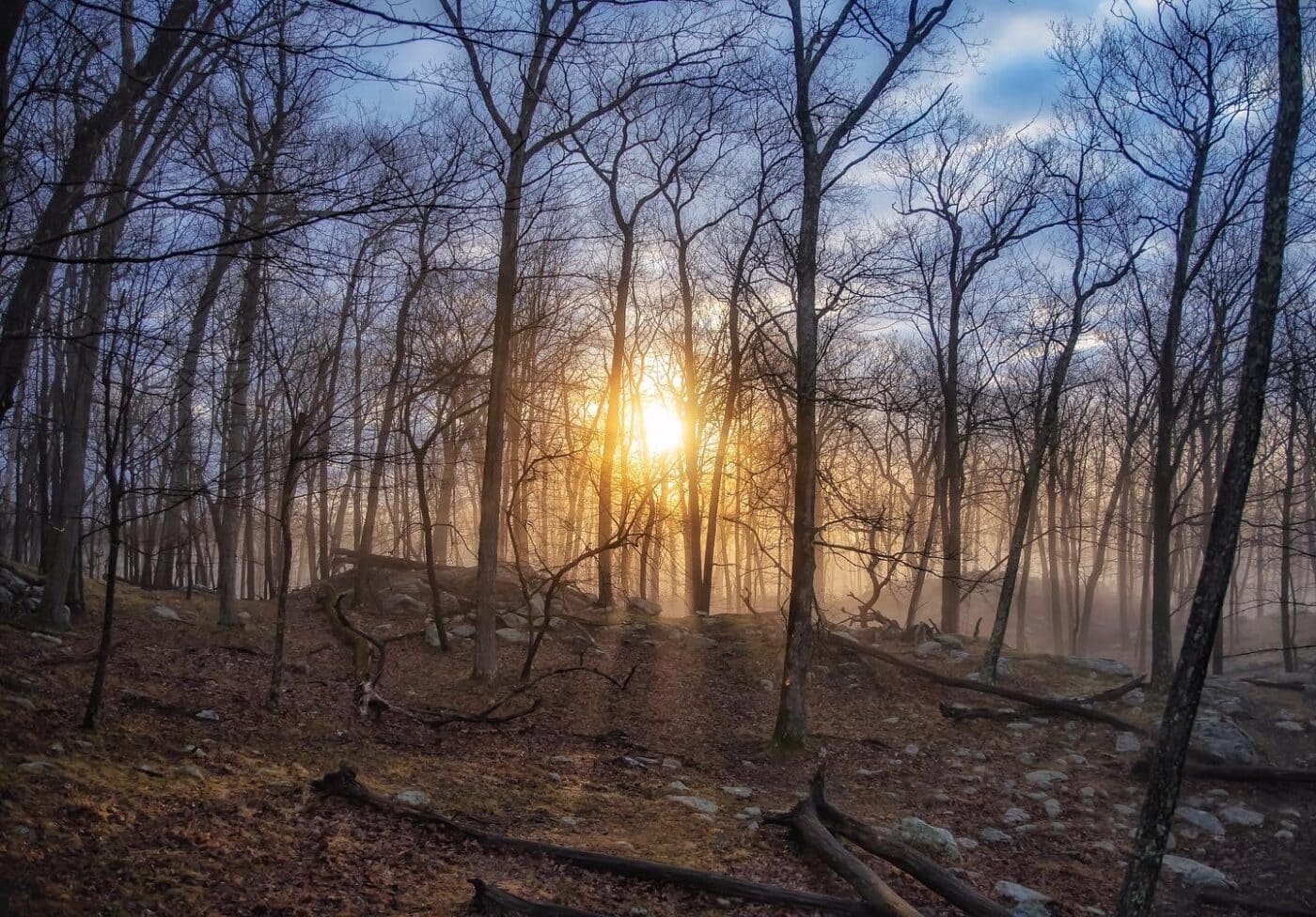
But in the lower elevation ecosystems of the Hudson Valley, Weathers says, fog probably has less of an impact. This is partly because there are different types of fog with variable “wetness,” and the type of radiation fog that tends to form in lowland valleys usually has less water in its droplets. “Not all droplets are the same, either chemically, biologically, or hydrologically, therefore their impact is different,” she explains. “Probably the biggest effect for dry(er) fogs has to do with what it does or does not do in terms of sunlight reaching the ecosystem,” she adds, noting that fog also can play an ecological role in blocking sunlight, or even slowing down evaporation.
Given the delicate way that fog formation depends on temperature contrasts between land and water, it might not be surprising that its presence and ecological role can be affected by climate change. A decline in fog has been reported on the coast of California and other locations, for example. But Weathers says that in the Hudson Valley and most other places, the effect of climate change on fog is still an open question because we don’t have much historical data to go on. “We don’t have that many records of fog,” she says, “so it’s really hard to know whether things have changed or not, or whether there’s a reduction, or even an increase in fog frequency.”
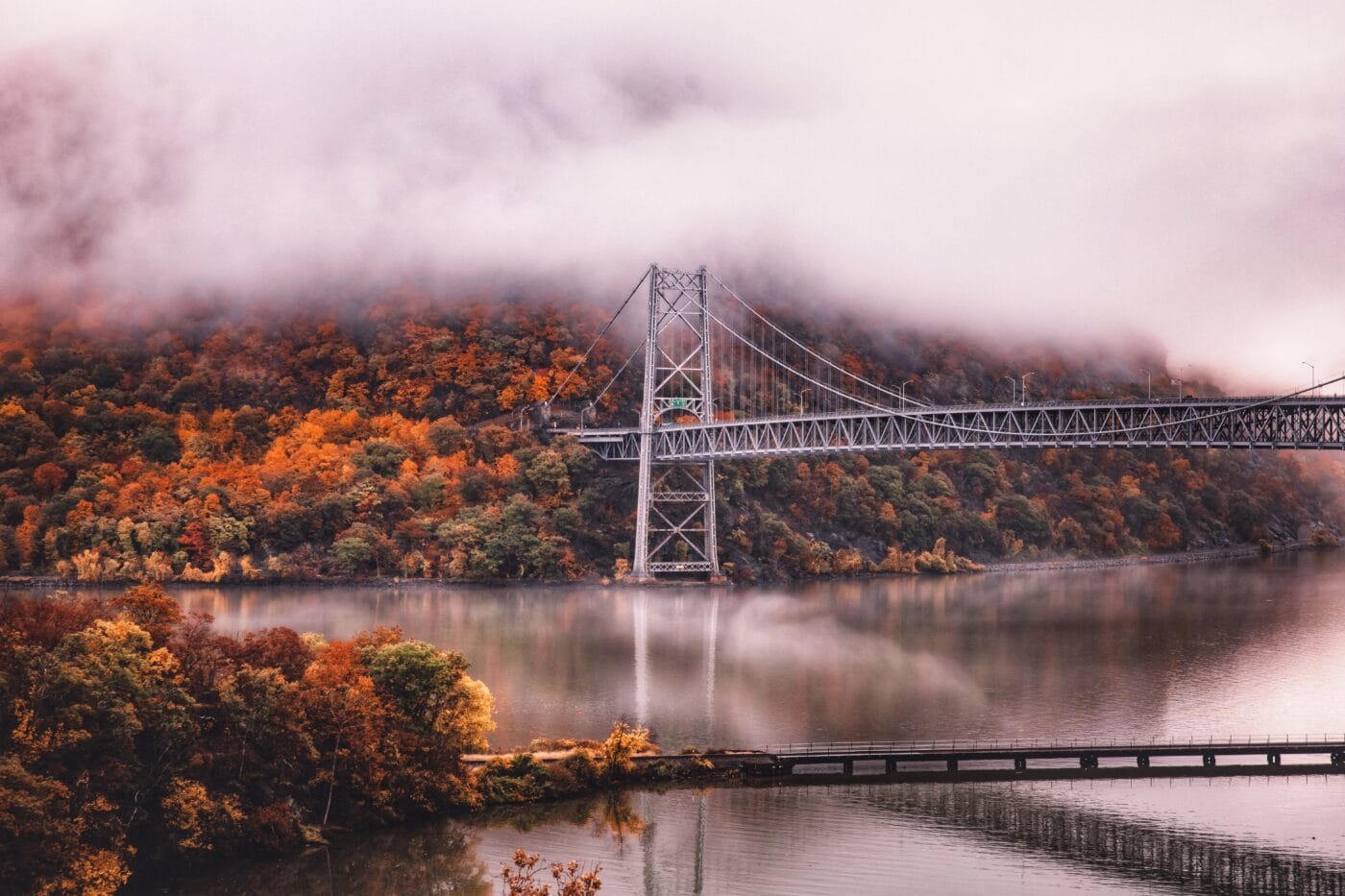
As we continue learning more about the different roles that fog plays in our ecosystems, we are also learning that fog is actually an ecosystem unto itself.
Much like a snowflake, each tiny droplet of water within a foggy mist is the result of water vapor condensing around an even tinier particle in the atmosphere. And that particle could be a bacterium, fungal spore, or a virus. It could also be an aerosol spewed from crashing waves or a piece of dust on which a microbe is hitching a ride as it gets swept up in the air from the surrounding environment.
Eli Dueker, an environmental microbiologist and associate professor at Bard College, is very interested in finding out what those specific microbes are. Working with Weathers and others, he has spent time on the coast of Maine collecting fog samples to see what kind of life is floating around with it. “The kinds of organisms that we’re seeing, they are hugely diverse,” Dueker says. “They span all the types of bacteria that we’ve seen in water in the past and the types of bacteria and other microorganisms that we’ve seen in the soil.”
The moisture and nutrients that fog provides helps keep these microbes alive while being suspended in the mist. And sometimes, they even thrive. “The atmosphere is not just helping bacteria move from one place to another, it’s also a place where they can also metabolize and make a living while they are doing that,” Dueker says.
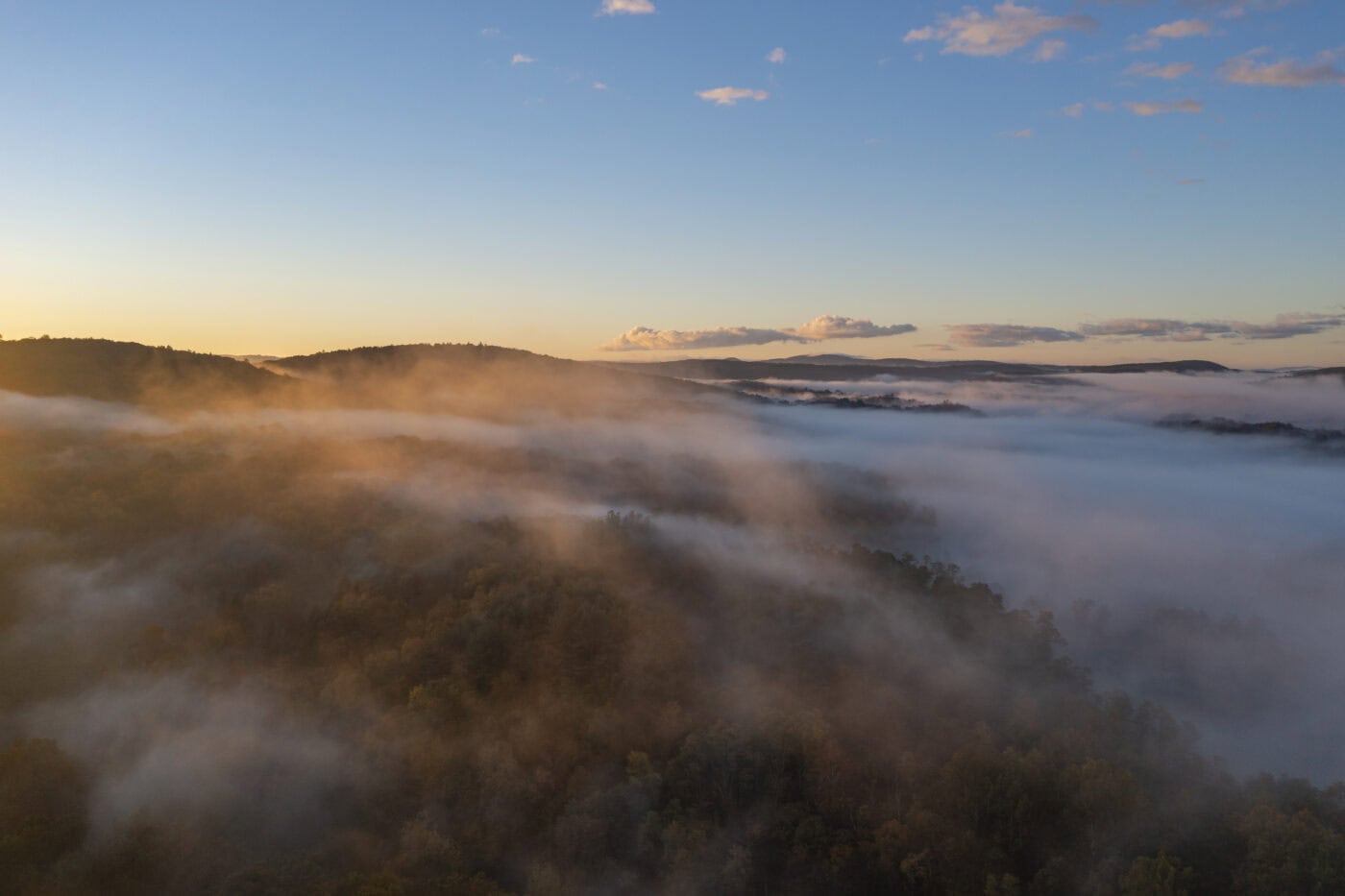
And so, as fog drifts slowly over water and onto land, or through our wetlands or forests, it is also serving as a passageway for these microbes along with the nutrients and pollutants that Weathers has been tracking.
These kinds of findings about fog reinforce that everything in our environment is connected, Dueker says. “The question of what’s in our fog is absolutely a question of what’s in our water, what’s in our air, what’s in our land,” he explains, hoping that this understanding encourages us to be more be careful about what we put in our waterways — especially untreated sewage that might harbor human pathogens. “The water actually then contributes to the air, which then goes right back to the terrestrial system,” he says. “And so it’s a full circle.”