

Before roses signified love with their satin petals, the ancient Greek poet Sappho described the feeling as a taste: “Eros…whirls me / sweetbitter…” These words gestured to the dance of pain alongside longing. While roses aren’t generally food (save for rose hips), one member of the rose family provides the same tannic taste in a small fruit that is sweet, yet so sour it would nearly hurt to have more than one: chokecherry.
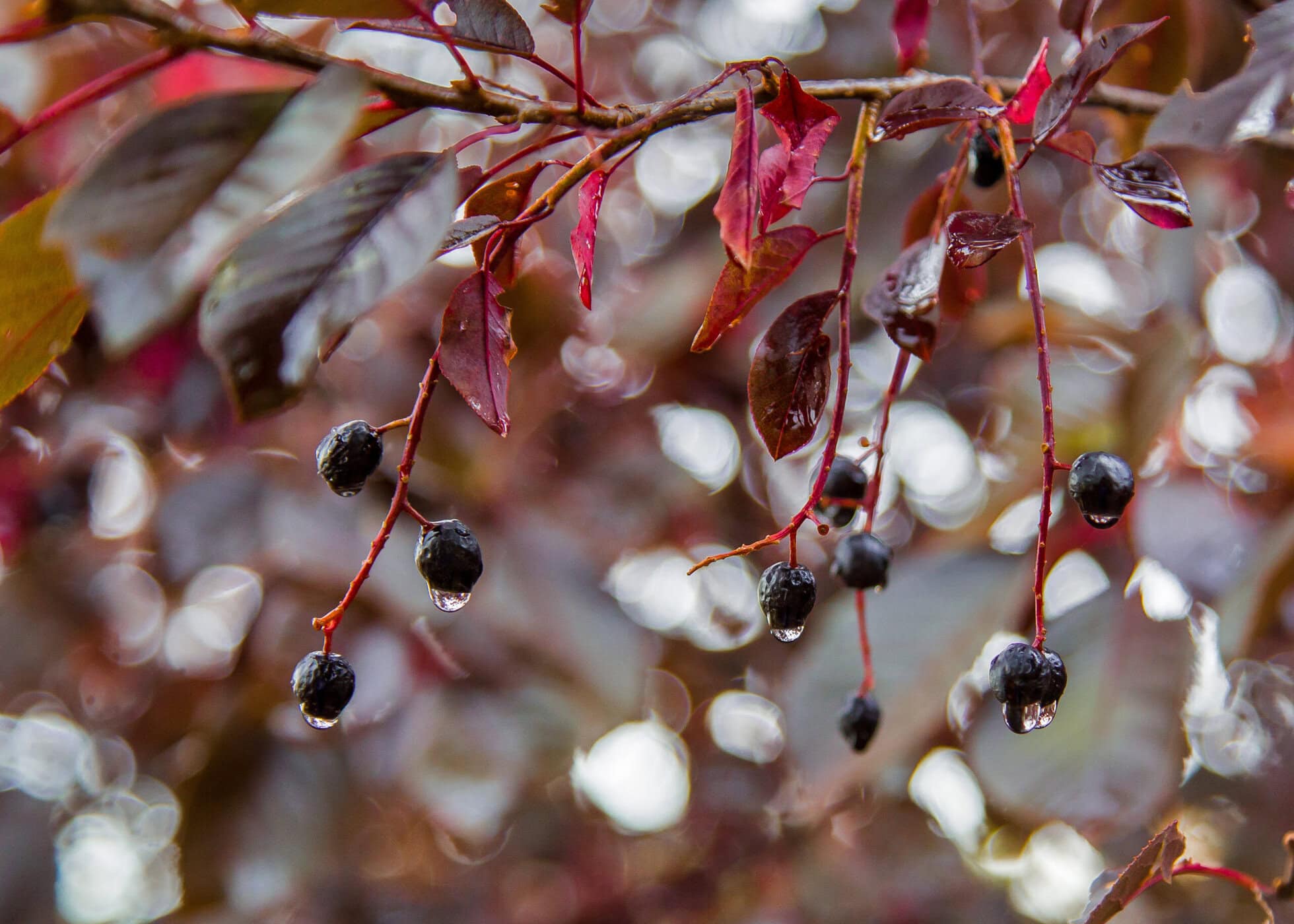
October comes and red foliage bursts from the finely toothed oval leaves. Hanging down from the panicle are a cluster of berries so red they can darken to purple or black.
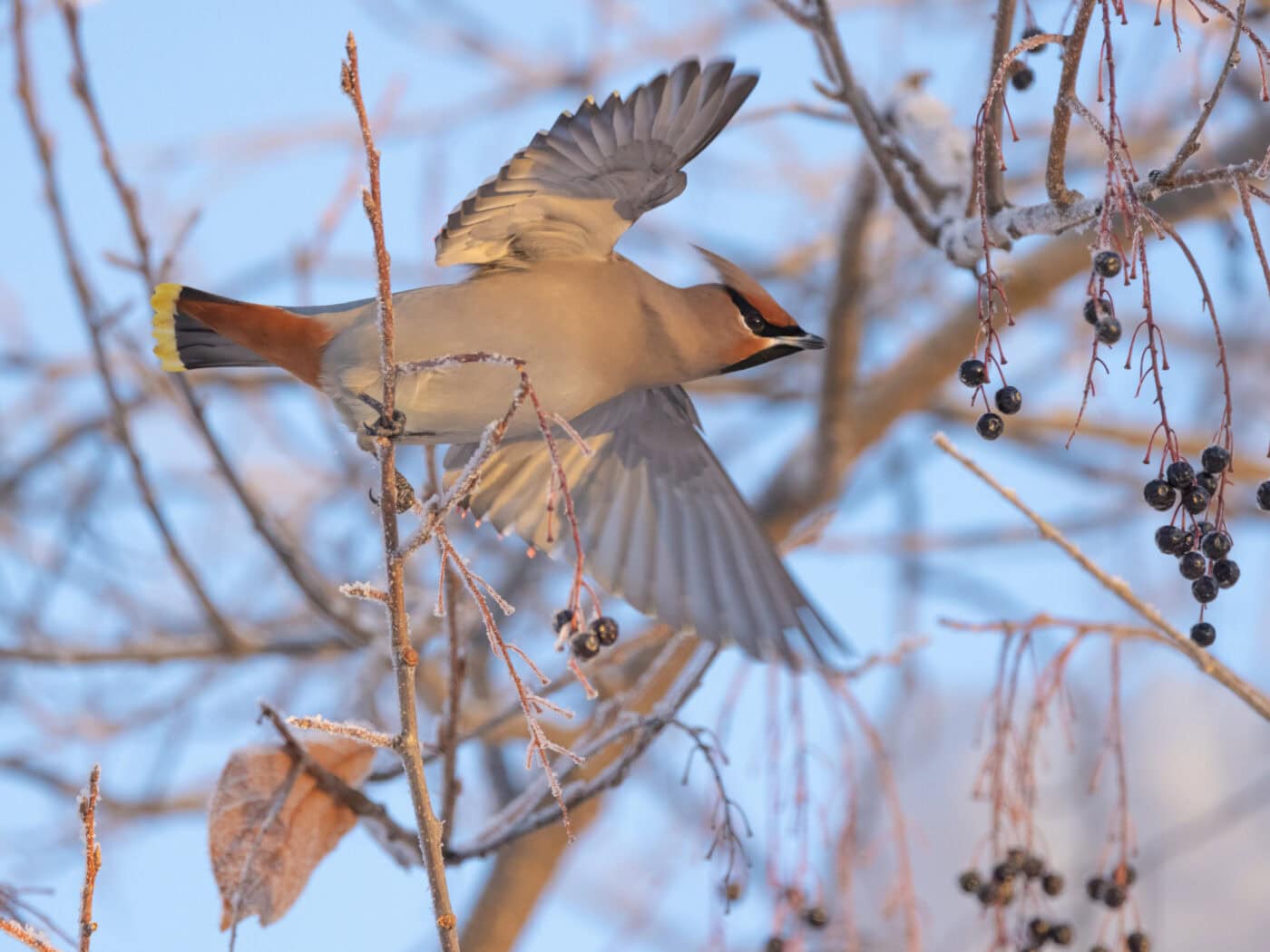
There are chokecherries from Vancouver to Maine, native all across the continent. At no more than 30 feet tall, chokecherry trees grow upland, outlining edges of forests. In the 1800s, 75% of New England was clear-cut for pastures and farmland. Chokecherries appear in transitional and disrupted areas. These are delicate ecosystems. Many songbird species who use these habitats for food and shelter are declining, leaving behind silent trees and rotting berries in ever thicker stands.
Close up, chokecherries’ papery grey bark is pocked with lenticels where the trunk exchanges gases. Ice can snap branches in the deep winter. Spaces open and close as they weave thickets in clusters, not shy about where they behave aggressively if given the chance. A thicket will often develop a disease called black knot. The chokecherries don’t die from it immediately, but black nodes grow all over their branches, passing from one tree to the next, opening cracks for killing fungus to enter.
The powerful tannins pucker the lips. Chokecherry is good not for its pure sweetness but for its complexity of flavor, like persimmon’s reluctant joys. Chokecherry plays the same game: sour enough to bring a tear, yet just small and sweet enough to keep us looking for it.
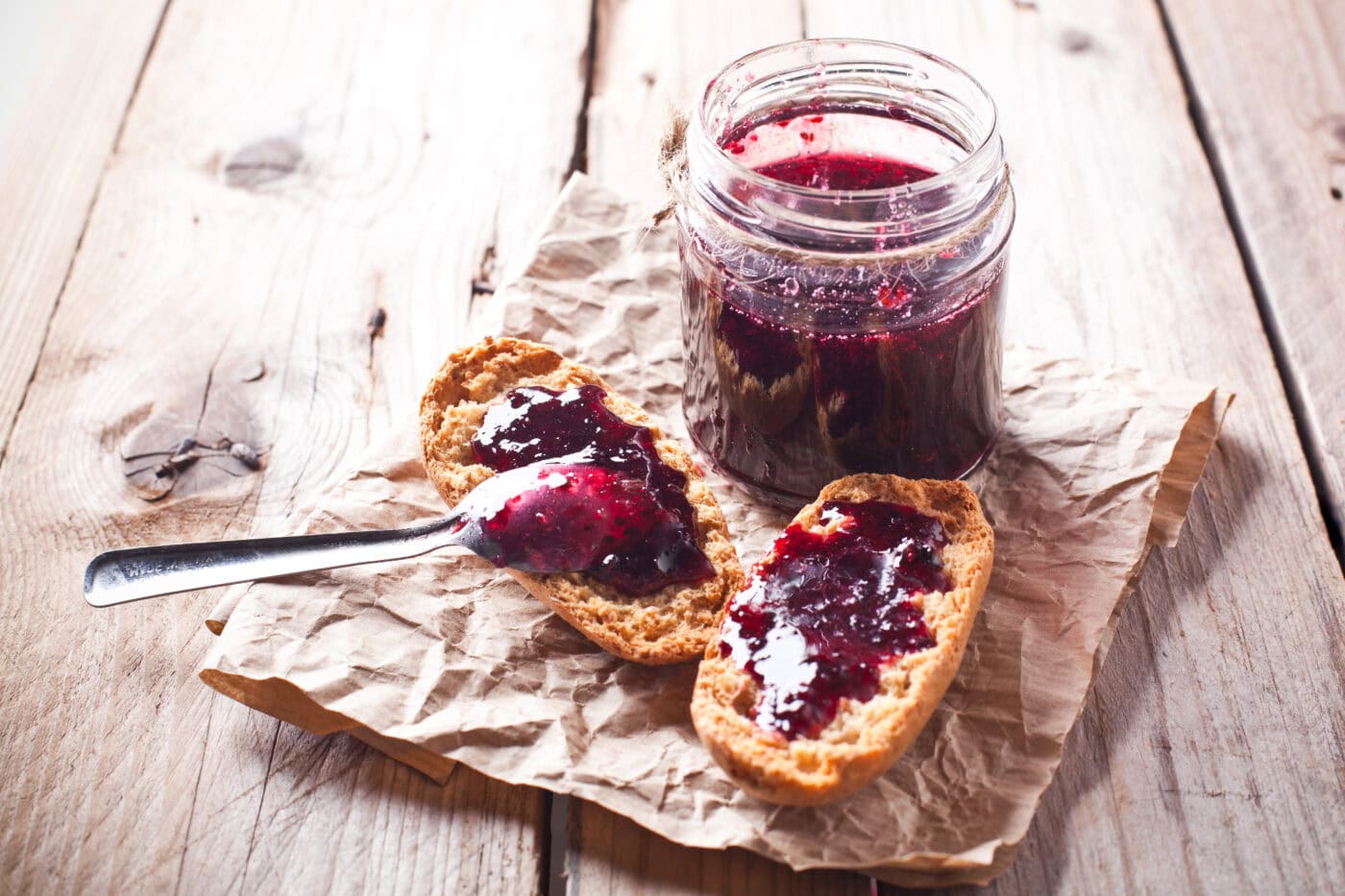
Indigenous peoples have used chokecherry bark and roots to act as a calming sedative, a remedy for coughs and more serious illnesses like malaria and tuberculosis. People have often made the fruits into jams and jellies.
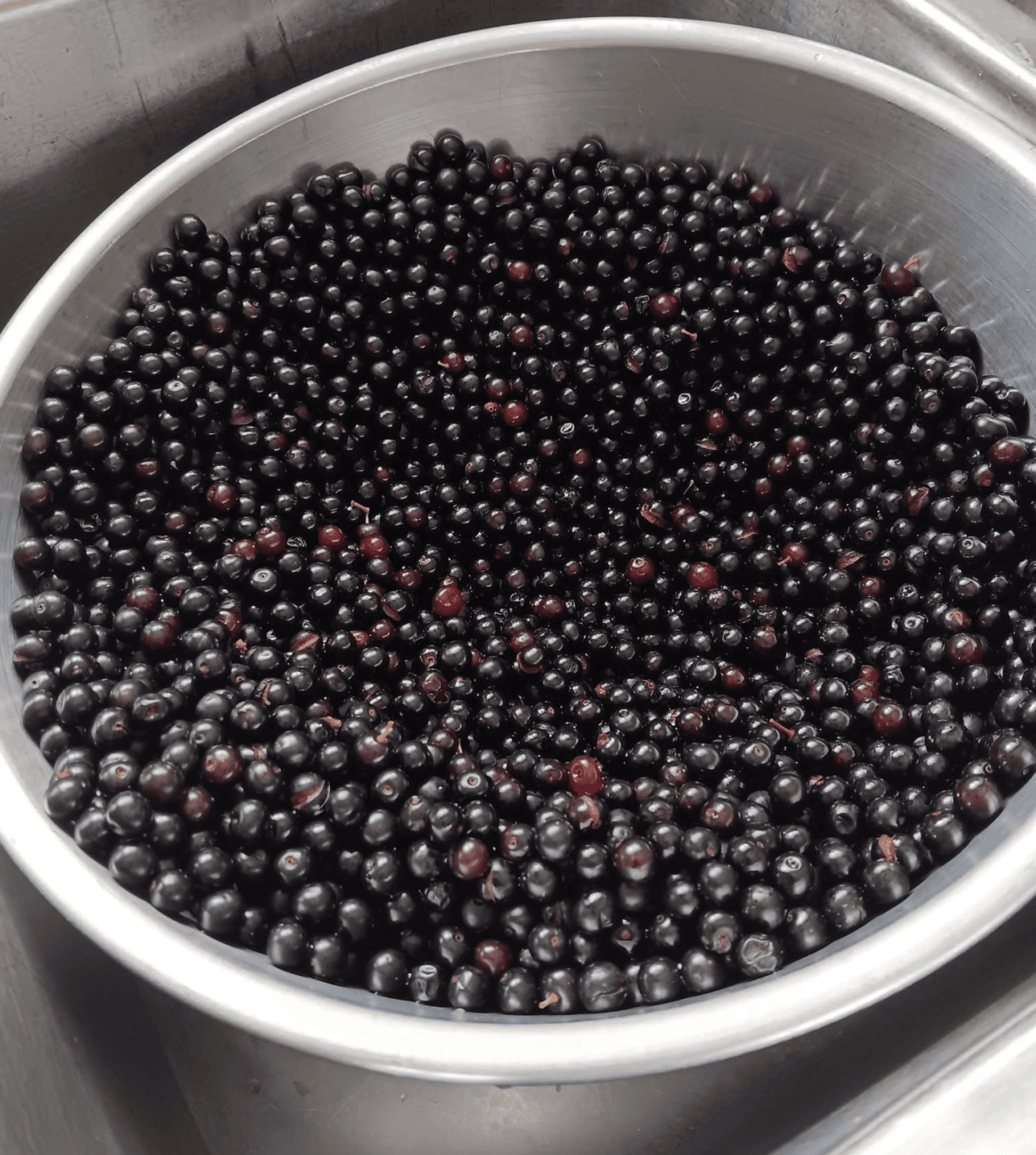
Yet despite the tart delicacy of the berries, chokecherries must be eaten with caution. Like popular cherries themselves, the leaves, seeds, and branches actually do contain cyanide. Too much will slow the pulse and shorten breath, sometimes to the point of death. The poison is strongest in spring and summer as they protect themselves in their most vital stage of life. The poison eases as the plant matures, but not entirely. Birds are the ones who pass this plant along through the forest, stomaching the seeds at any time of year.
Fortresses from dreaded tent caterpillars form in these trees. But these aren’t the only ones who need chokecherry. Up to 300 dusty-winged insects, including butterflies and moths, visit each tree throughout the year. Pocked in ivory and shaded in red, Columbia silkmoths use chokecherry trees as their larval host, emerging in clouds from the iron grey branches each spring. Medicinal or poisonous; hard worker or rambunctious grower. A plant of dualities, chokecherry asks for a partner who knows its steps out on the hill’s dance floor.