


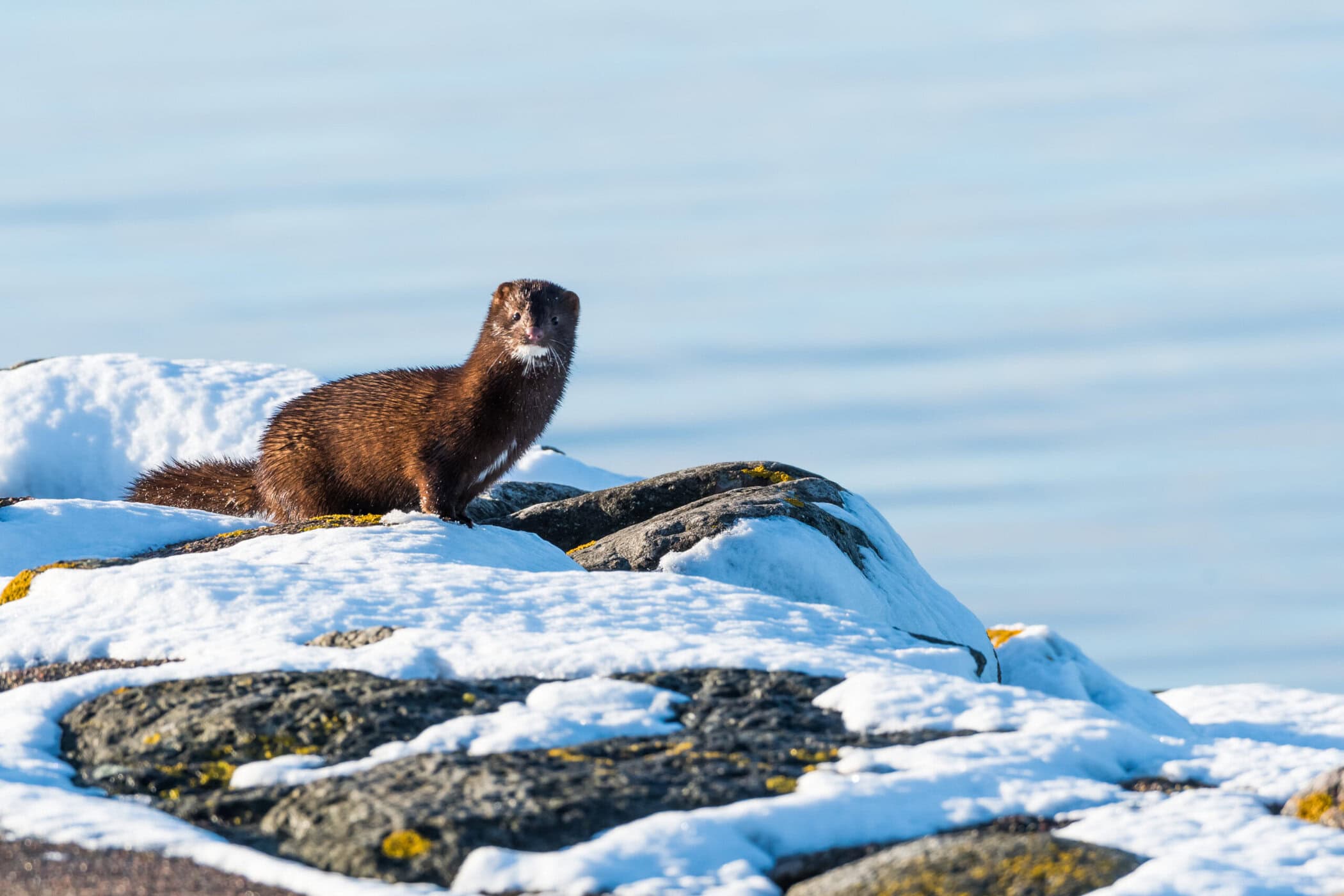
If you’ve never seen a mink, you’re not alone: The small, mostly nocturnal mammal is an elusive creature, found near water — streams, rivers, lakes, marshes and the coast — but rarely spotted. Don’t be fooled by the mink’s sneaky and solitary nature — whether guarding their territory or hunting for their next meal, they can be fierce and aggressive, and are known to take down animals bigger than themselves.
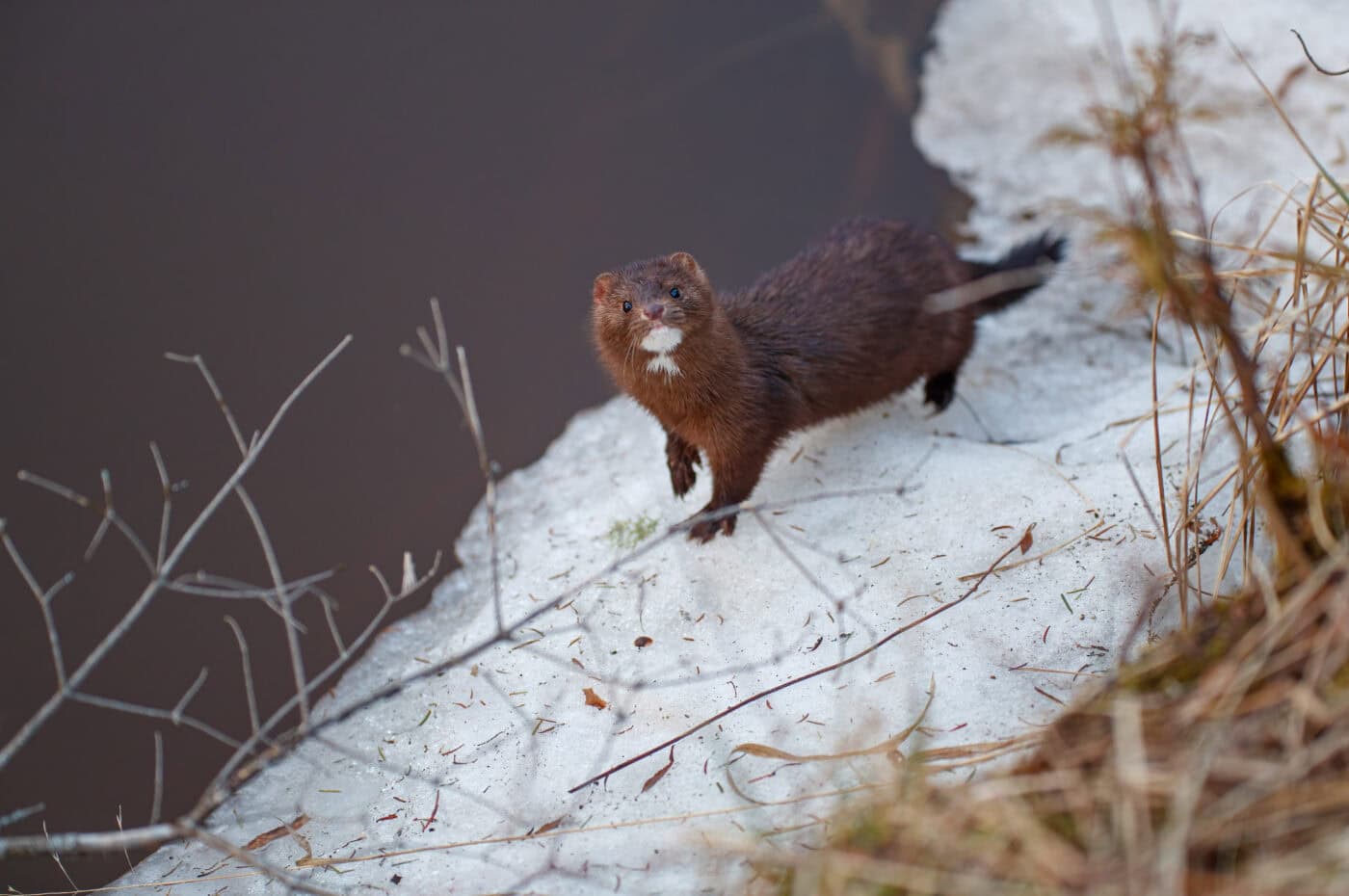
A member of the weasel family, the mink has a slender, muscular body and neck and a bushy tail about 6-8 inches long. Their fur is dark brown on the back and lighter on the belly; their dense, soft underfur is protected by oily “guard hairs” that waterproof the coat. Minks also have a small white patch on their chins.
Minks have long been coveted for their soft, lustrous fur, which is used for luxury garments such as coats and stoles. The mink coat, in particular, was once a sign of status and glamour. In the first half of the 20th century, most mink coats were made with pelts from minks caught in the wild. But the rise of farm-raised mink in the ’50s and ’60s helped stabilize the mink market by providing a steady supply of the prized mammal, lowering prices and enabling people of more moderate means to buy goods made with mink.
After a surge in popularity in the ’80s, when a mink coat might fetch between $8,000 to $50,000, fur became less fashionable, with animal rights activists decrying the industry as cruel and sales falling off. However, attitudes toward fur might be shifting again. The New York Times recently reported that the social stigma around wearing fur has faded, with vintage fur in particular being considered more sustainable. According to CNN, in 2025 searches for “mink fur jacket” spiked 280% on the luxury resale site The RealReal.
Despite this fur revival, New York’s mink population is “secure” even as “interest in mink remains a high priority among trappers,” according to the New York State Department of Environmental Conservation (DEC). Minks are occasionally hunted and killed by other animals, such as bobcats and owls, but they don’t have any predators other than humans.
One of the biggest threats to the mink population might be pollution. According to the DEC, mercury, pesticides such as DDT and polychlorinated biphenyls, or PCBs, have been shown to cause weight loss and reproductive problems in farm-raised mink that eat contaminated fish. In 2026, the Hudson River Natural Resource Trustees published a report on the impact on the mink population of PCBs released into the upper Hudson River at Fort Edward and Hudson Falls by General Electric. The report showed that PCBs adversely affected the mink population, with the mink population density along the Upper Hudson River about one third lower than the nearby Mohawk River.
PCB concentrations in wild mink are also correlated with reduced body weight and depleted body fat stores, indicators of poor health. Minks are mainly exposed to PCBs by eating fish, crayfish, frogs, and more.
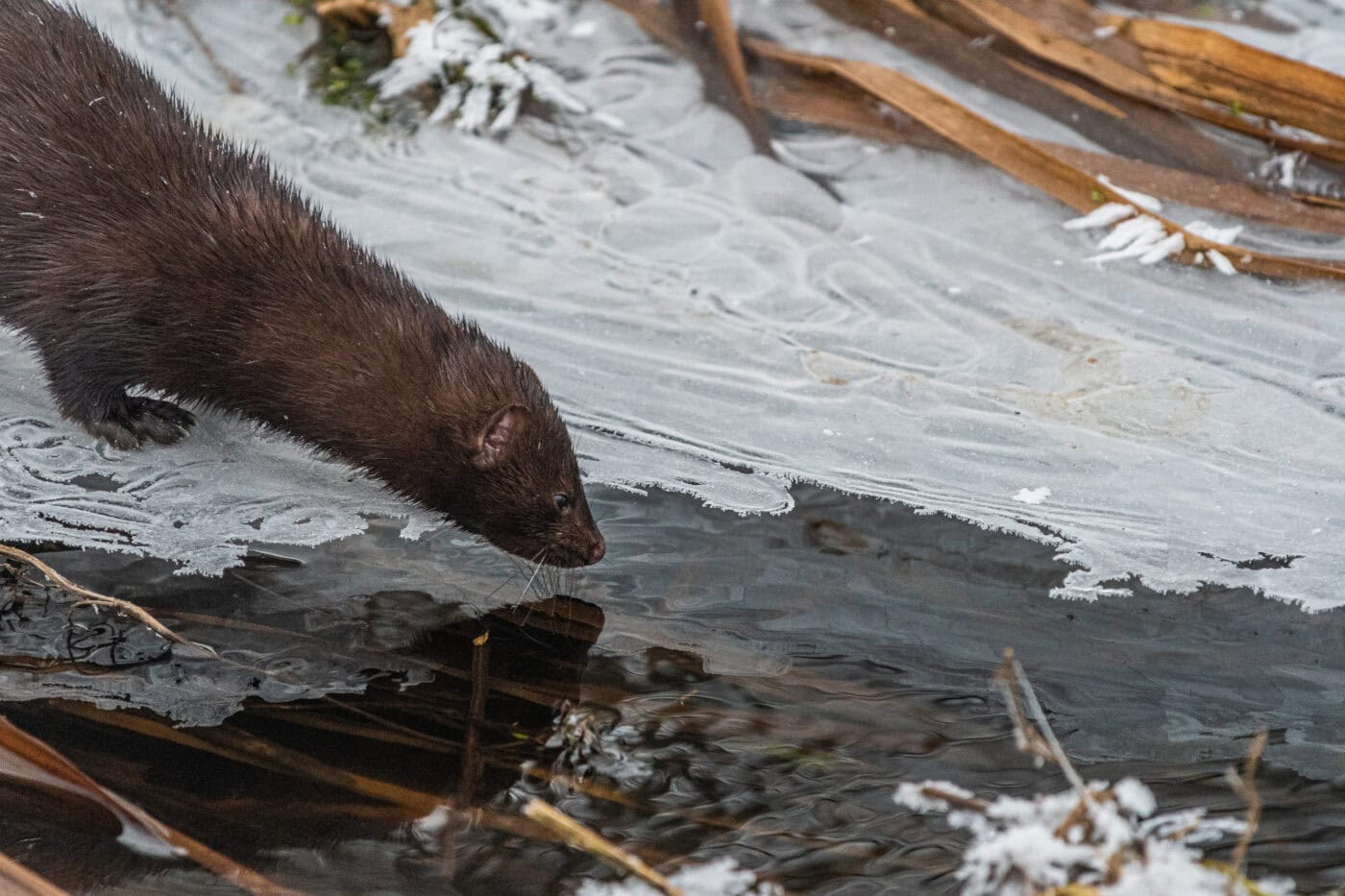
Minks are found throughout New York, always near water and usually in sparsely populated areas, though they are sometimes observed in the suburbs. They are splendid swimmers, thanks to their partially webbed feet, and they are agile and quick on land, skilled at climbing trees and capable of running up to 8 miles per hour.
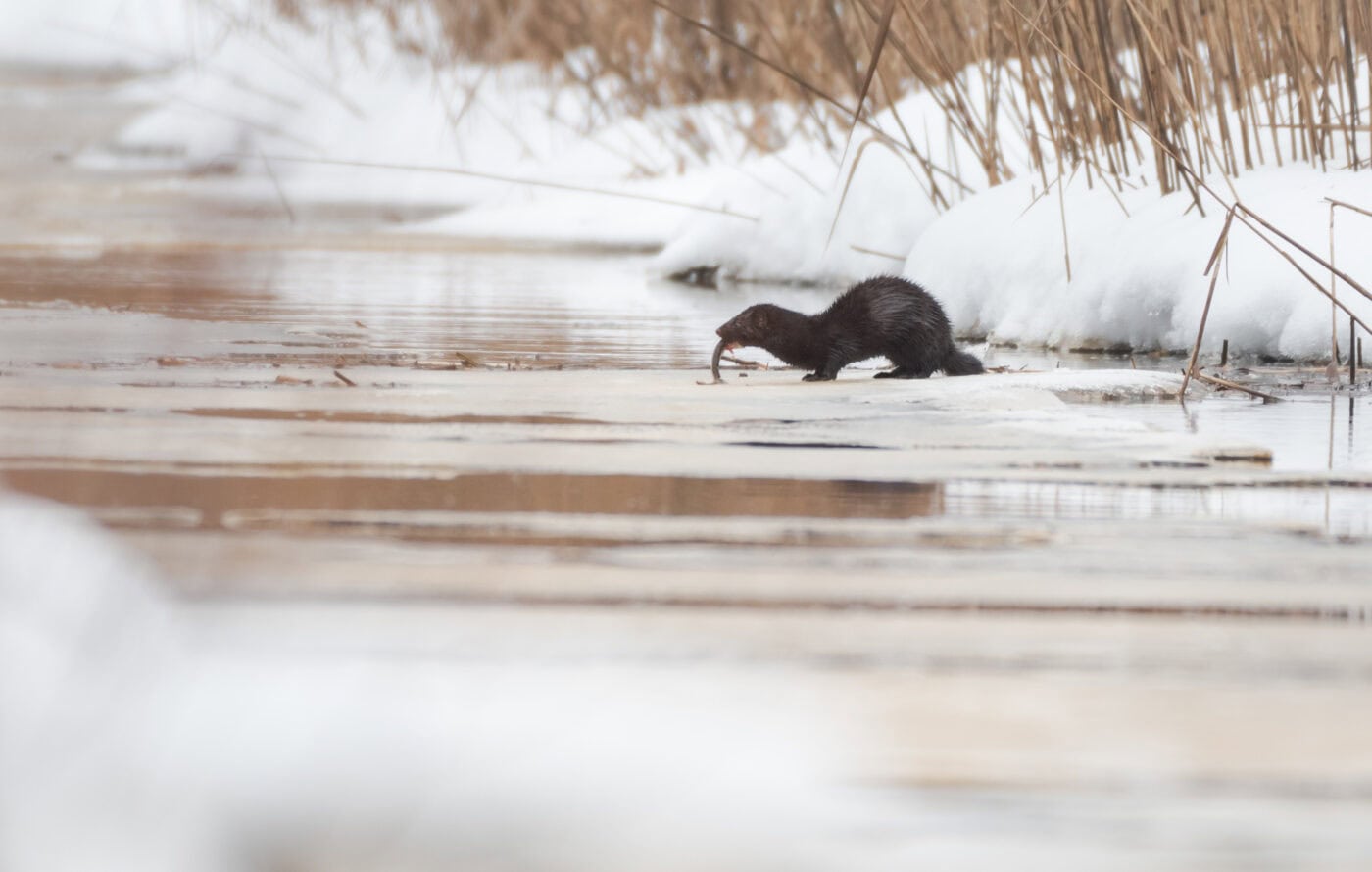
Minks are also very curious. They will travel from one stream bank to the other, exploring “nearly every hole, crack, crevice and overhang that might hide a potential meal,” according to the DEC. In addition to fish, mink eat muskrats, rabbits, small rodents, waterfowl, marsh-nesting birds, and aquatic beetles.
Like cats, minks will purr when they are happy and hiss when threatened. Their underwater vision is poor: they will often locate aquatic prey above the surface before diving to catch it.
Minks live in burrows located near water — dens they dig themselves, or dens abandoned by other animals such as muskrats and beavers. Mink burrows are made up of tunnels that are 1-3 feet deep and up to 12 feet long. These burrows often contain a nest chamber lined with vegetation and the fur and feathers of prey. In winter, minks will sometimes kill more than they need and store the extra food in their dens. To keep other animals at bay, minks have anal scent glands that excrete a foul-smelling liquid.
Minks are loners. Male and female minks only associate during the later winter breeding season. In April or May, the female gives birth to between one to eight mink kits that are born hairless, with their eyes closed and weighing about ¼ of an ounce.
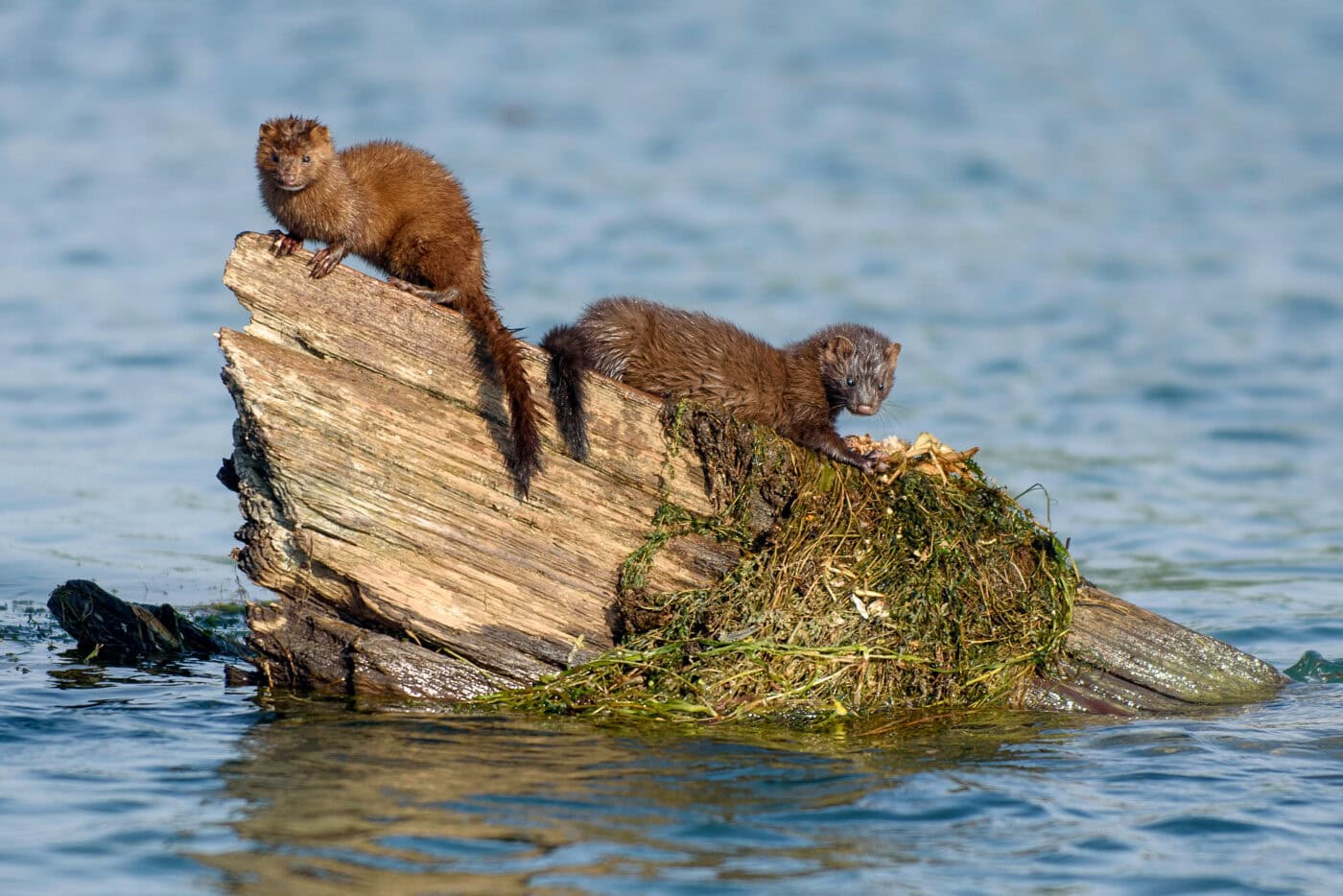
When the kits are about 56 days old, they join their mother on hunting trips and begin catching their own food. In August and September, the kits head out on their own; at 10 months, they are sexually mature. In the wild, minks live about three or four years.