
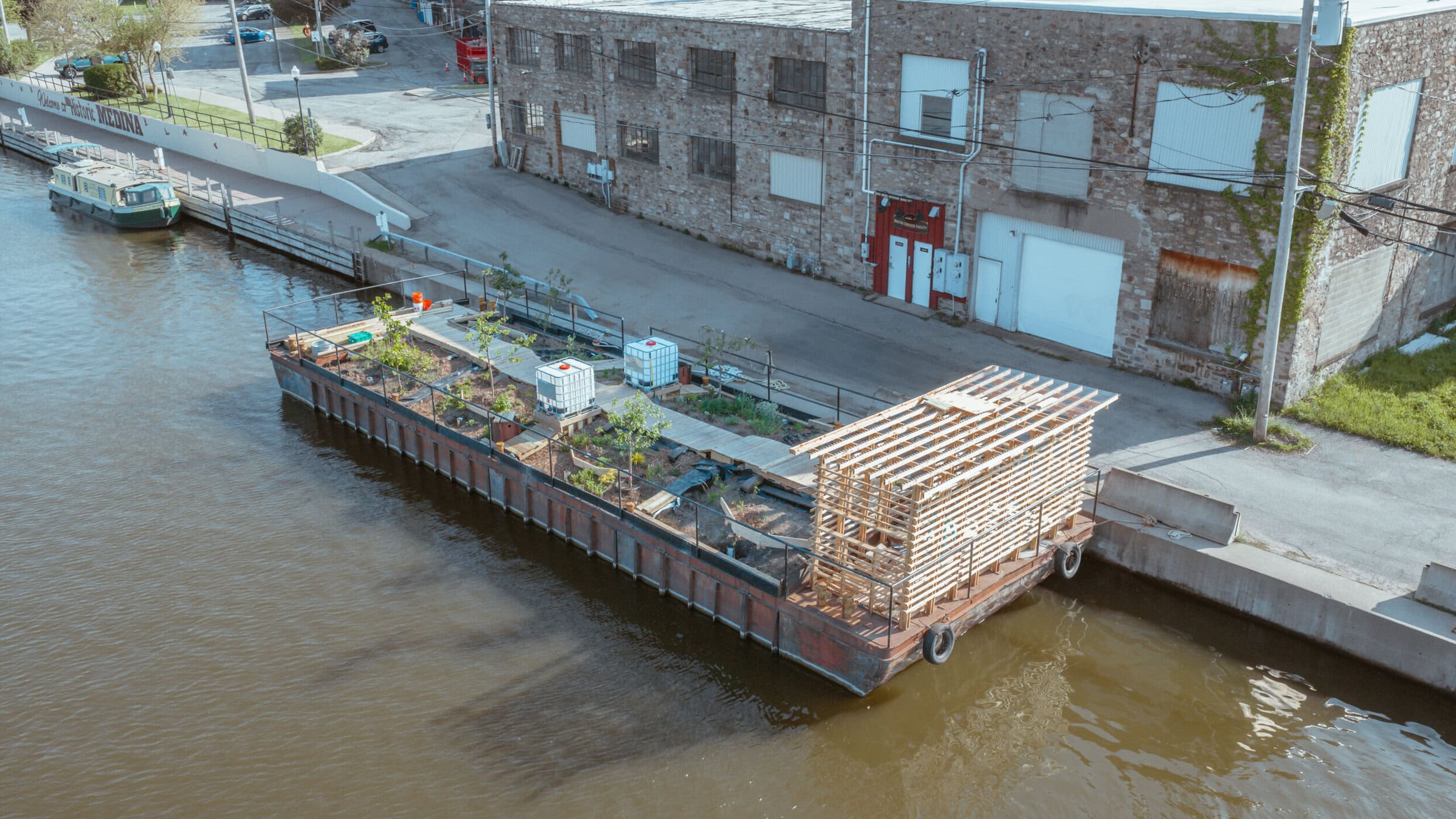
When Mary Mattingly’s local community garden on Manhattan’s Lower East Side closed, she quickly felt the loss of high-quality produce that was both affordable and close to home. Rather than opting for the nearest grocery store as the next-best alternative, she chose a bit more of an ambitious path: building a floating garden atop an abandoned barge for the community to forage upon.
The garden became known as Swale, and is part food forest, part art installation, and part experiment in growing food in a changing climate.
When the pilot project opened to the public in 2016, it was the first sanctioned food forest on New York City public land. A decade later, the next iteration of Swale will be setting sail in spring 2027 across the Erie Canal, and back down to NYC, making stops along the Hudson River on its way.
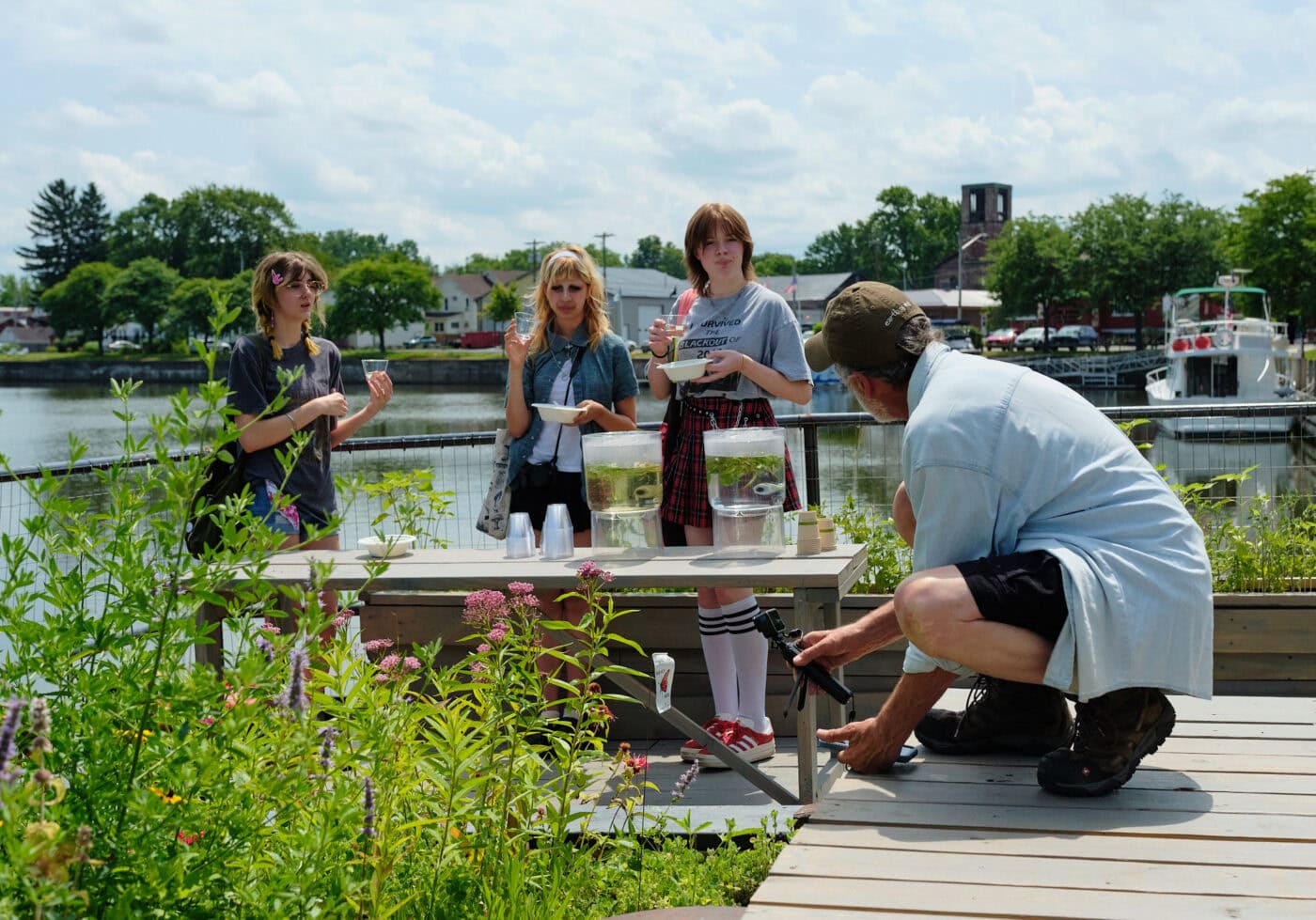
Foraging for public food has long been illegal or inaccessible in cities across the U.S. In New York, Mattingly says, the Parks Department is concerned about liability, protecting biodiversity and preventing certain plants from being picked too heavily. She points to the irony that NYC has historically used Roundup to manage vegetation in the name of protecting biodiversity.
“I’ve had people in the Parks Department say to me, ‘if we could work out a way for NYC not to be liable, then we would [allow] it’,” Mattingly says.
Mattingly pursued a docking arrangement in which Swale would legally dock next to a park, allowing the Parks Department to observe how public foraging went over in practice.
The barge kicked off with enough funding to run for six months, but received continual support that allowed it to continue for more than three years. COVID made it challenging to keep the project running, so the team shut it down to regroup. Over the following five years, Mattingly re-examined what it would take to develop a more permanent structure that could respond to rising sea levels.
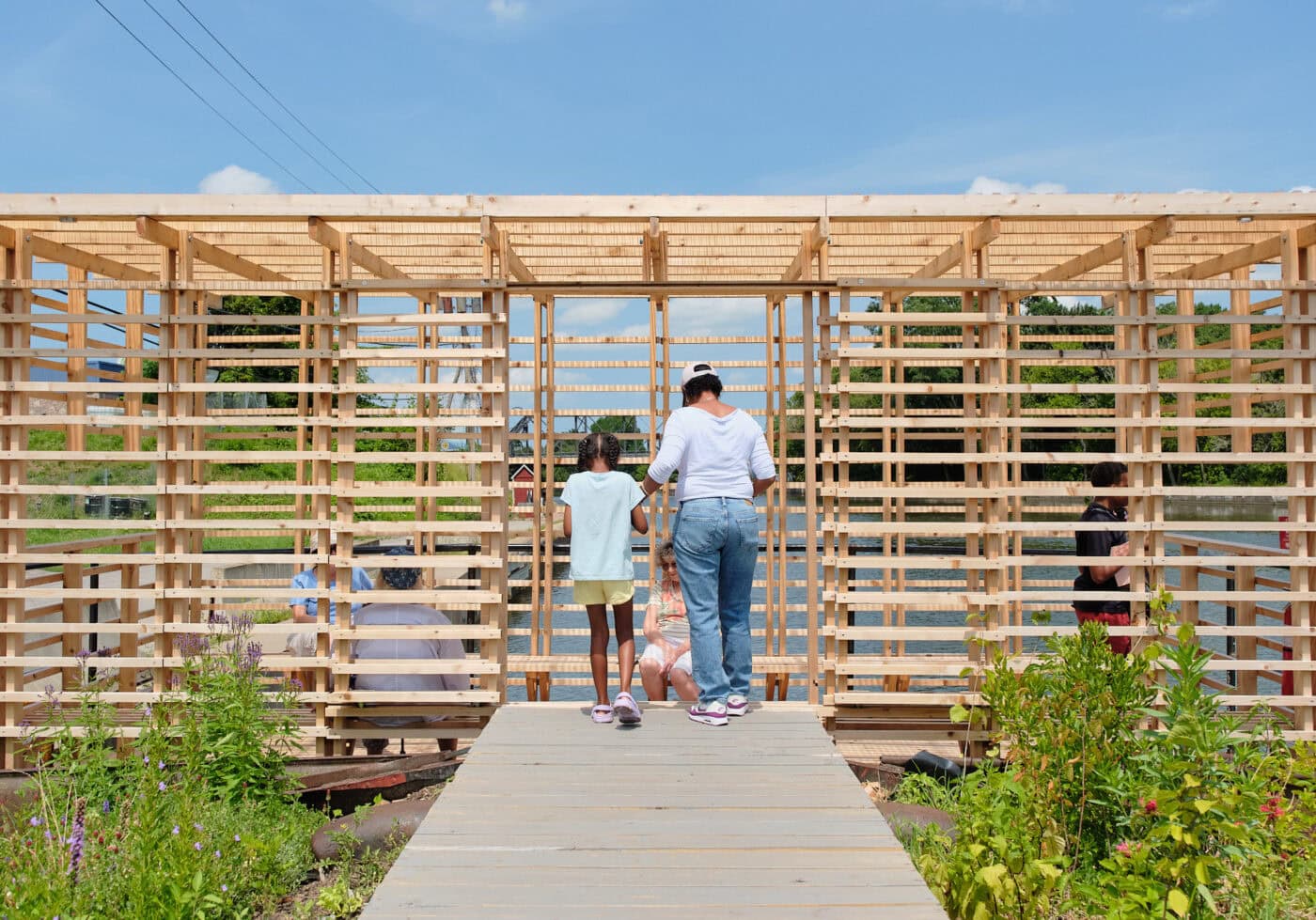
Ancient traditions have used water as a foundation for food production and climate adaptation for centuries. Preethi Radhakrishnan, one of the program directors of LaGuardia Community College’s Environmental Science program, points to floating gardens in Bangladesh, where farmers grow food on floating plots in flood-prone areas.
“Waterways could be used to grow food, but it’s something that rarely comes up in conversations about climate adaptation,” says Radhakrishnan.
Swale’s inspiration pulls from systems across geography and history, while catering to the particular needs and resources that exist in and around New York today.
For Radhakrishnan, water-based agriculture also offers an opportunity to combine food production with ecological remediation. She suggests that restoration efforts beneath a barge, those that might involve seaweed, eelgrass, or oysters, could be explored alongside food production — bearing in mind the sensitivity of the surrounding marine environment.
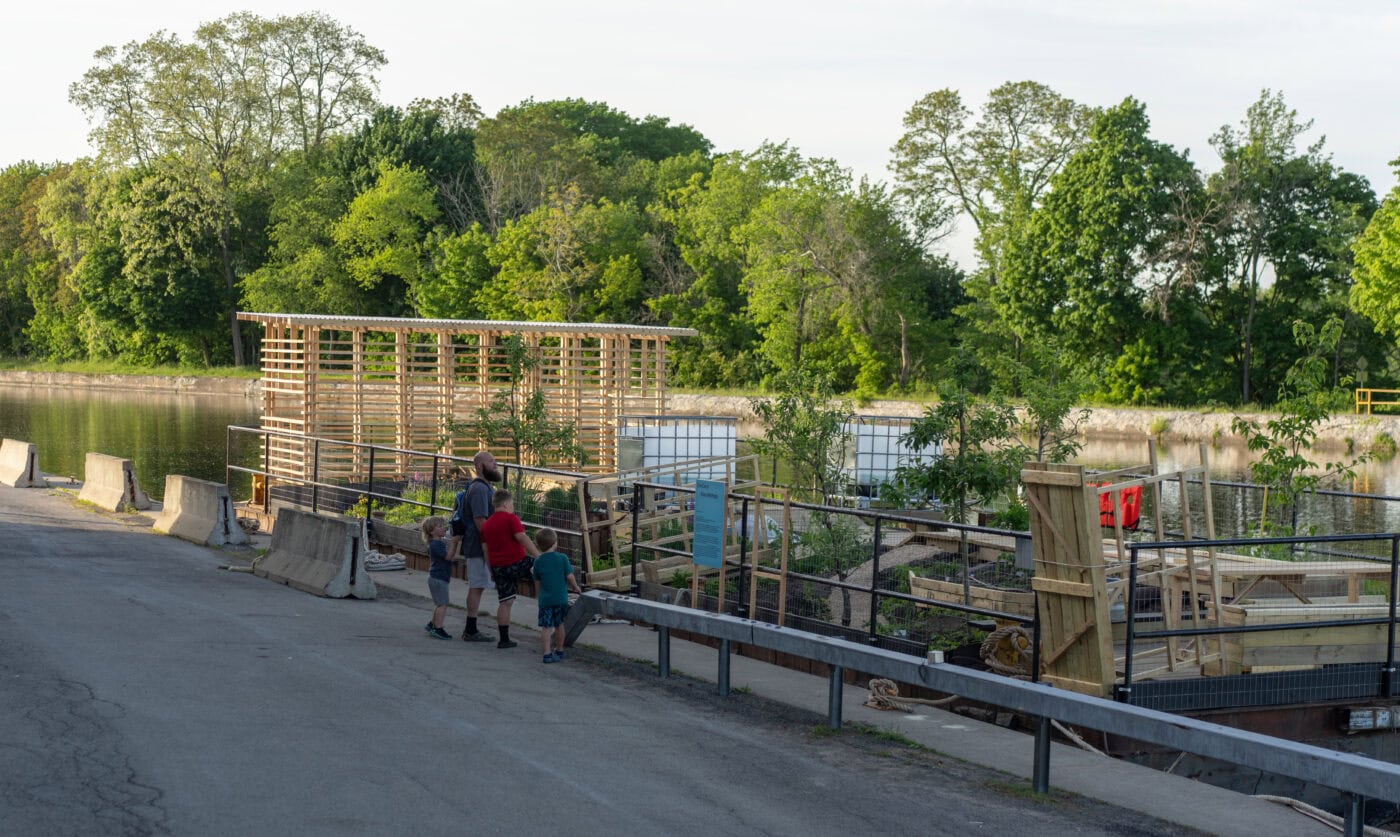
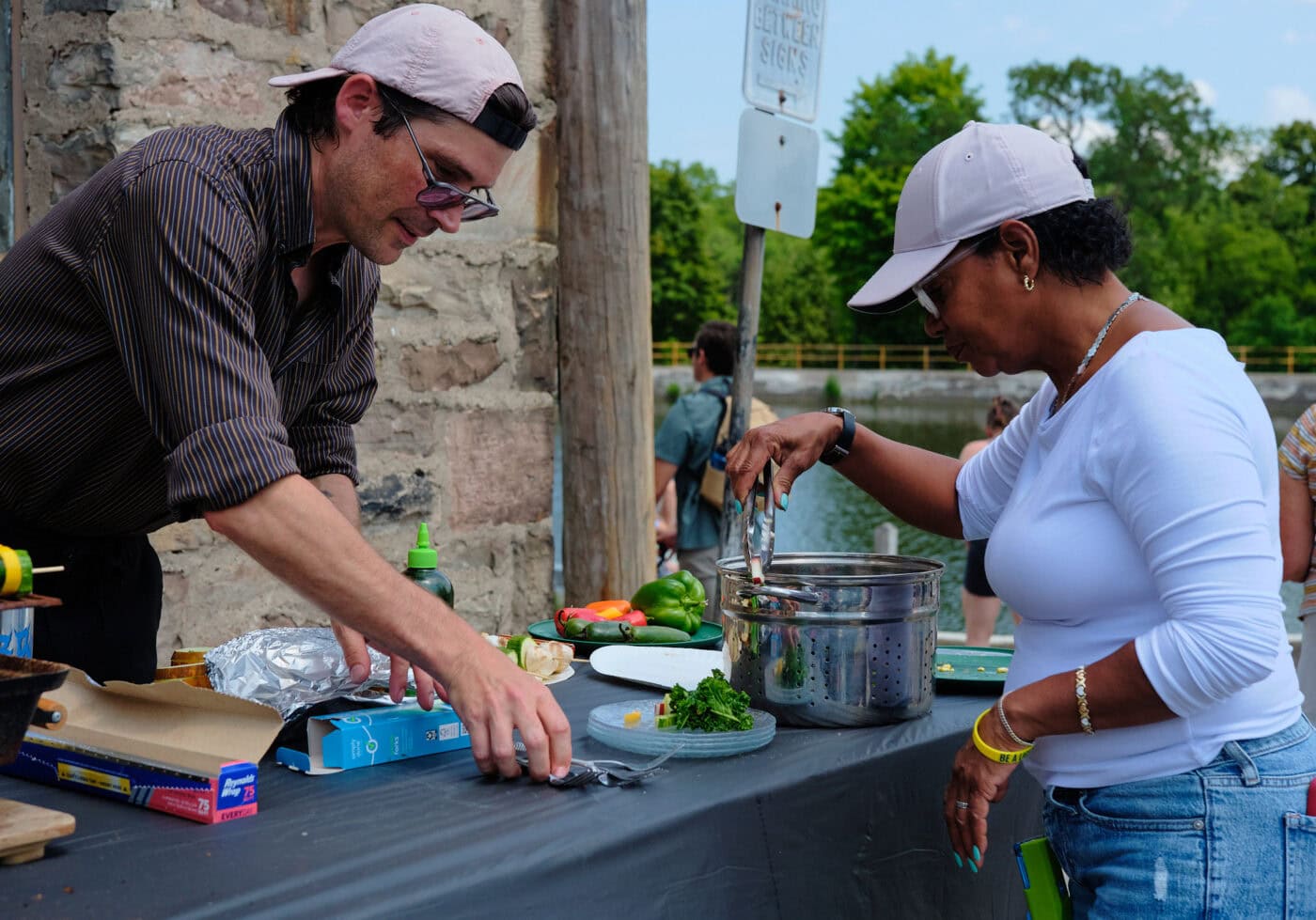
Federico Rosario worked on the next iteration of the Swale barge in Medina, a small town along the Erie Canal in Western New York, and saw the project transform from a subject of skepticism to a widespread connector for residents of all ages.
“When you bring a large, empty barge [into a town] and say you’re going to build out a garden, people are wondering how it’s going to work,” says Rosario. “But over time, they saw how much work we put into it, the students here were helping to build it out, some of their kids helped plant these seeds from scratch. That’s what really made them feel comfortable.”
Swale’s funding has come from a combination of community fundraising and grants. The original project raised $30,000 through Kickstarter and received a $20,000 grant, enough to rent a barge for six months. Once the project is up and running, Mattingly says, its operating costs are minimal.
Mattingly sees Swale as a way to support work already happening in communities around food access. “It works best as a provocation,” she says. Ideally, she adds, the barge will return to the same communities over the years and become part of long-term efforts to deepen their sense of food sovereignty.