


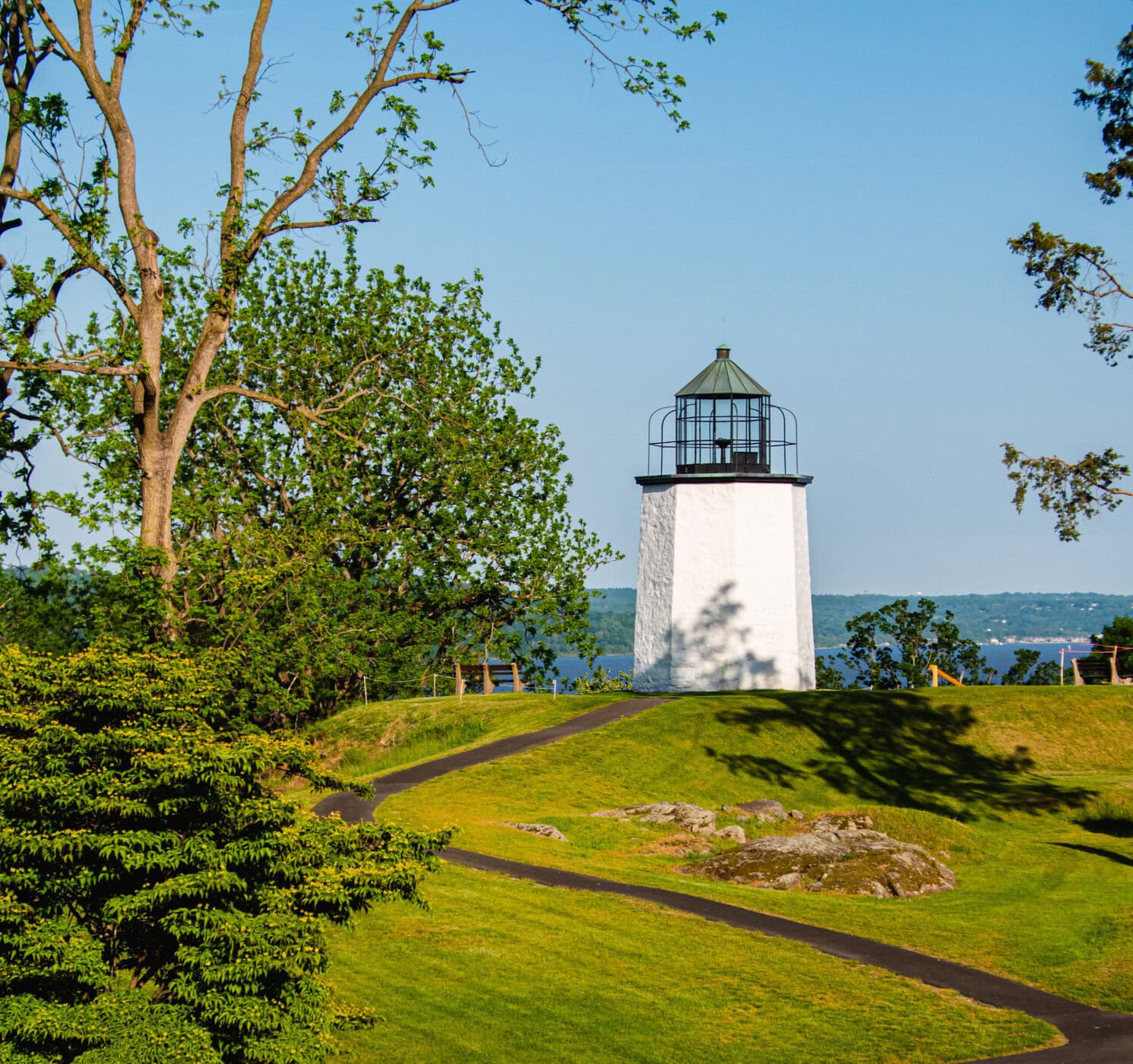
Lighthouses were once a familiar sight along the Hudson River, serving as essential guides for all who traveled its waters. They were especially important near treacherous turns and rocky outcroppings — such as the southern entrance to the Hudson Highlands, where the river narrows and bends sharply after Haverstraw Bay.
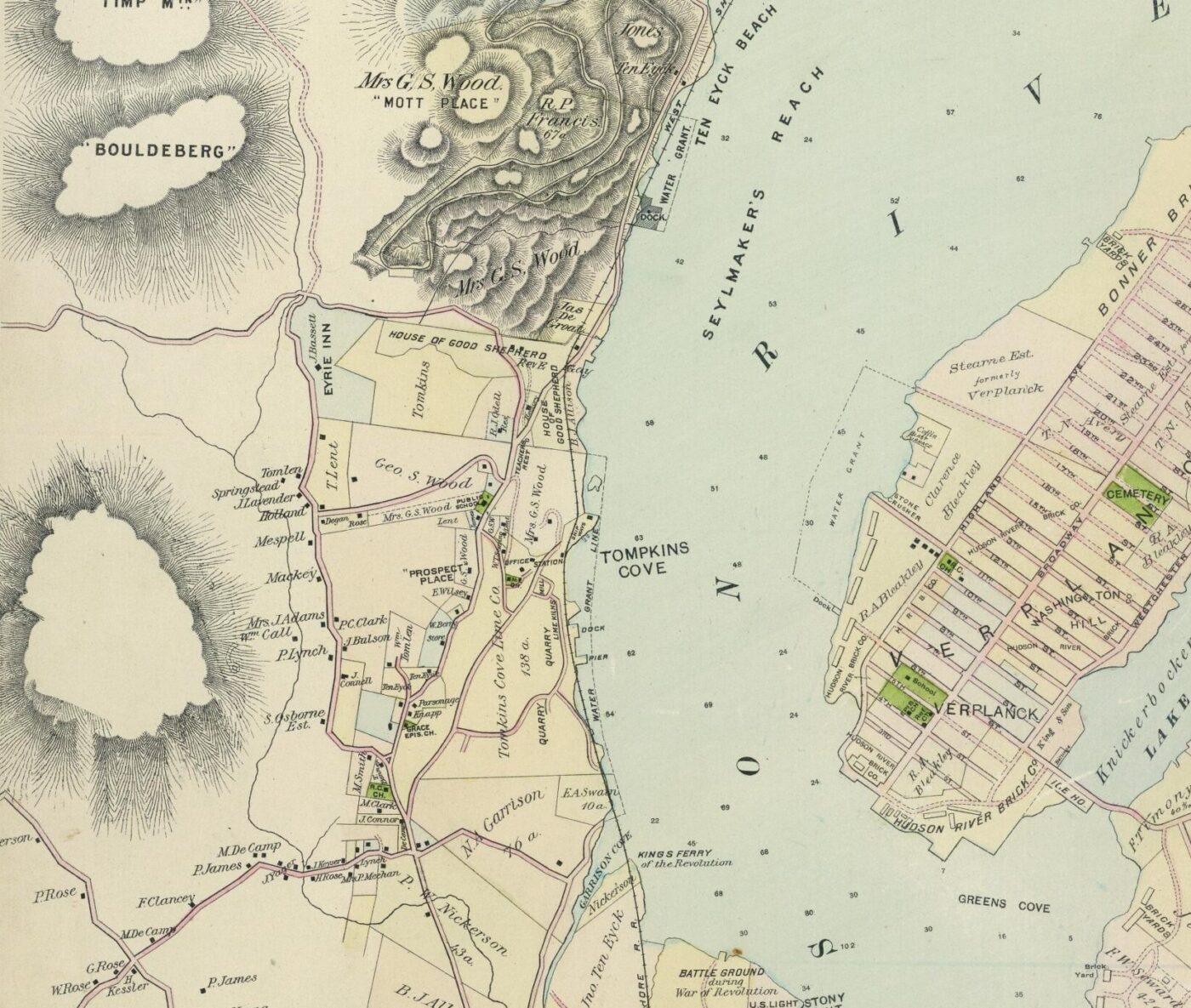
River traffic increased with the completion of the Erie Canal in 1825, creating a greater need for reliable navigational guidance. In response, the U.S. Treasury Department commissioned the first lighthouse at Stony Point, a rocky peninsula in Rockland County. The chosen site was already well known as a former Revolutionary War battlefield and the rocky promontory about 10 miles south of West Point marked a vital passage along the river during the war.
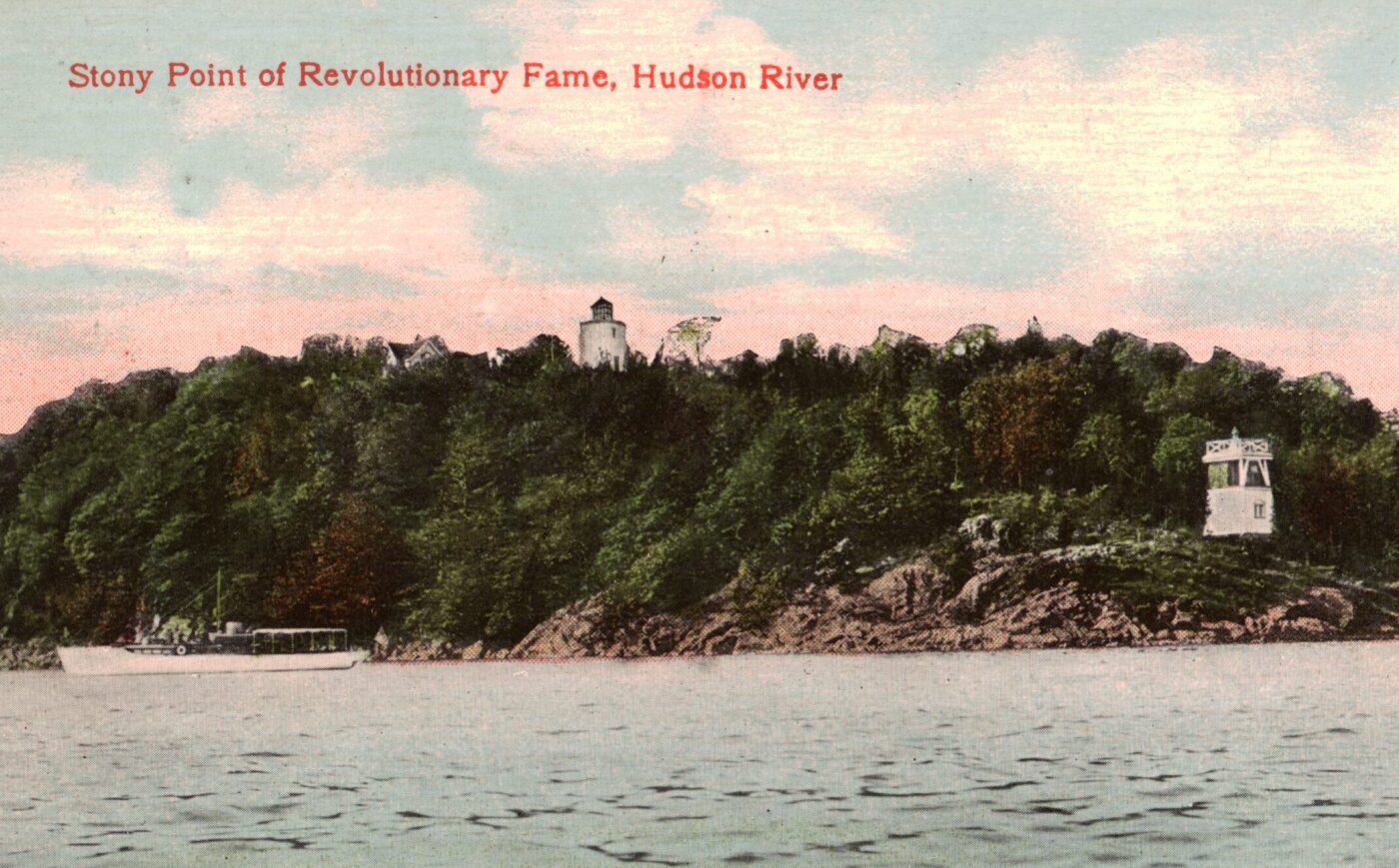
The new lighthouse was an octagonal tower built on the former military earthworks, about 150 feet above the Hudson’s high tide mark. It was constructed of local bluestone, with two floors and a glass-enclosed lantern room, as well as a cellar to store the whale oil originally used to light the signal. The Stony Point Lighthouse and adjacent lightkeeper’s house were completed at a cost of $3,350 and on Dec. 1, 1826, first keeper Cornelius W. Lansing ignited the light for the first time.
The keeper’s job was demanding, keeping the light in service around the clock. Curtains were drawn in the lantern room each morning to keep the lantern cool during the day, and the copper floor was cleaned and inspected for any spilled oil. Each evening the light was fired and checked throughout the night. At first, the lighthouse contained eight patent whale-oil lamps with 12-inch reflectors, allowing it to project a fixed white light visible from the water.
The keeper monitored and recorded daily weather conditions and, in poor ones, was responsible for ringing a fog bell every 15 to 30 seconds. Initially this job was done by hand, but a mechanical fog tower installed in 1857 helped to make the job more manageable.
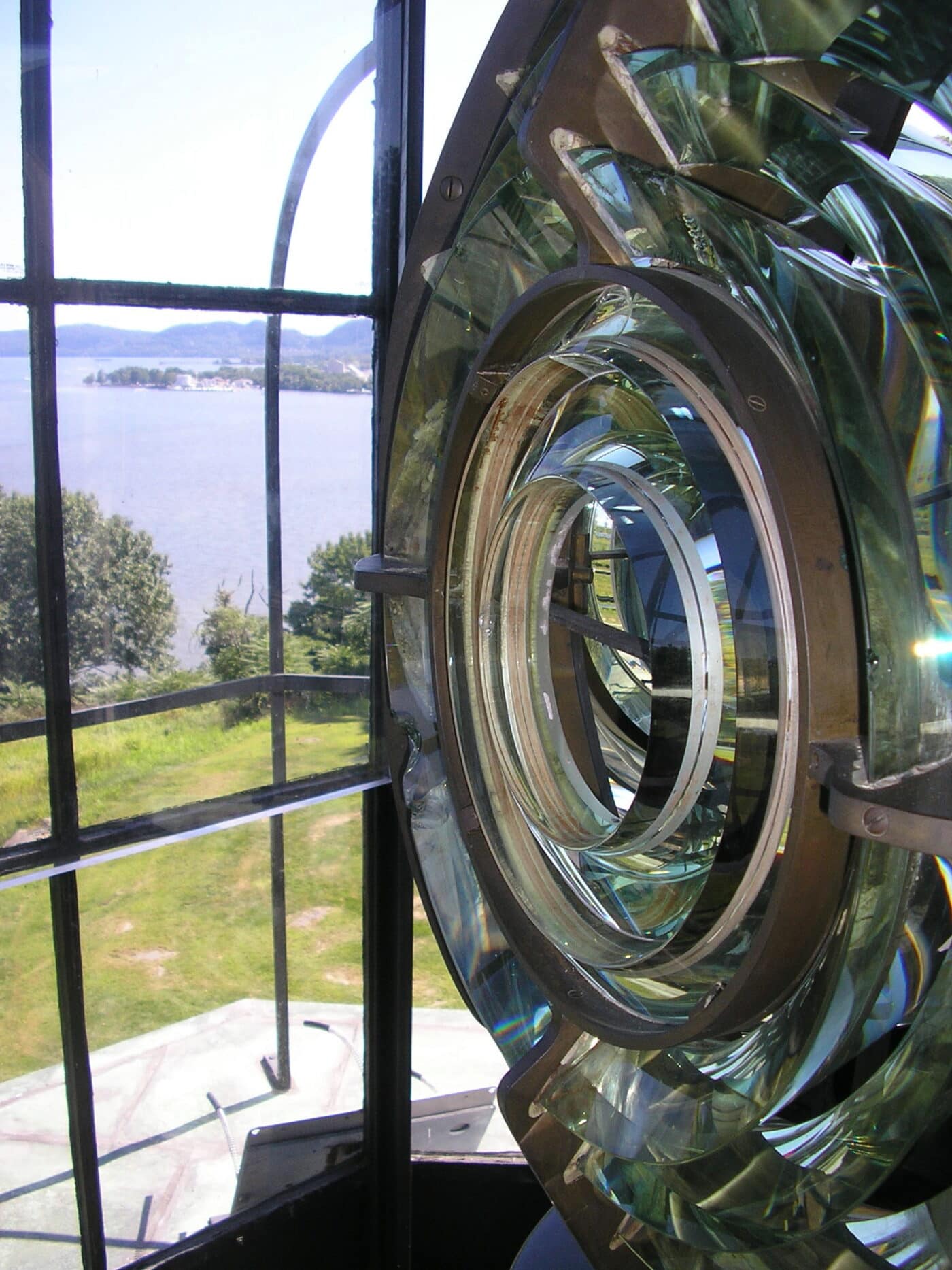
The original light was eventually replaced by a powerful Fresnel lens, which used beveled glass prisms to magnify the light. The new lens required a precise schedule of daily cleaning and polishing, adding to the lightkeeper’s responsibilities.
For most of its time in service, the Stony Point Lighthouse was maintained by one extended family. Robert Parkinson (whose grandfather, Jacob Parkinson, had been wounded at the Battle of Stony Point) served as the second keeper, succeeding Lansing in 1829. Alexander Rose, Sr., was appointed lighthouse keeper in 1852; his wife Nancy was Robert Parkinson’s niece, and Jacob Parkinson’s great-granddaughter. Just five years after his appointment, Rose died while lifting timbers for the new fog bell tower at the site.
Nancy, his young widow and mother of six, took on the job of keeper and tended the light accessed via steep steps and trapdoors. Over her half-century of keeping the light at Stony Point, Nancy Rose became known for her service and endurance. In addition to the light, she also maintained the fog tower, hiking up and down a steep incline every three to four hours to wind the bell when needed.
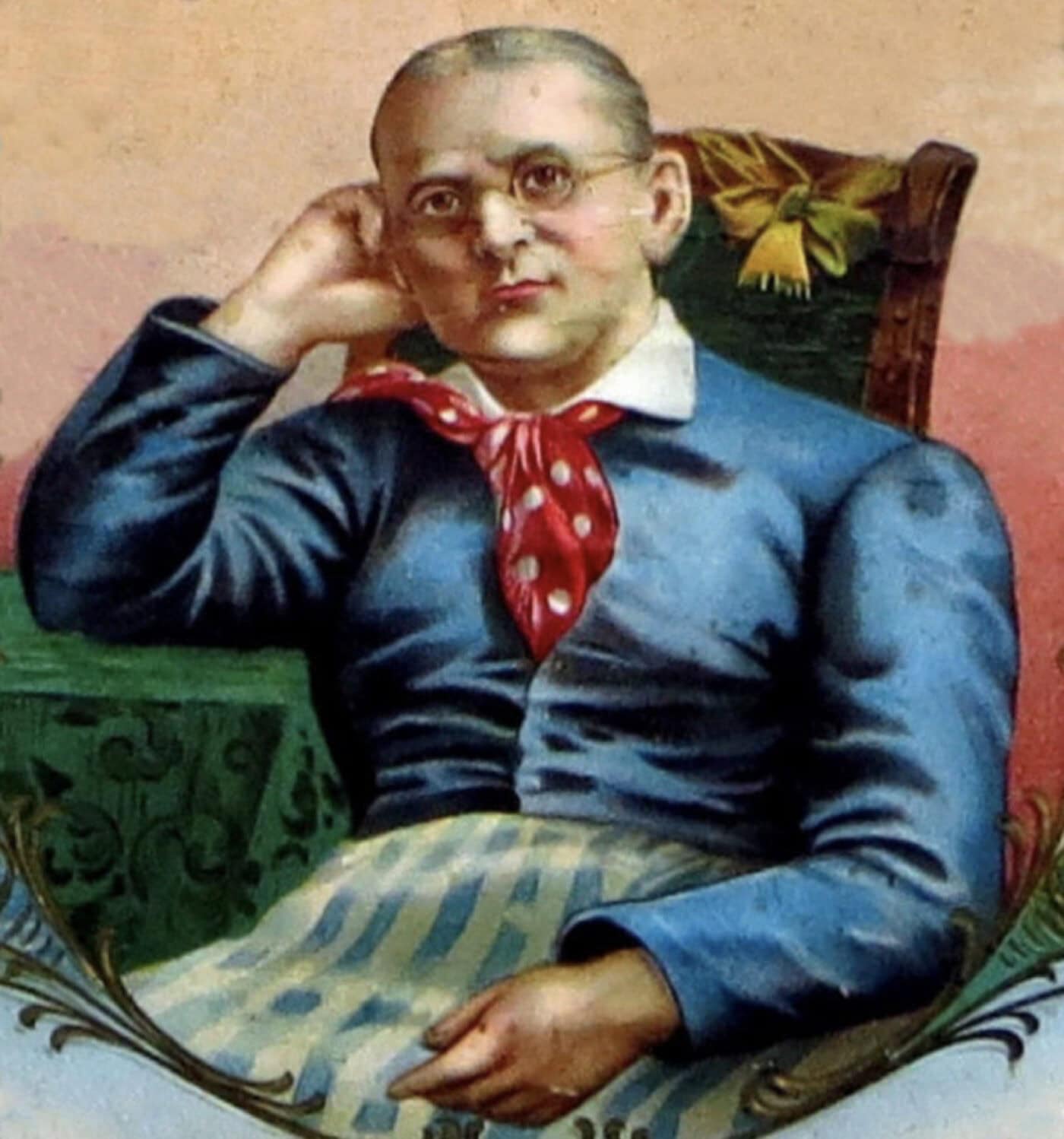
During one notable storm, the machinery malfunctioned and Nancy was said to have tolled the bell by hand for nearly 56 hours, going without sleep or food to ensure safe passage on the river. In another instance, the 79-year-old keeper defended herself with a fire poker against an intruder bent on destroying the light, hitting him repeatedly until he ran away. (Only after he was gone did she summon help by ringing the fog bell.)
Just a single wreck was recorded during Rose’s tenure. One stormy March morning in 1901, the steamer Poughkeepsie ran aground on the rocks below the lighthouse. Though she had been at work all night at the lighthouse, Rose welcomed more than 50 passengers into her home, drying their clothing by the fire and serving coffee until the nearby passenger train could be summoned. In addition to her arduous job, Nancy also raised chickens and cows, churned butter, and tended to a garden of climbing roses and dahlias. Along with her surviving two children, she collected military relics she found on the property. Those relics can be found in the Stony Point Battlefield Museum to this day.
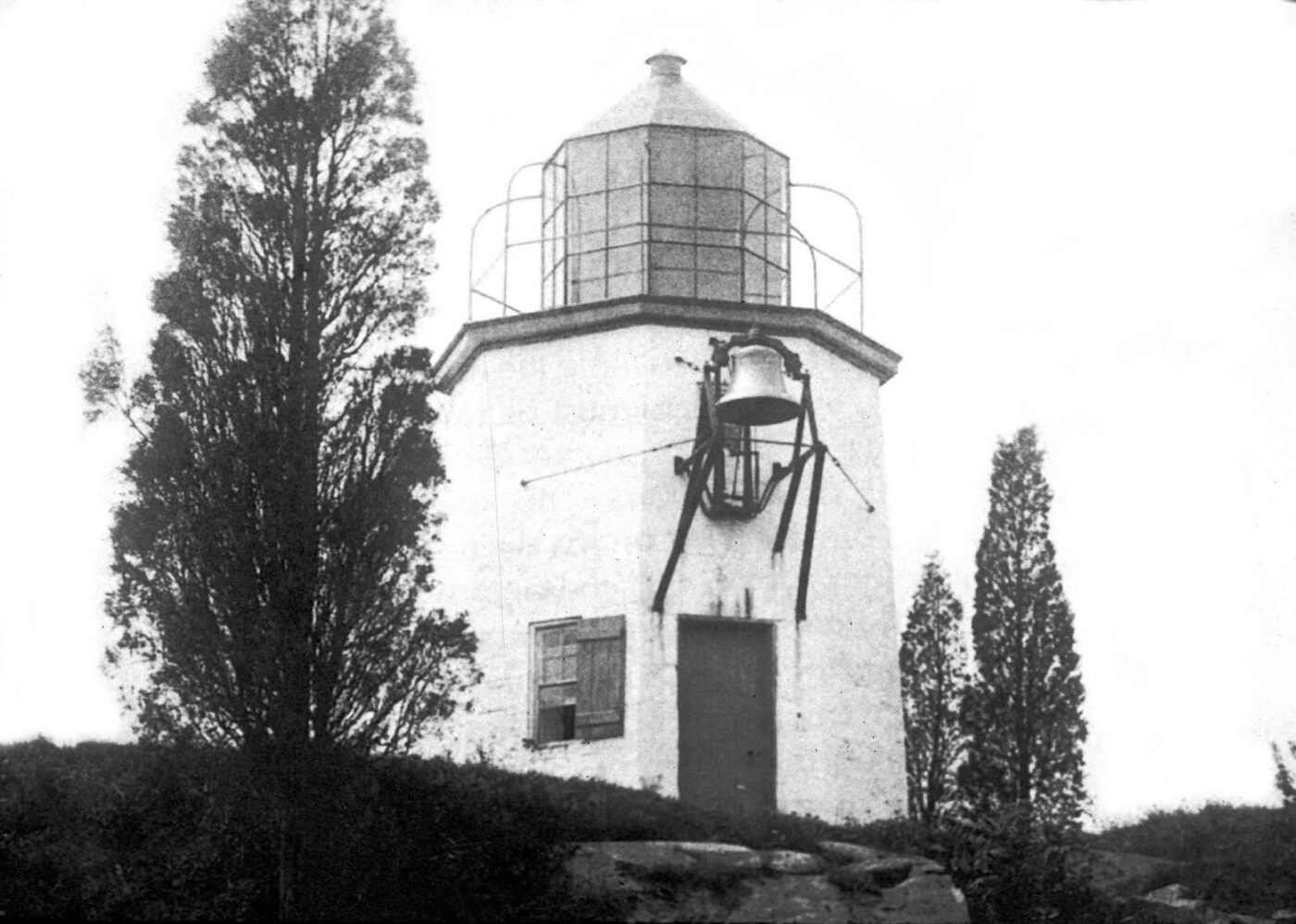
After Nancy Rose’s death in 1904, her daughter Melinda Rose took over the keeper’s duties and officially applied for the position. Her application was rejected as, at 53, she was deemed too old to apply per Civil Service rules. Given the long-standing reputation of the Rose family as keeper of the Stony Point Light, New York State Assemblyman Thomas Bradley intervened, and the age requirement was waived.
Navigational technology advances eventually ended the need for a light at the point. In 1916, a lighthouse inspector recommended the original lighthouse be abandoned in favor of a new tower “on the extreme point of the water.” The Stony Point Lighthouse was ultimately decommissioned in 1925 and replaced by a steel light tower.
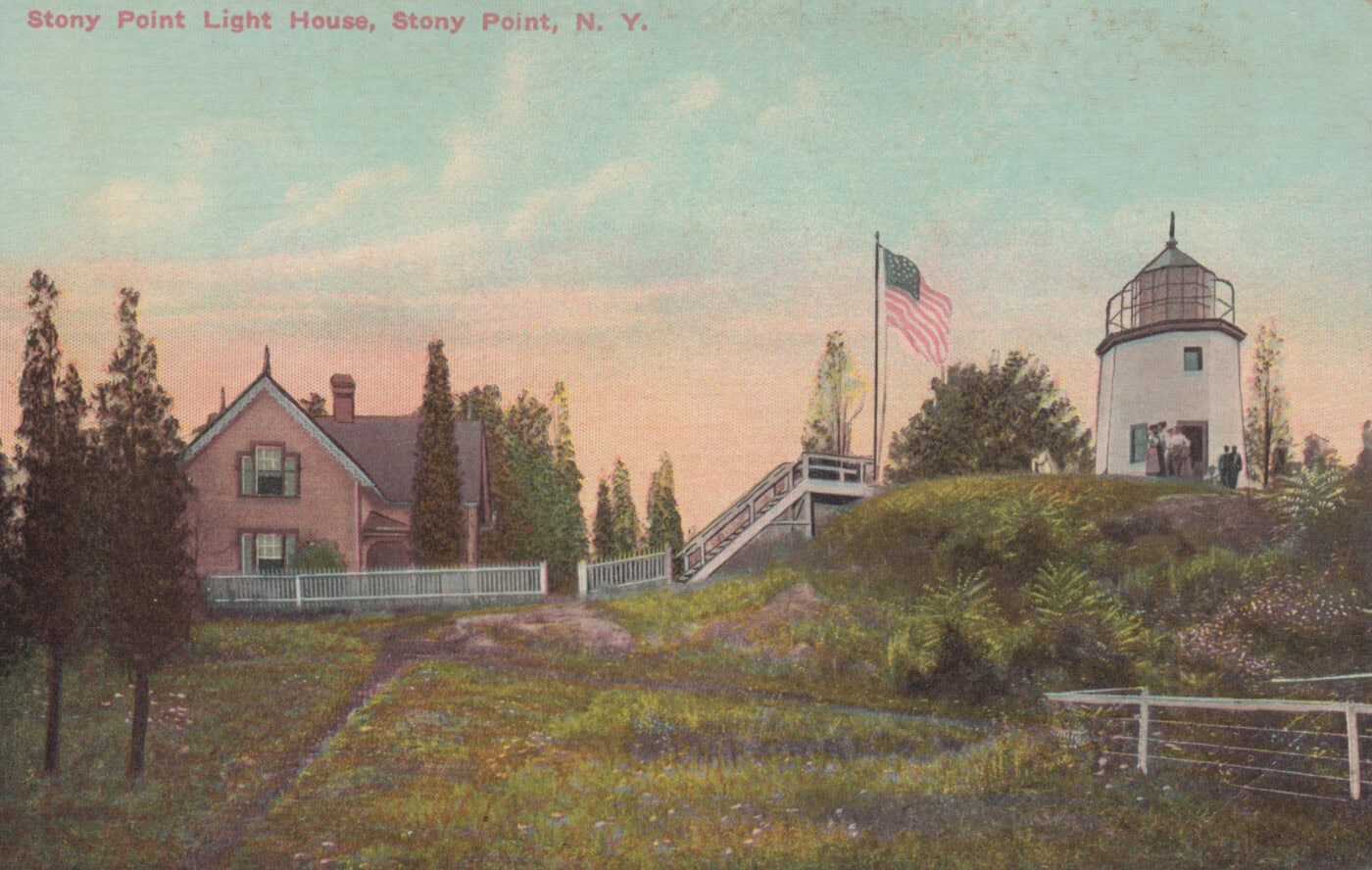
The Palisades Interstate Park Commission acquired the Stony Point Lighthouse in 1941 and it was placed on the National Register of Historic Places on May 29, 1979. After having been minimally maintained for many years, restoration efforts began, and in 1995 the Stony Point light was ceremonially relit.
The oldest lighthouse on the Hudson is now part of the Stony Point Battlefield State Historic Site, managed by the New York State Office of Parks, Recreation and Historic Preservation. Its survival preserves the stories of those long-ago guiding lights along the Hudson River and the dedicated keepers who made river safety their life’s work.