


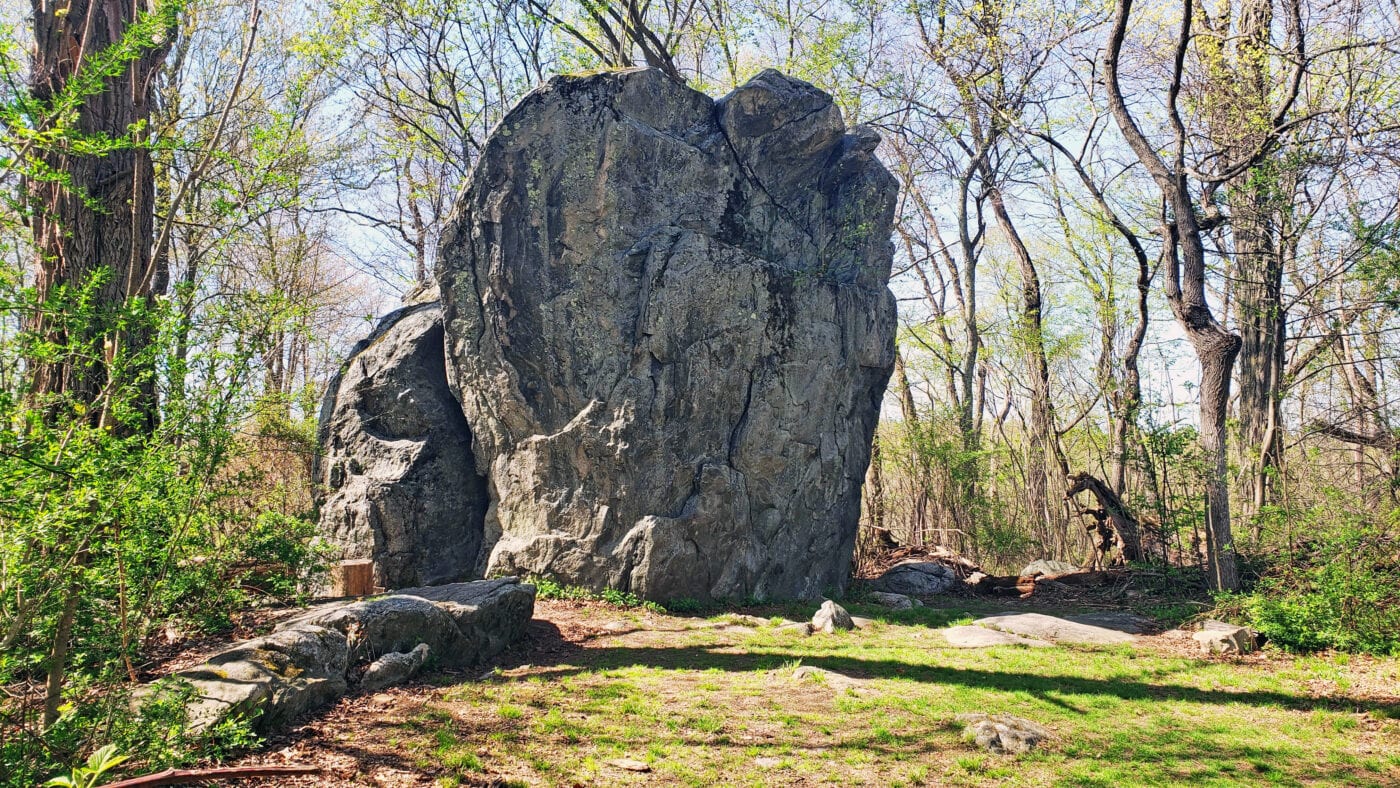
The town of North Salem in Westchester County is known for its rich history, wide-open acreage, and horseback riding. It’s also known for a 60-ton boulder. Balanced Rock, as it is called, measures at least 10 feet across in any direction and is elevated a foot or two off the ground by a cluster of smaller rocks, like legs on a stool. It sits in plain view near a historic road that travelers have used for centuries. Naturally, many have wondered how it got there.
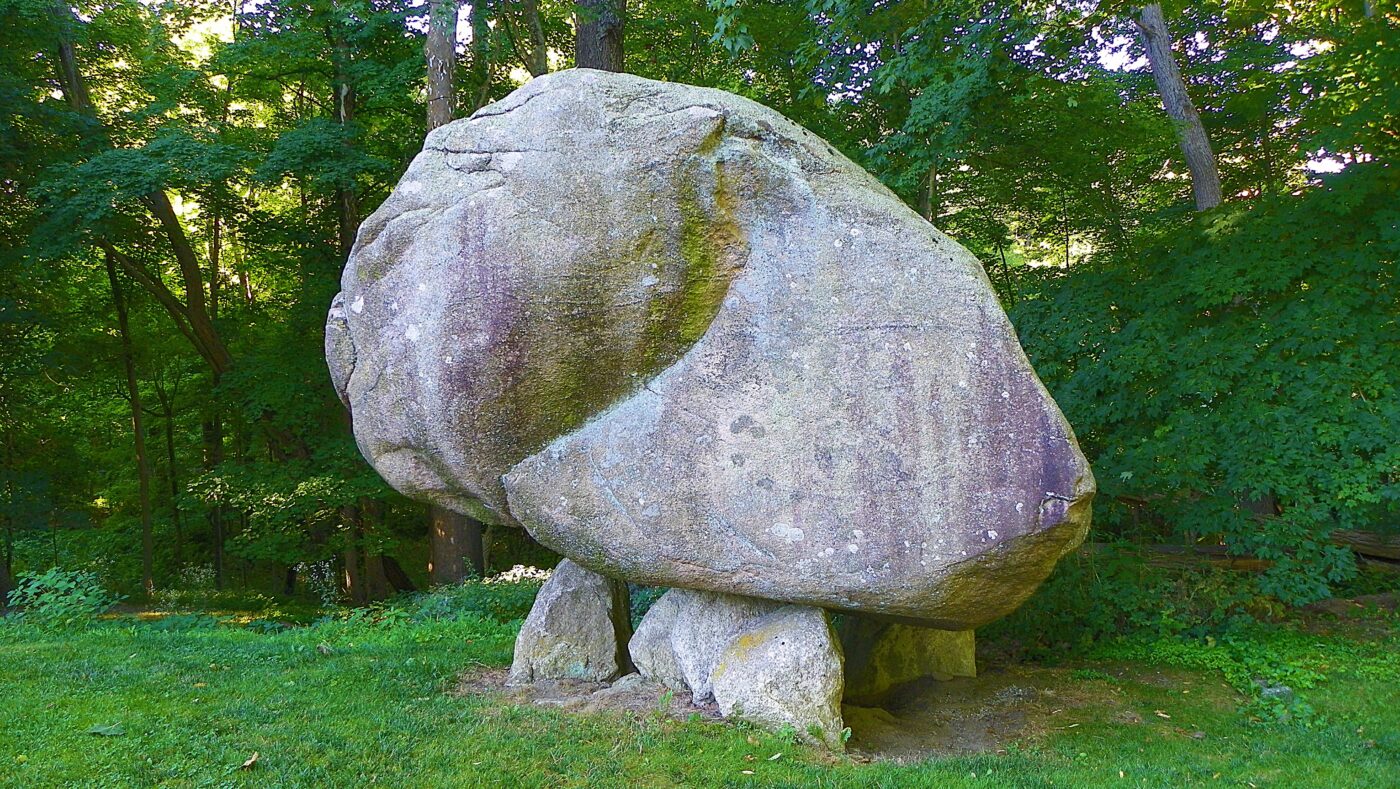
“There are many theories and a lot of speculation about its origin,” says Susan Thompson, who is North Salem’s town historian. For instance, she points to a British geologist named John Finch, who proposed in 1824 that Balanced Rock was a prehistoric monument of Celtic origin, much like Stonehenge and other cromlechs common in Europe. “I think Finch is one of the earliest to make that assumption or state that possibility,” she adds. “It was understandable that he would assume this was a cromlech, like the ones he sees at home.”
Others have suggested that Balanced Rock was erected either by Indigenous peoples or beings not of this world. But Thompson isn’t convinced. “I think it arrived there by nature, not by man,” she says.
The natural explanation may seem less intriguing, but it’s still part of a very ancient and fantastic story.
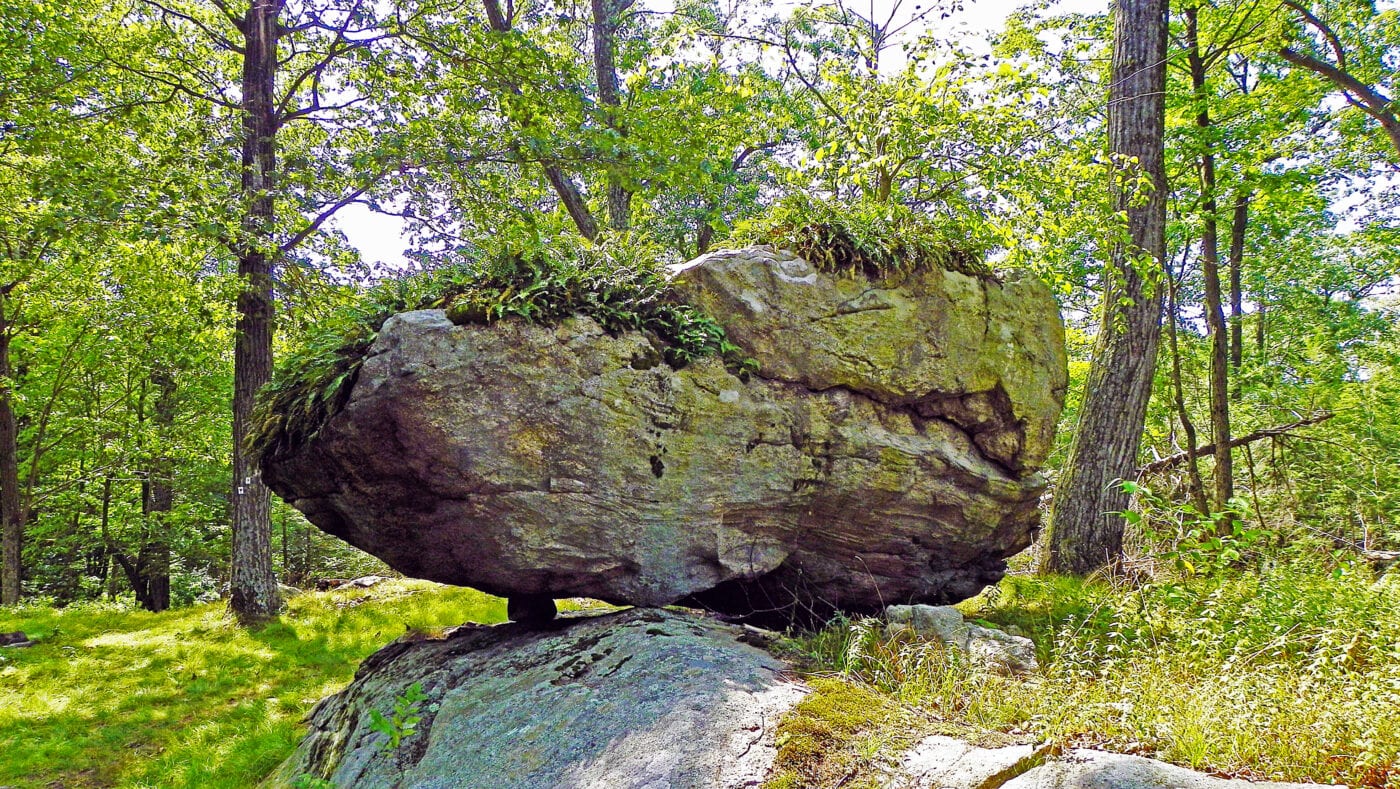
During the last ice age, what is now the Hudson Valley was buried under the Laurentide ice sheet. At its peak 21,000 years ago, the ice sheet could be more than a mile deep and covered most of the northern part of the continent. As the ice sheet’s glaciers flowed in slow motion, they carried boulders and other debris. When the last glaciers in this region finally melted about 12,000 years ago, some large boulders were left far from their origin, sometimes in unusual locations. These are what geologists call “erratic boulders,” or “glacial erratics,” or sometimes just “erratics.”
As peculiar as Balanced Rock is, most geologists consider it to be an erratic boulder rather than something humans built in ancient times, says Steven Schimmrich, who is a geology professor at SUNY Ulster. “That is not to say that local [Indigenous peoples] didn’t attach significance to such objects,” he says. “But there really is zero archaeological evidence for artificial construction.”
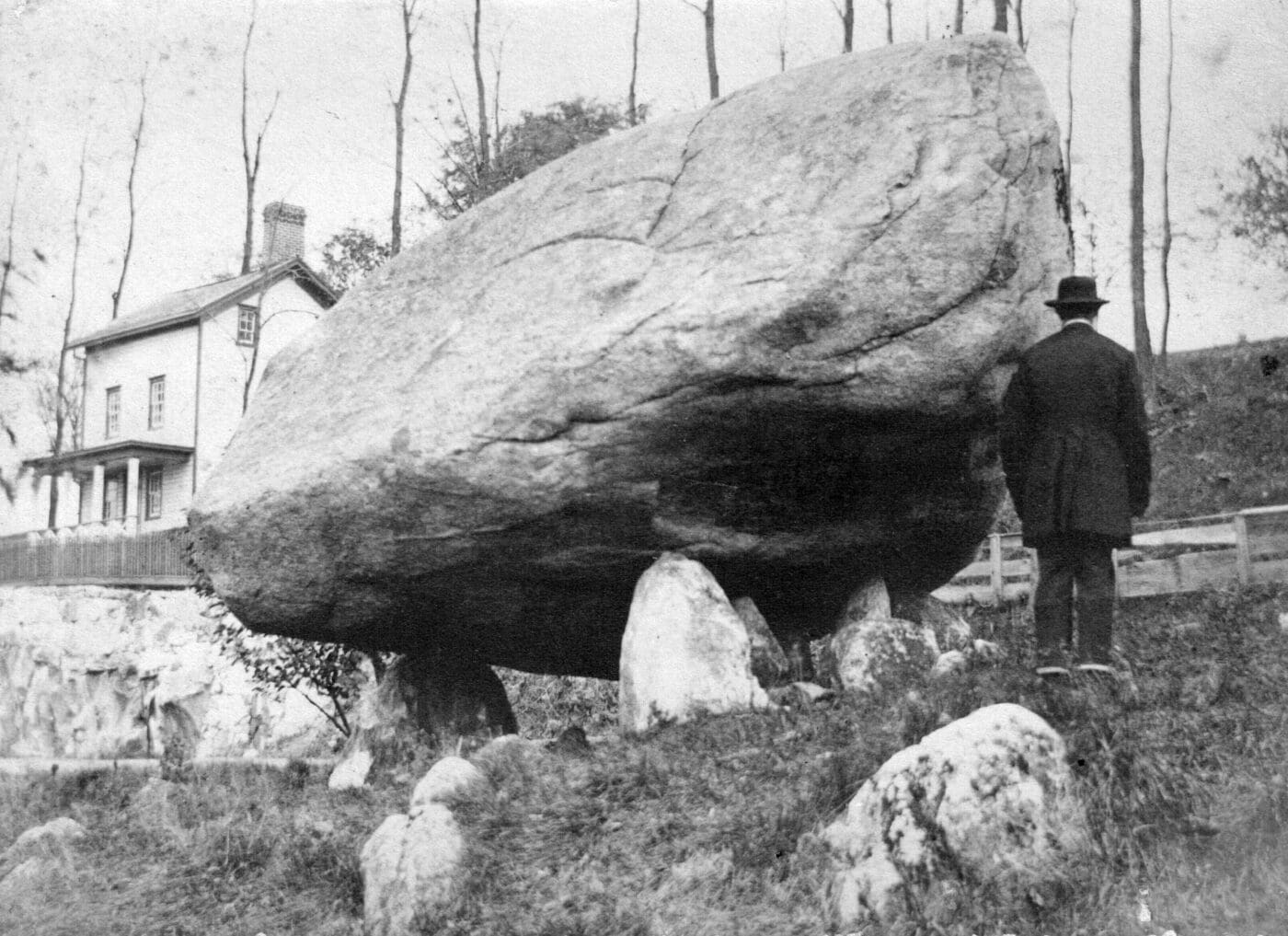
For those who would like to judge for themselves, Balanced Rock can be easily located just off North Salem’s Titicus Road (also known as Route 116), near the Titicus River. The plot of land where the rock is found is owned by the town, and there is an open space for viewers to park nearby.
Here are a few more places around the Hudson Valley where you can find other famous erratic boulders.
Patterson’s Pellet, Minnewaska State Park Preserve
Minnewaska State Park is one of the best places in the Hudson Valley to see evidence of the region’s glacial past, according to geologist Robert Titus, who cowrote the book The Hudson Valley and the Ice Age. “The Shawangunk Ridge is composed of very heavily cemented quartz sandstone. That makes it extremely resistant to the effects of chemical weathering,” he says. “Once gouged, scratched, sanded, or polished by a passing glacier, it stays that way.”
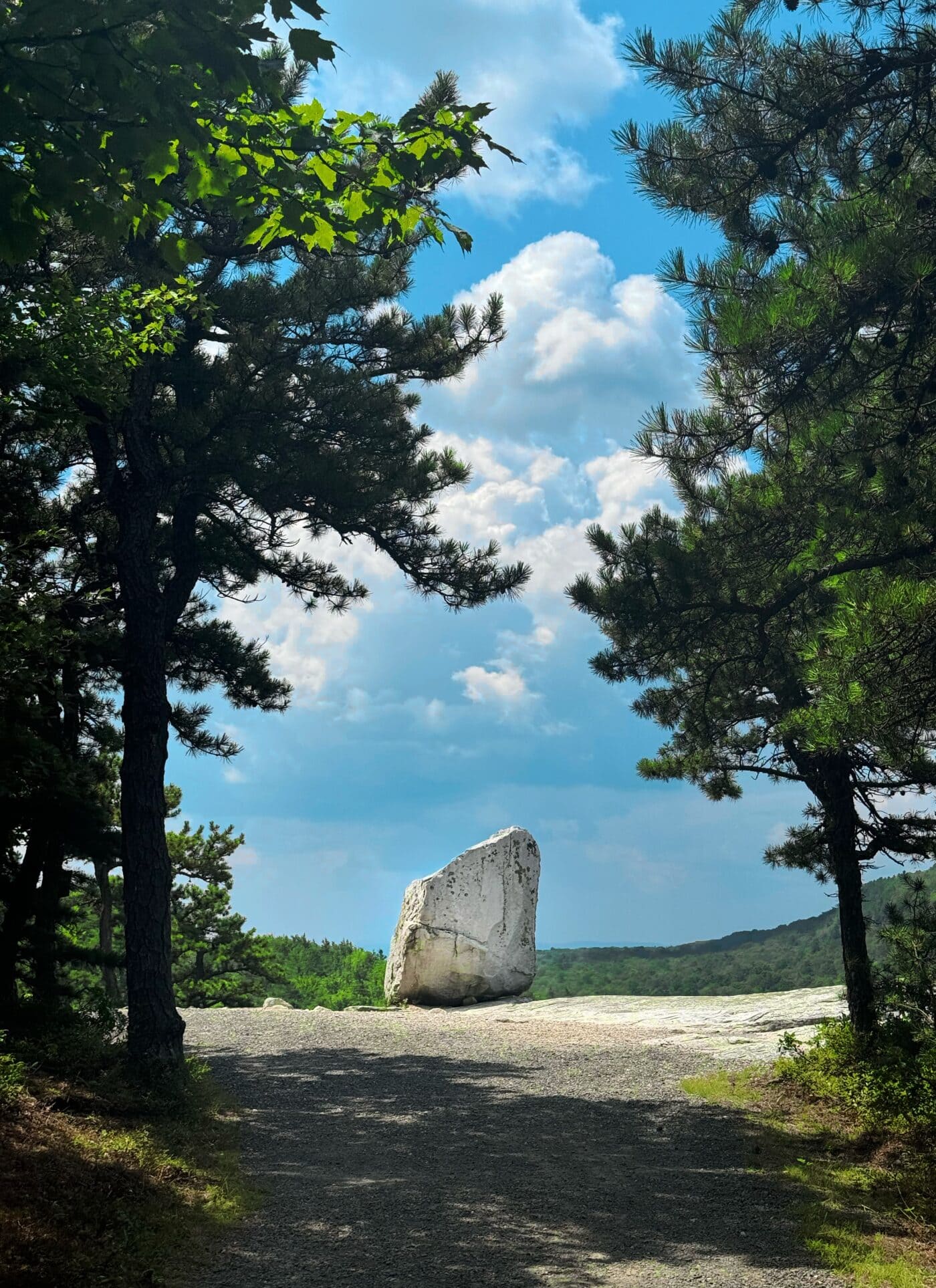
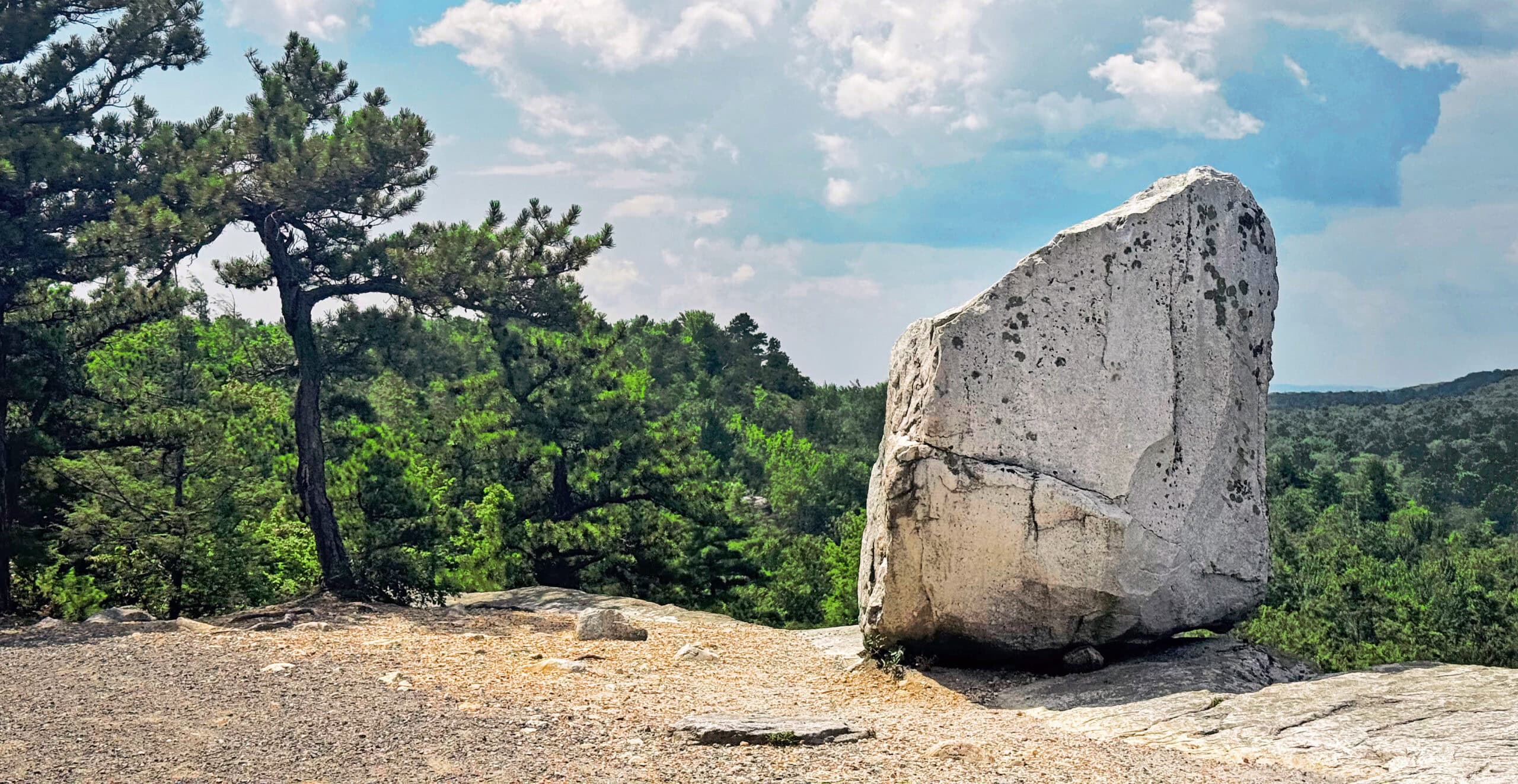
Incidentally, many erratic boulders can be spotted around Minnewaska State Park, along with some of the scratches they left on rock surfaces during their glacial journey. Patterson’s Pellet, near Lake Minnewaska, is perhaps the most photogenic of Minnewaska’s erratic boulders. This 7-foot-tall boulder suddenly emerges at a bend along the Millbrook Mountain Carriage Road after you’ve gone about 1.5 miles from the main visitors’ center. It dangles slightly just over the edge of the Palmaghatt Ravine, where it has been enjoying the view for thousands of years. It seems that if a glacier had pushed Patterson’s Pellet just a few more feet before melting, this erratic boulder would be at the bottom of the ravine instead.
Indian Rock, Minnewaska State Park
Another well-known erratic boulder can be found over on the western side of Minnewaska State Park in the Sam’s Point Area. It’s about a 2-mile hike to get there from the Sam’s Point Visitor Center, and the final stretch will take you on a spur trail that cuts through a charming dwarf pitch pine forest before opening over North Gully. From there, a short scramble along a rocky path leads to Indian Rock, which is accompanied by a scenic vista over the gully toward Ellenville. Like much of the surrounding Shawangunk Ridge, this large erratic is made of quartz sandstone conglomerate full of breaks and crevices.
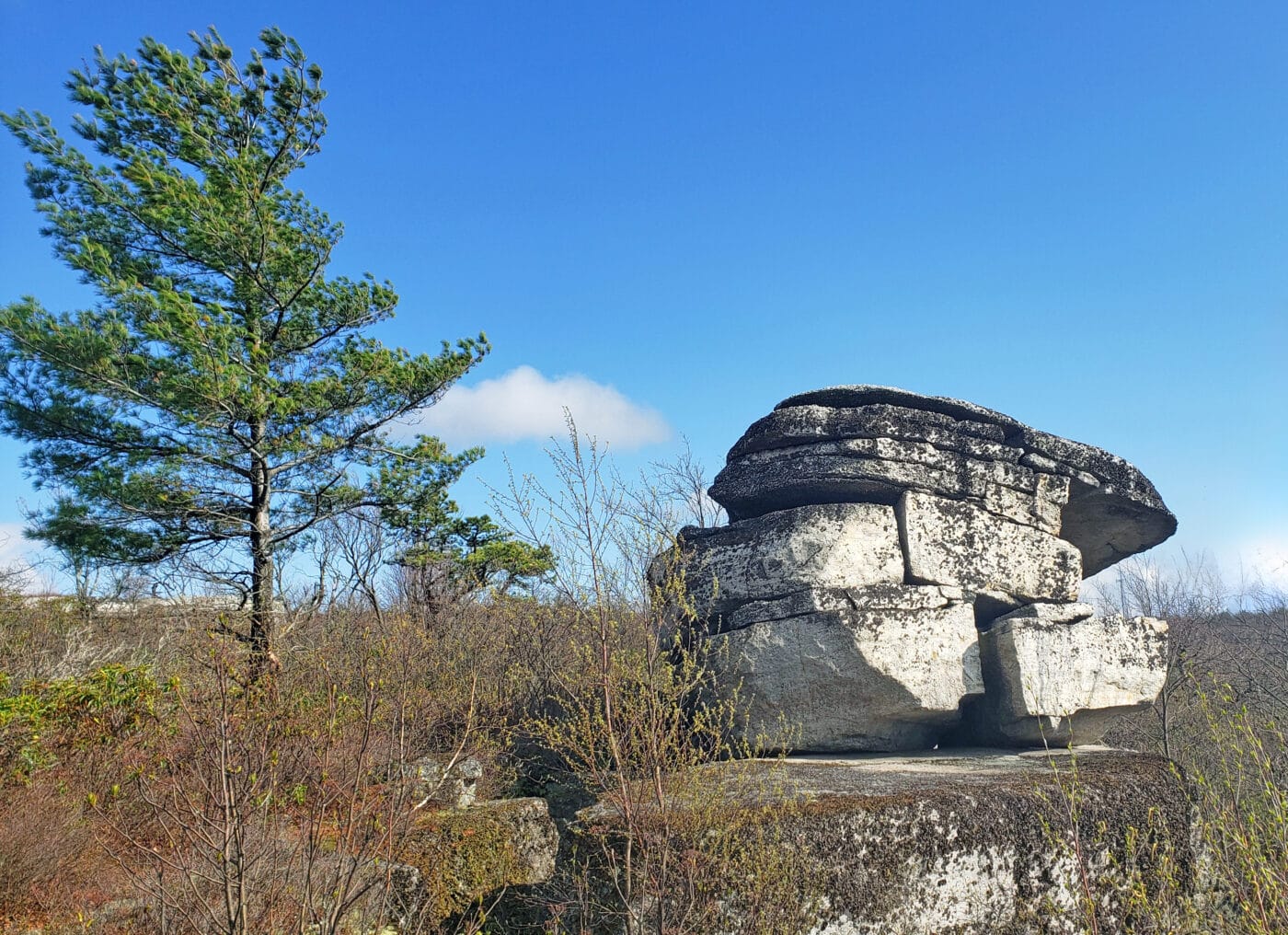
A shorter hike to the popular Sam’s Point overlook will take you to a smaller boulder just above the Lenape Steps that stands out on the cliff. But there is some uncertainty about whether it is truly an erratic boulder. “I have a hard time calling it an erratic because it has some rocks below it, almost propping it up,” says Rebecca Howe, an environmental educator with a geology background at Sam’s Point. She notes that its rounded shape was probably caused by glacial activity but adds, “I am way more confident Indian Rock is an erratic.”
Indian Rock, Rockland County
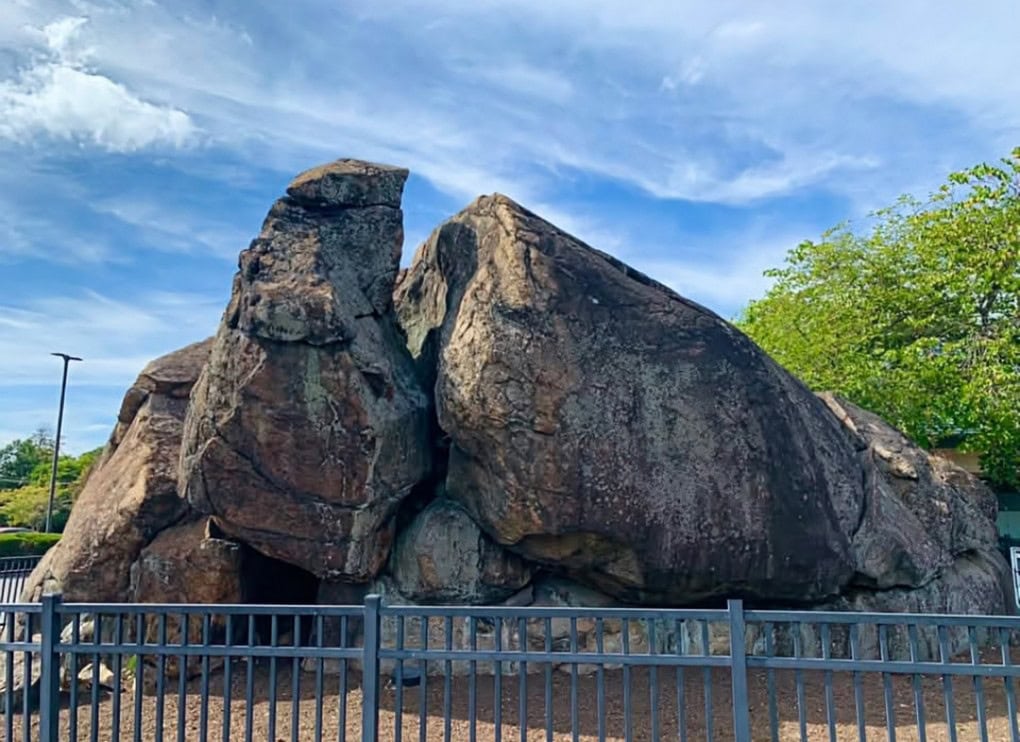
Interestingly, there is more than one erratic boulder in the Hudson Valley named Indian Rock. But the one in Rockland County is a bit more metropolitan. The Indian Rock Shopping Center in Ramapo, N.Y. is named in honor of a 23-foot-tall granite boulder that sits adjacent to the building’s parking lot (and across from a McDonald’s). Developers originally considered removing Indian Rock when planning to build the shopping center in 1996. But locals opposed that plan, and so the boulder became proudly incorporated into the shopping center instead.
Spook Rock and the Pleasantville Glacial Erratic, Rockefeller State Park Preserve
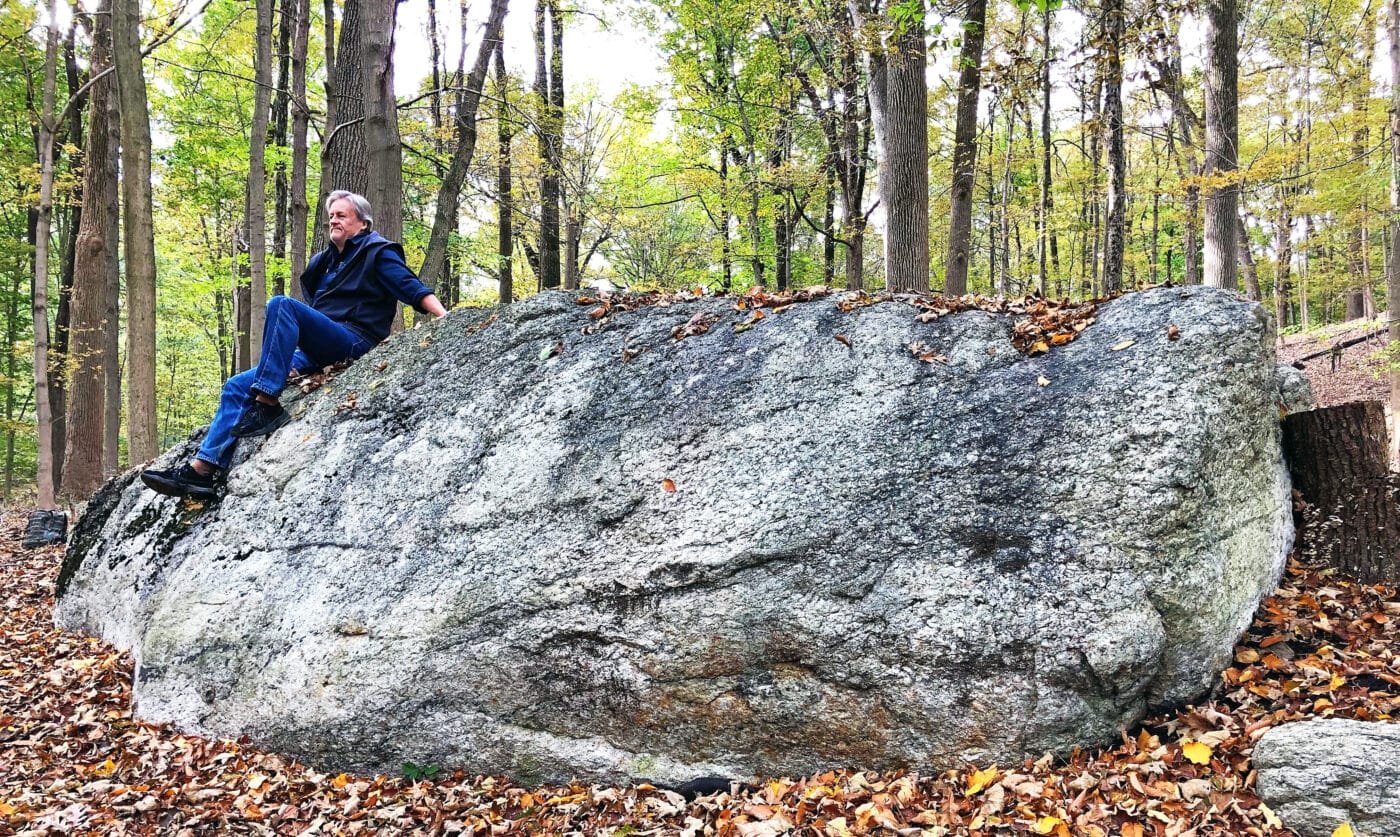
Located near Spooky Hollow, Rockefeller State Park Preserve is home to two erratic boulders that can be spotted along its trails. Spook Rock is found along the Big Tree Trail over in the northwestern edge of the preserve. Its name comes from cryptic descriptions of this area included in Irving Washington’s famous book The Legend of Sleepy Hollow. And a short distance to the east is the more spectacular Pleasantville Glacial Erratic, which can be appreciated from a clearing accessible via the Nature’s Way trail, just a short walk from the main parking area. Truly massive, this boulder measures 65 feet in circumference and is at least 20 feet tall, although not all of it is exposed.
Robert Lawrence lives in Montgomery, N.Y., where he works as a science writer and enjoys visiting the many parks of the Hudson Valley with his wife and little boy. He is originally from drier climates and holds a Ph.D. in biochemistry from Arizona State University.
—