


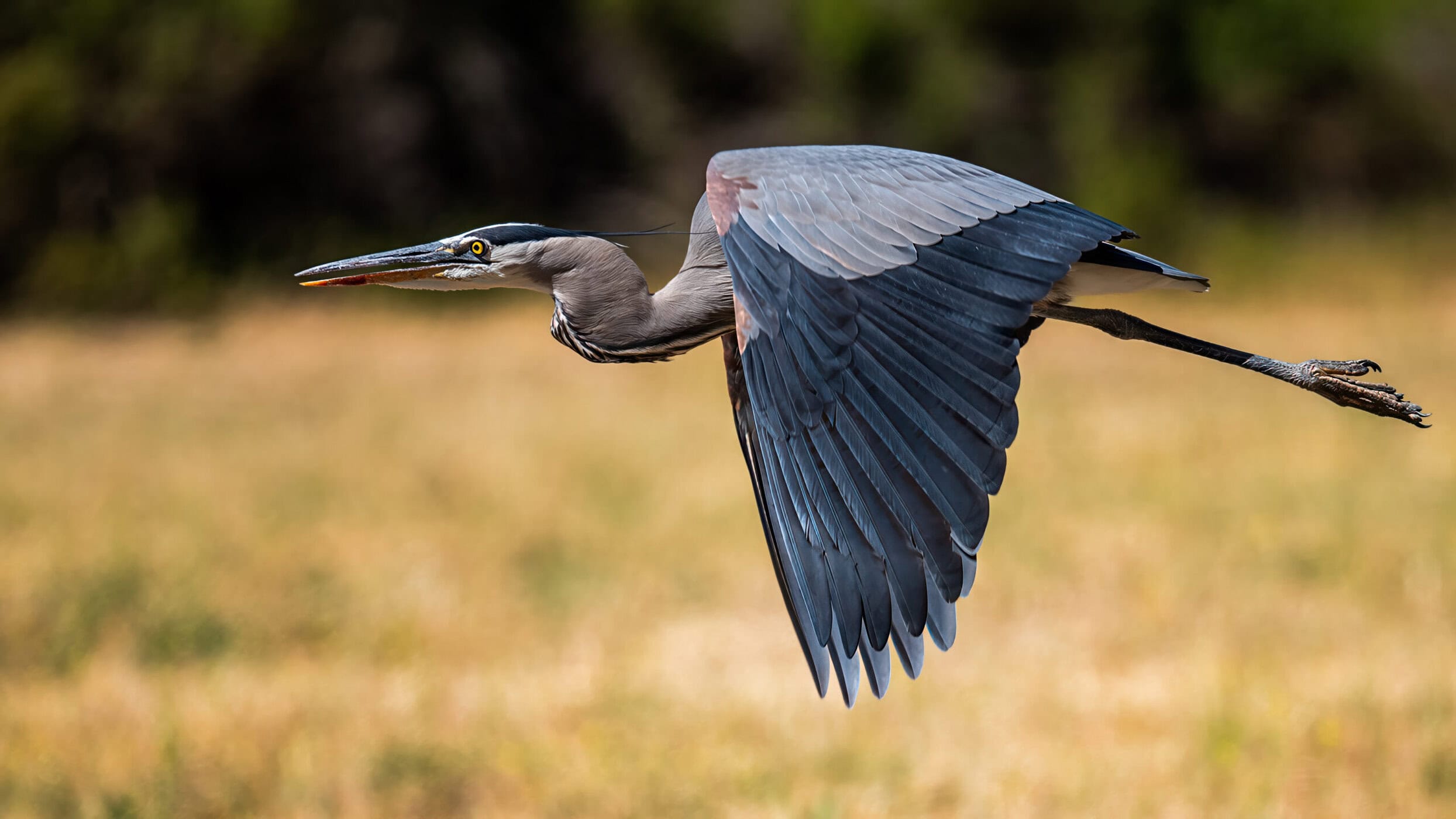
Great blue herons can be spotted in the Hudson Valley not just during breeding season (mid-April through late-June) — but for the observant, through the colder months as well. These ubiquitous birds measure up to 4 feet tall and have a 6- to 7-foot wingspan. They spend roughly 90% of their waking hours hunting, standing still, or wading slowly through shallow water.
Most breeding colonies are located within 2-4 miles of feeding areas, so you’ll often spot the birds along rivers and other bodies of water near their nesting sites. They nest in colonies called “heronies” or “rookeries” and lay up to six eggs per clutch.
“They nest in trees primarily,” says Danielle D’Auria, waterbird specialist at Maine’s Department of Wildlife Diversity. “In beaver flowages and wetlands where there are dead snags in the middle from flooding. That’s one of their favorite habitats to nest in. They also nest in upland live trees.”
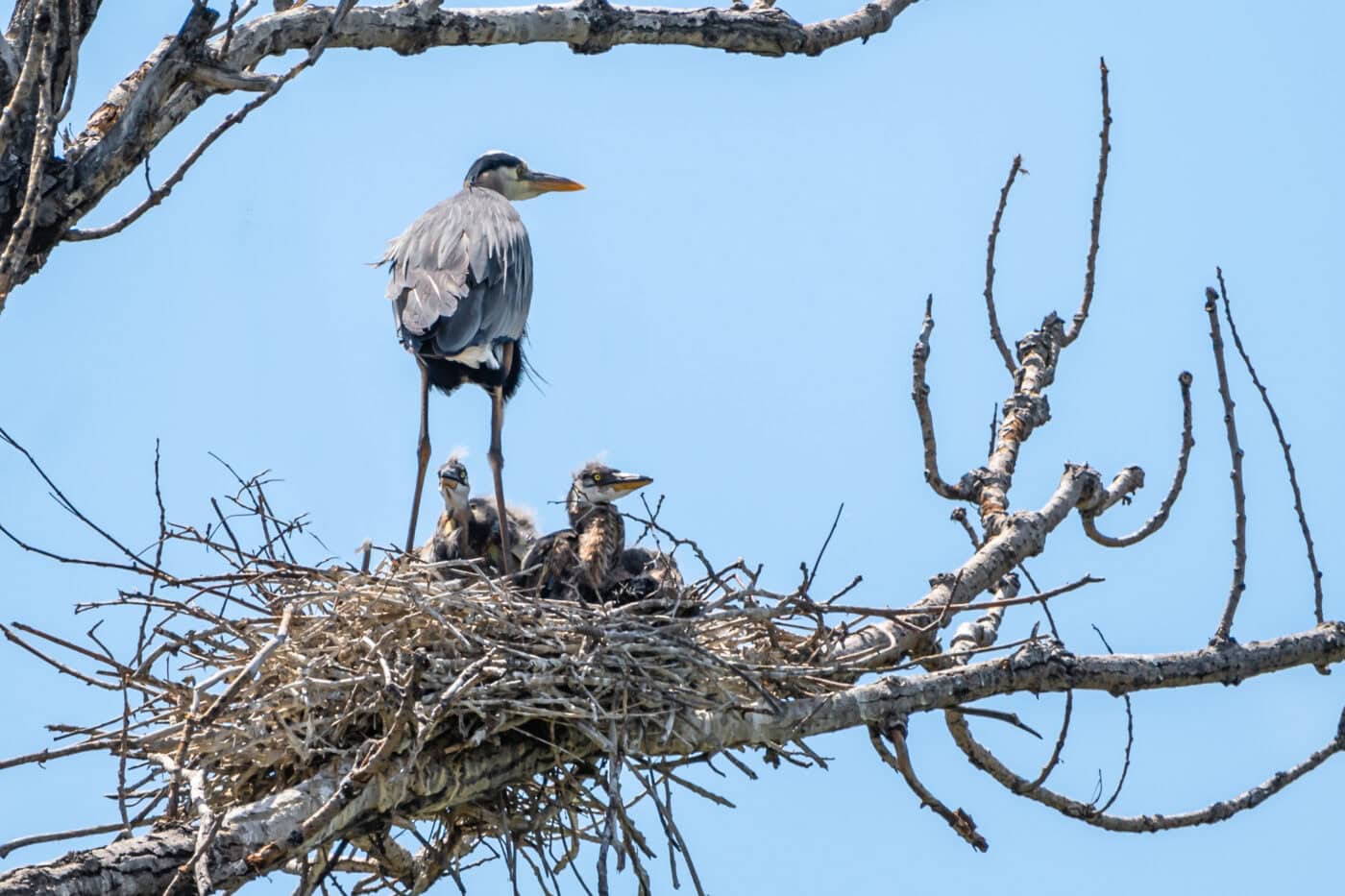
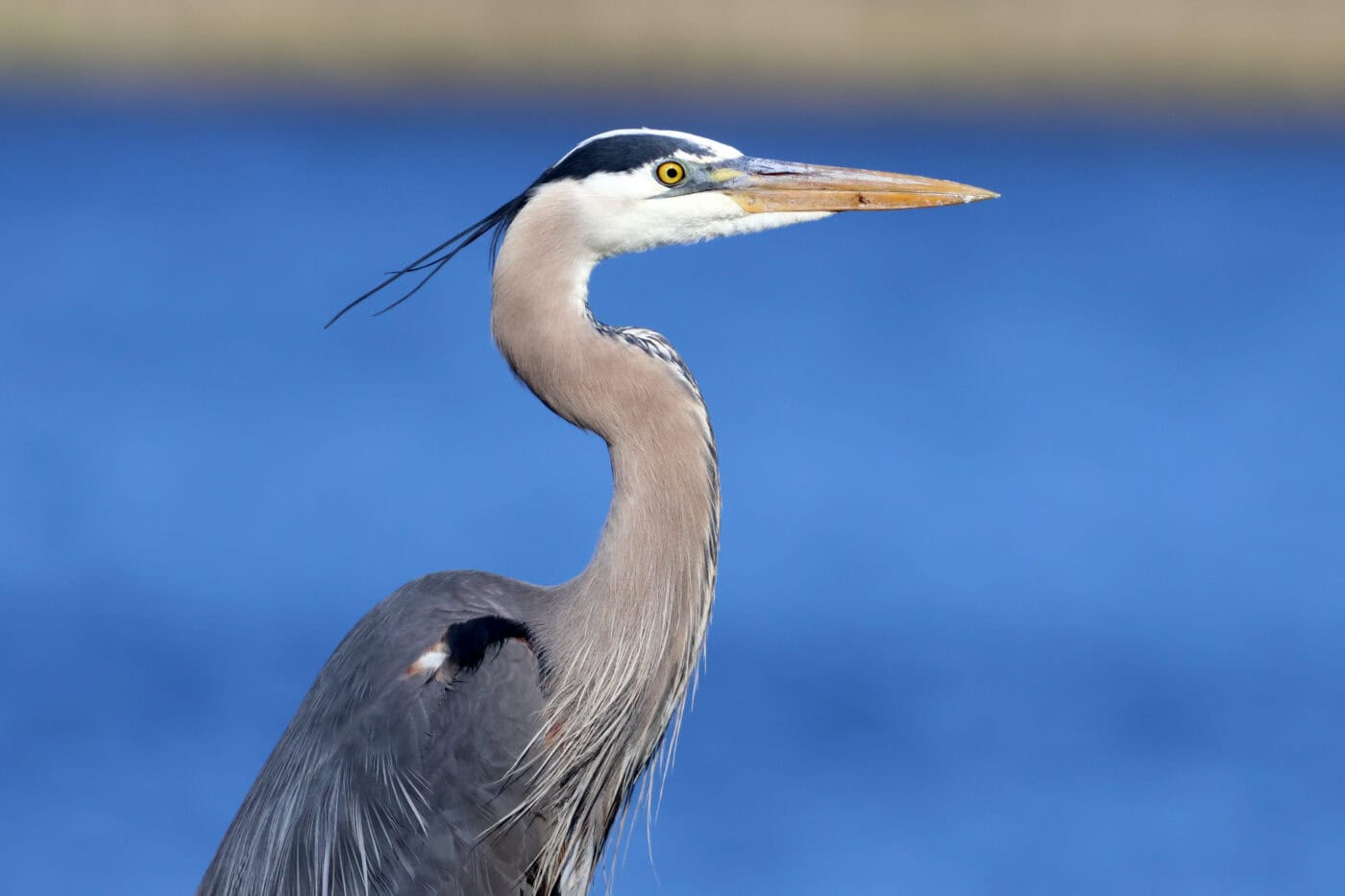
These conspicuous water birds are relatively easy for beginning birders to identify. They have striking bluish-gray plumage and hunt throughout the day, but are particularly active around dawn and dusk.
I often see them at Esopus Meadows Preserve, a Scenic Hudson wildlife preserve that sits that sits at confluence of the Hudson River Estuary and one of its tributaries. These birds are a common sight from spring through autumn, but did you know that some of them hang around all winter long?
Migration Isn’t All-or-Nothing
Experts agree that some great blue herons remain through winter but only if they can continue finding accessible food. They need open water to do this (that is, any water that doesn’t freeze over).
Whether a great blue heron migrates appears to depend largely on food availability and likely on a bird’s age. D’Auria said the wintering herons she observes in Maine are overwhelmingly juveniles. “I would say 95% of the birds here in the winter are young birds that were just hatched this past spring or summer,” she says. “They’re trying to stick it out on the landscape here.”
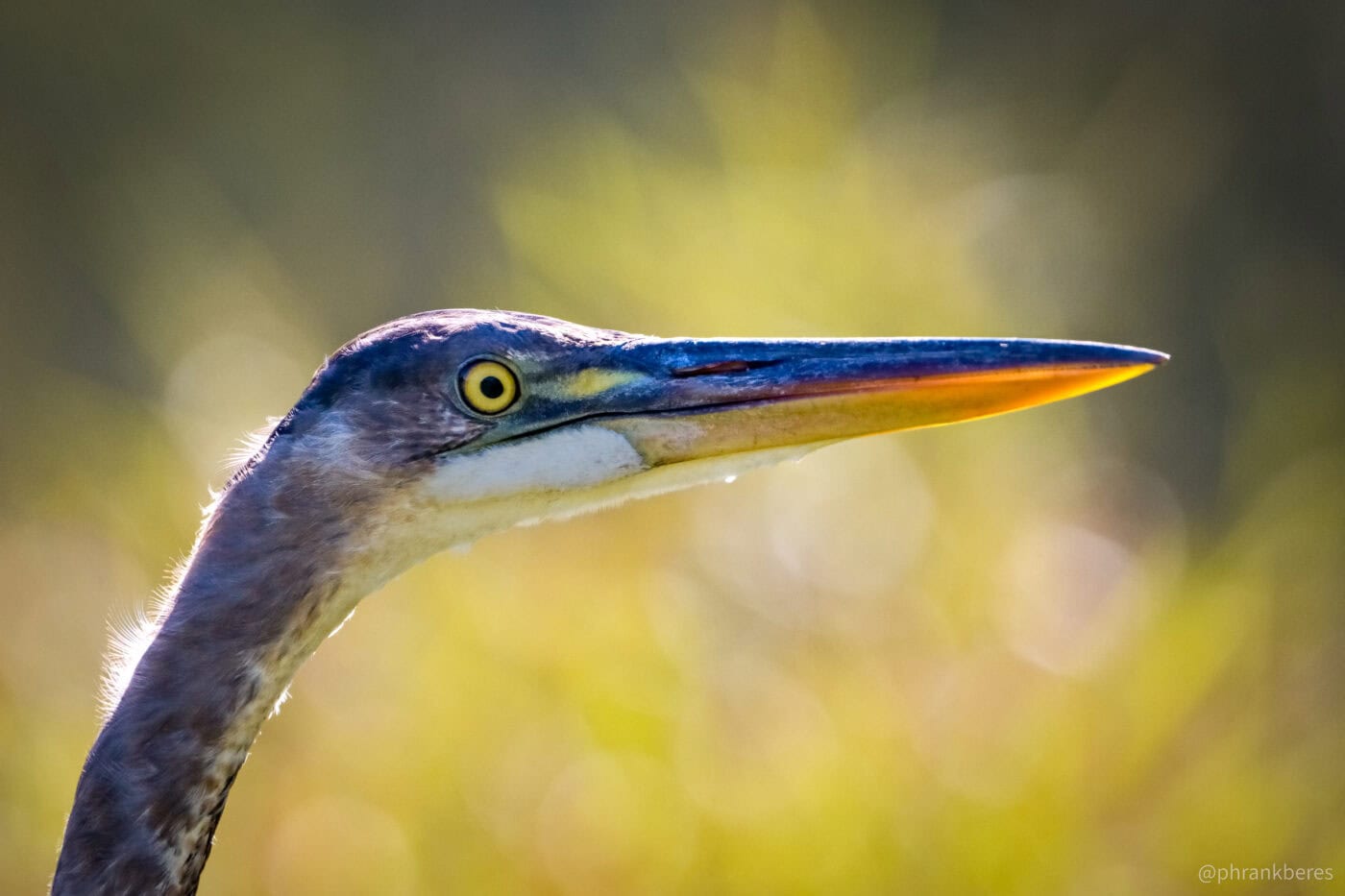
Great blue herons live primarily on fish and other aquatic prey, including eels, but they’re opportunistic and will eat rodents and small animals like snakes and frogs.
“They’re a versatile predator,” notes Tod Winston, a birding guide and urban biodiversity specialist at the New York City Bird Alliance (formerly NYC Audubon). “They can find food outside of water if they have to.”
Depth of water is also a factor in where herons hunt and how long they stick around. “Water must be a certain depth,” Winston says. “Because it’s a wading bird, it must be able to reach the floor, so coastal areas or shallow lakes and ponds are what drives them.” As the water freezes, they have less access to fish, and most are gone by the time it gets cold enough for the Hudson to freeze over.
The presence of herons declines in winter in New York City, Winston says. “They’re in our area year-round, but some go south,” he says. “They’re constrained by how much open water there is. In a really cold winter, a lot of birds that might hang out for a while head south.”
The Remarkable Thing About Herons
One of the most interesting things about great blue herons, regardless of whether they migrate or stay put, is how habitual they are in their migratory patterns.
D’Auria has monitored Maine’s great blue herons since 2008. As part of that work, she and her team fitted a small number of birds with GPS transmitters to study their movements and behavior. They’ve tracked birds that wintered as far south as Florida, Cuba, Haiti, and the Bahamas.
They learned that the birds are loyal to their destinations, with one female returning to the same location in Haiti for at least four winters and to the same nesting colony in Maine each spring.
The most extreme flight D’Auria recorded covered more than 2,000 miles in one continuous stretch and lasted 68 hours. The tracking information is from a small sample size so it’s not necessarily a rule that can be applied to all herons, though it does speak to their resilience.
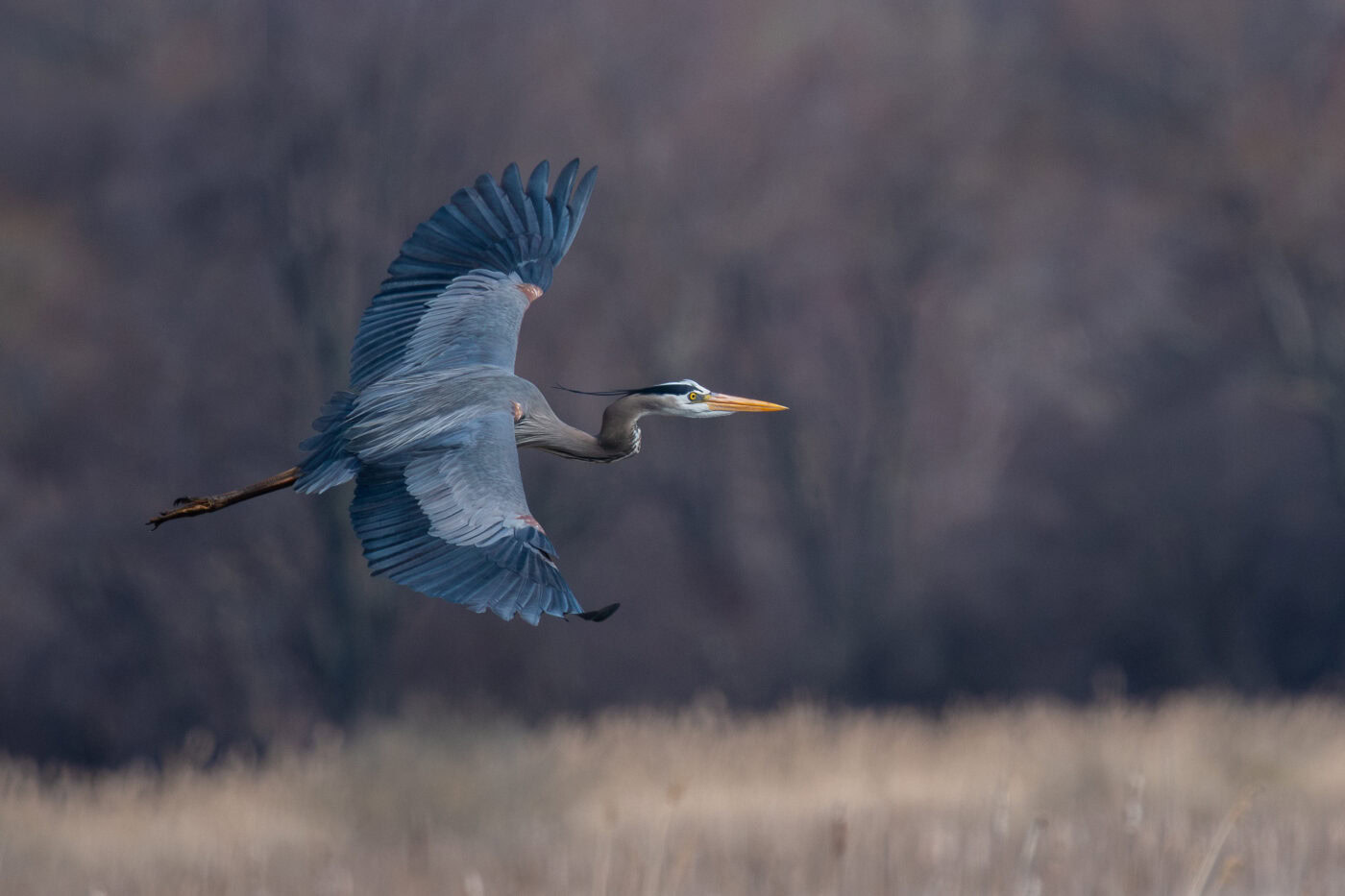
“This bird is so graceful, but to think of it flying nonstop, and how much effort that must take for such a large bird to travel so far, that’s just fascinating,” says D’Auria.
Spotting Great Blue Herons in Winter
If you want to see a great blue heron in the Hudson Valley in November and beyond, the John Burroughs Natural History Society has an interactive map that shows where to bird in Ulster County.
It lists the Saugerties Lighthouse Trail and the mouth of the Esopus Creek as places that attract waterfowl in winter, including herons that visit the tidal mudflats. Another possibility is the Ashokan Reservoir. In addition to great blue herons, the reservoir attracts wintering waterfowl like loons, grebes, ducks, and gulls.
The DEC also includes Schodack Island State Park, which is on the Hudson in Rensselaer and Columbia counties, as among the state’s best places to see these majestic birds.
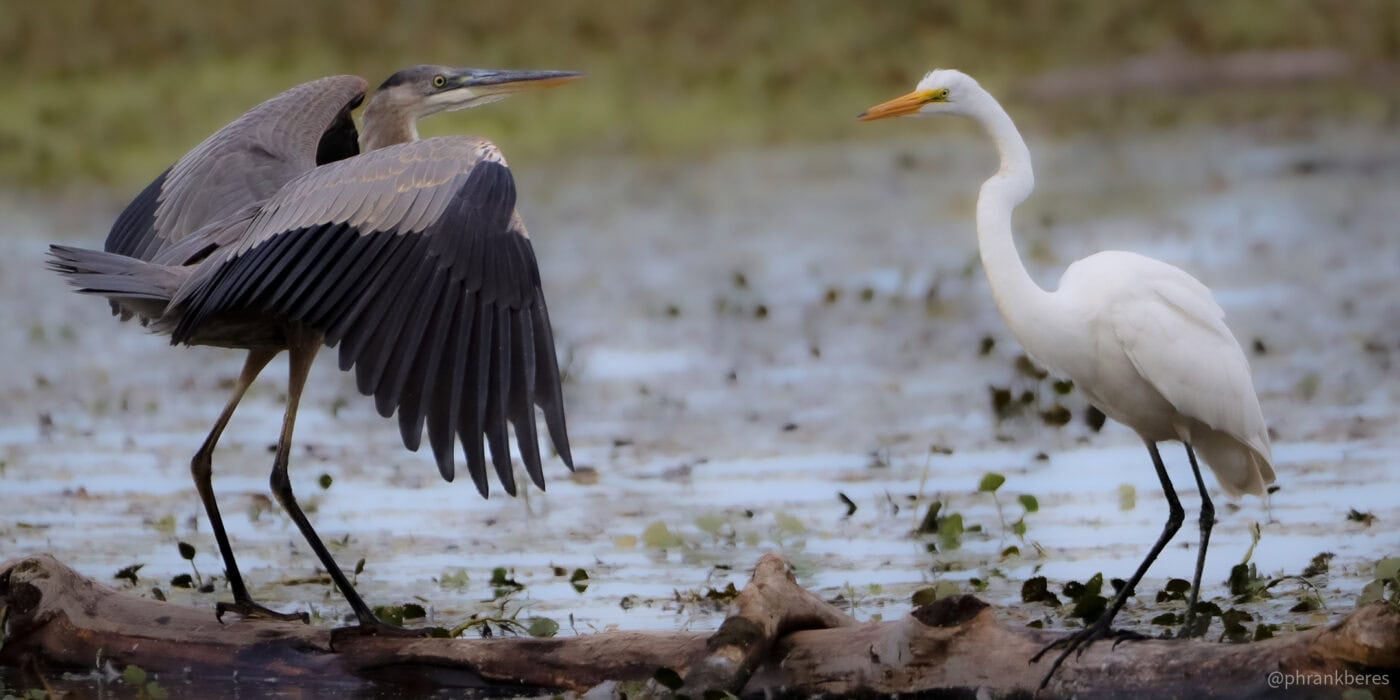
Even in winter, spotting a great blue heron may simply require finding open water and taking the time to look carefully. “Talk about a patient predator,” D’Auria says. “These birds stand still — stick still — for what feels like hours sometimes, because they’re just waiting for something to swim by and nab it. That’s extremely impressive to me.”