


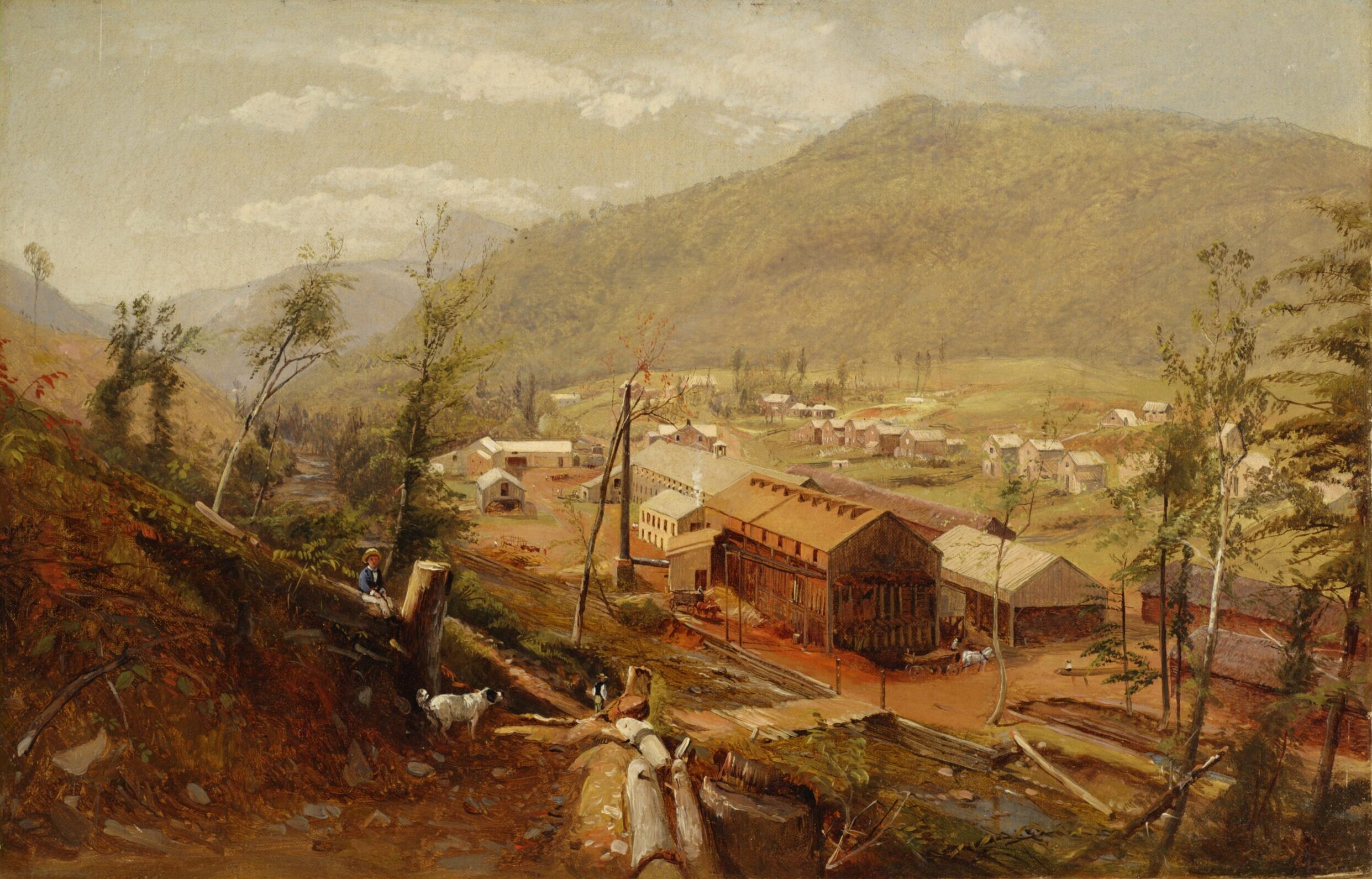
Step into the dense woods of the Catskill Mountains today, and it’s hard to picture a time when those forests were nearly stripped bare. Before the early 1800s, woodlands in much of the Hudson Valley and Catskills remained relatively undisturbed, with old-growth hardwood and conifers sustaining diverse ecosystems. But as the young nation’s demand for leather goods grew, the extraction of natural resources from the Catskills took a heavy toll.
New York’s first commercial tanneries were established by Dutch settlers around 1638 in Beekman’s Swamp, near the present-day Brooklyn Bridge. Like their European counterparts, early colonial tanners preserved animal hides by processing them with the tannins from crushed oak bark. In 1805, British chemist Sir Humphry Davy identified hemlock bark as an effective substitute for oak in tanning. Oak-tanned leather, known for its yellow-brown color, remained the standard for fine leather, but reddish-brown hemlock-tanned leather became widely valued for durable goods like shoe soles. Tanners began looking north to the Catskill Mountains, where stands of Eastern hemlock offered a plentiful new source of tannin.
Eastern hemlock grew especially well in the moist soils around Catskill streams. Beyond its industrial value, the species supported forest ecosystems by providing wildlife habitat, nesting cover, and deep shade that helped keep stream temperatures suitable for native trout. In addition to hemlock, the Catskills provided other resources the tanbark industry required: abundant water sources, nearby lime deposits (used to remove hair from animal hides), and access to the Hudson River, which allowed finished hides to be shipped to NYC and beyond.
In 1817, the first commercial tannery in Greene County was established in what would become Palenville. Within a matter of years, more than 60 tanneries operated in the region, and there were plentiful jobs for teamsters, peelers, tanners, bark grinders, and hide scrapers. The growing industry brought significant development to the Hudson Valley and the Catskills. Settlements expanded around the tanneries as the newly deforested land was claimed for homes, businesses, and farmland.
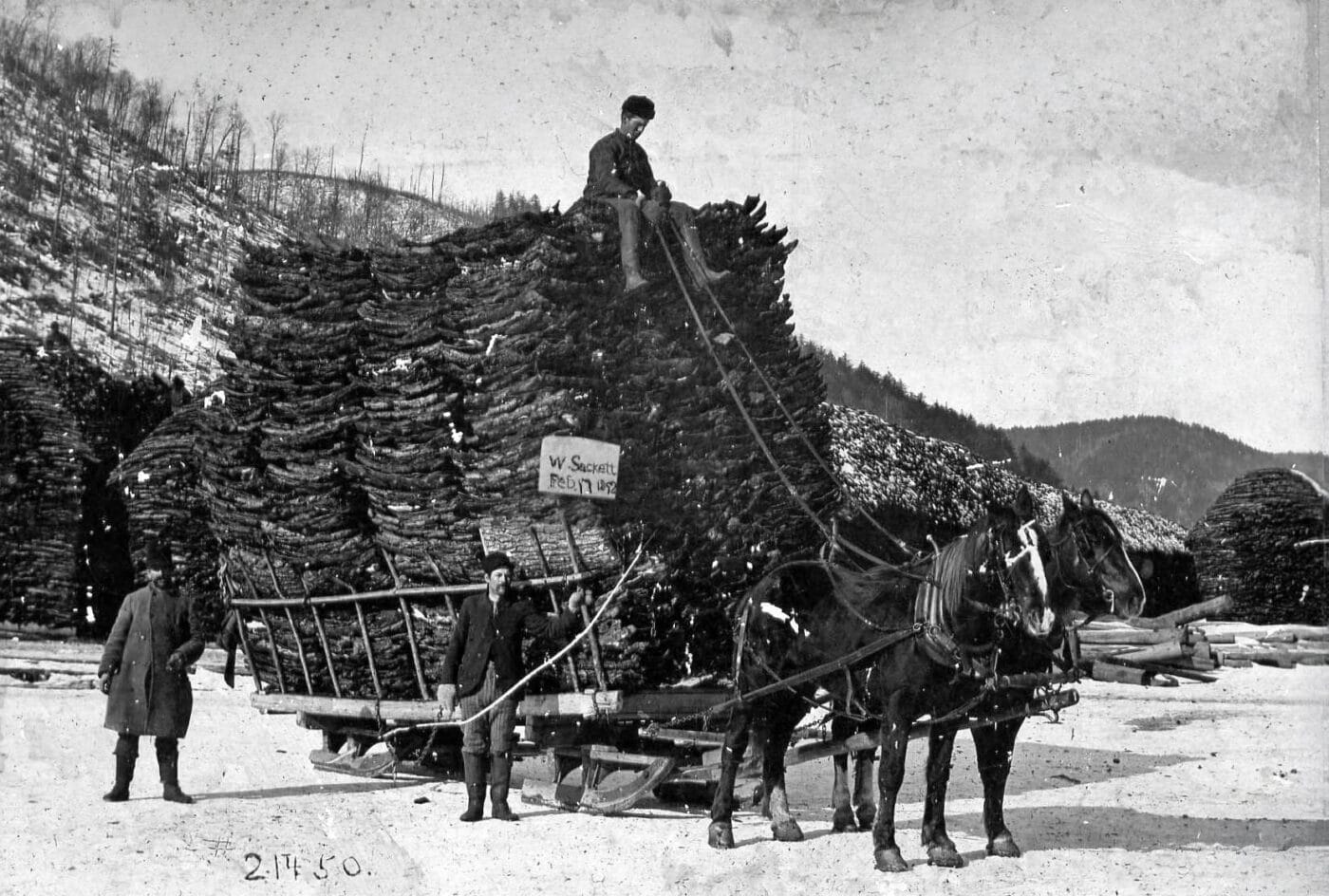
This sudden growth had a devastating effect on the hemlock forests. Peelers harvested hemlock with “spuds” (hook-shaped blades), stripping the thick bark into 4-foot lengths. This was accomplished by girdling and stripping bark from near the base of a standing tree, leaving the remainder to die off, or chopping down trees in order to peel the bark from the ground.
Forest fires were a common threat, fueled by the drying remains of felled timber. A network of “bark trails,” created by dragging loads of bark to tanneries or to the Hudson River, further eroded the forests. Hardwoods were also harvested in abundance as fuel for the tanneries, for woodworking businesses, and as lumber for housing. Logging camps were built throughout the Catskills, along with bridges, plank roads, and even an incline railroad in order to reach previously inaccessible areas.
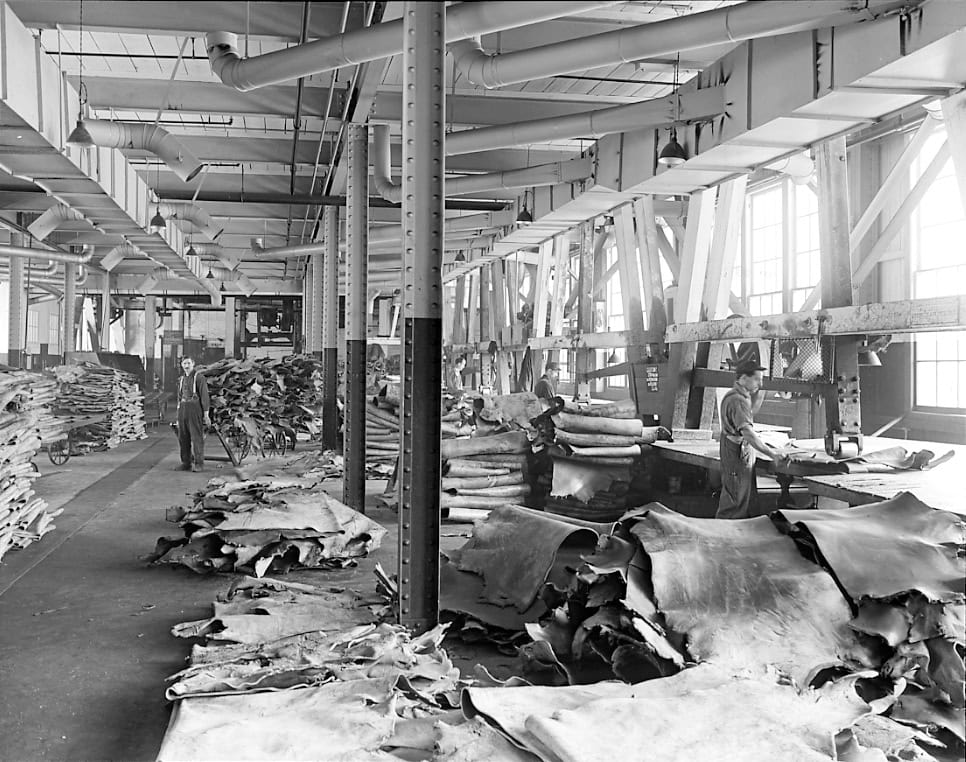
For a time, Zadoc Pratt’s tannery in Greene County was the largest of its kind in world. Within 20 years, the Pratt Tannery was responsible for stripping 6,666 acres of bark from the adjacent forests, the equivalent of 10 sq. miles. During the height of the tanbark industry, an estimated 70 million hemlocks were cut down in the Catskill Mountains.
The industry also affected the Hudson River watershed, since dams built for the tanneries altered and polluted waterways. Fish and other aquatic life died off due to the large quantities of animal waste, tanning-vat liquid, dyes, and other contaminants dumped into streams.
By the mid-19th century, with the Eastern hemlock nearly eradicated in the northern Catskills, tanbark operations began moving north into the Adirondacks and further south into Ulster, Sullivan, and Delaware counties. Sullivan County, aided by the D&H Canal, became a major tanbark hub with nearly 40 tanneries, the most in any New York county at the time. The Civil War created great demand for boots, harnesses, hats, and belts made of the durable, waterproof leather produced in the Catskills tanneries. The output was so high during that period that 19th-century Sullivan County historian James Eldridge Quinlan would later write that “the Civil War was won with the boots tanned in Sullivan County.”
As they did in the northern Catskills, the tanneries and other timber-based businesses inevitably took a toll in the southern counties and the Adirondacks. At the same time, new chemical technologies were introduced, and plant tannins were replaced by synthetics that allowed for a greater range of colors and strengths. As a result, the tanning industry in New York had all but disappeared by the early 1900s.
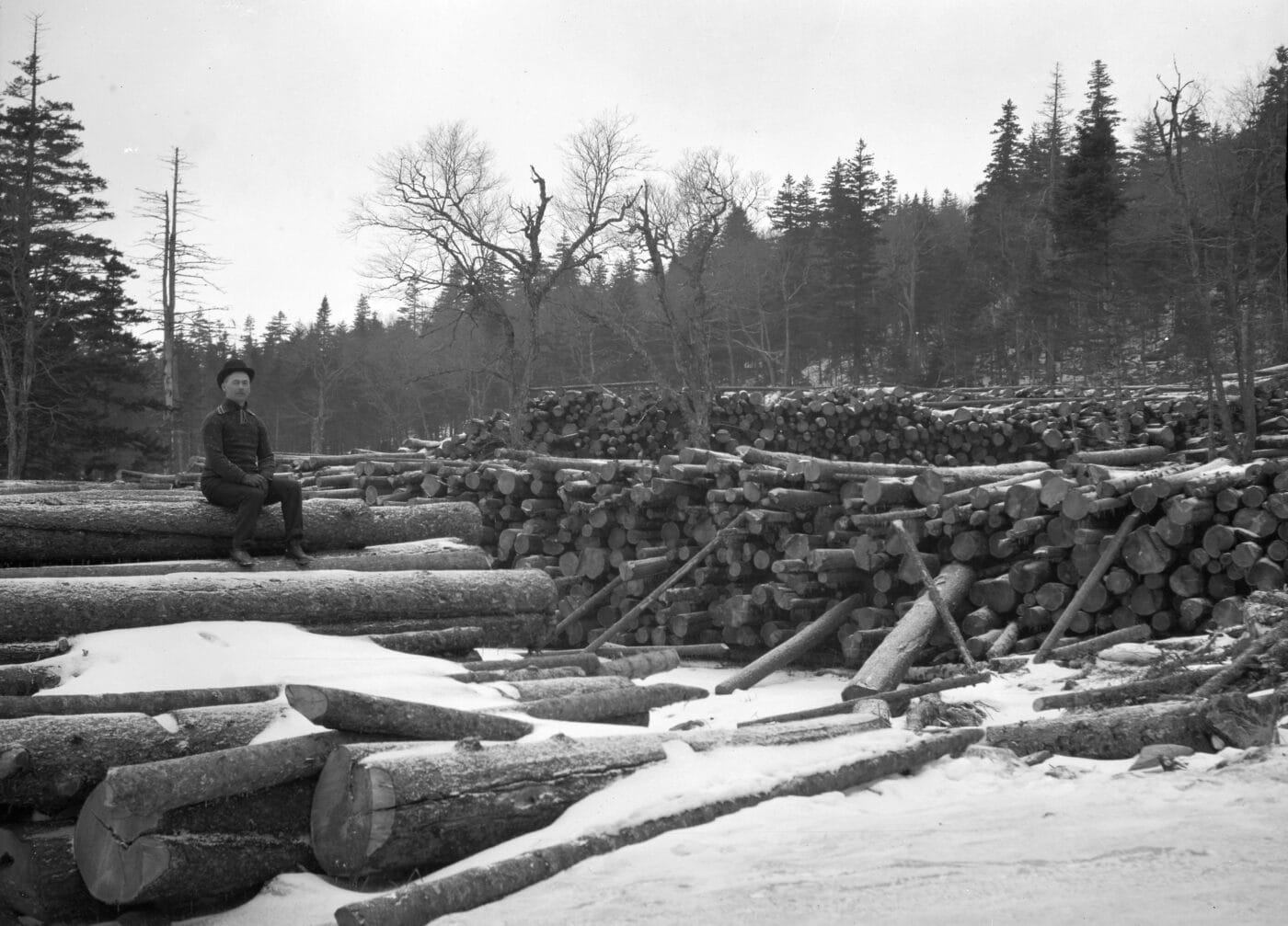
The devastation caused by tanbark production and the woodworking trades that followed wound up ushering in a conservation movement in the Catskills and Adirondacks. Efforts were made to revitalize damaged streams and forests, and naturalists, writers, and artists brought greater attention to nature and wild spaces. The first steps toward preserving state forests came in the 1890s. Ultimately, a constitutional amendment to the New York State Constitution designated state forest preserves in the Catskills and Adirondacks as “Forever Wild” lands.
Despite the destruction caused by the tanbark industry, Eastern hemlock has slowly returned to the Catskill Mountains, especially in the high peaks. Today, however, the keystone species faces a new threat: the invasive hemlock woolly adelgid, an insect that feeds on hemlock sap and can weaken or kill affected trees.
Using a range of experimental methods, state agencies, Cornell University, and volunteer community scientists are working together to save hemlocks, and the early results are promising. In Harriman State Park, for example, the introduction of Laricobius nigrinus, a small predatory beetle, appears to be attacking hemlock woolly adelgid populations, offering hope for a solution to protect New York’s Eastern hemlocks for future generations.