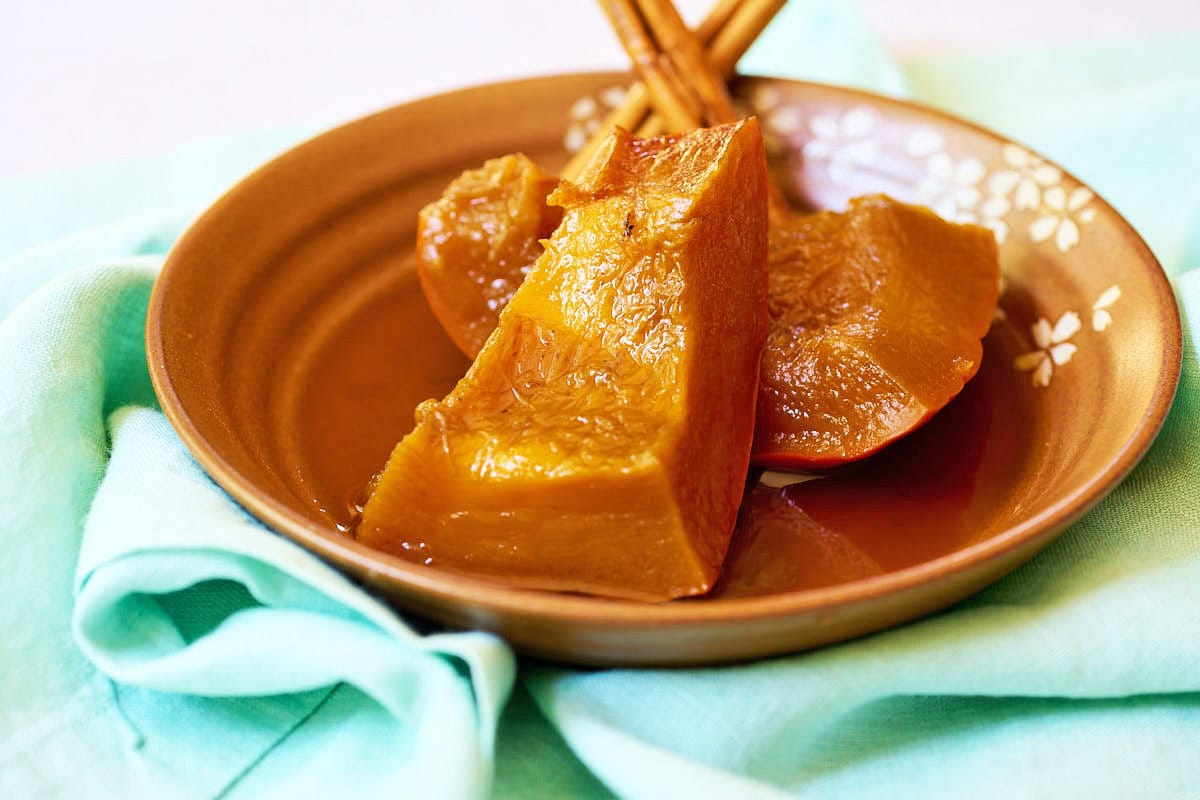


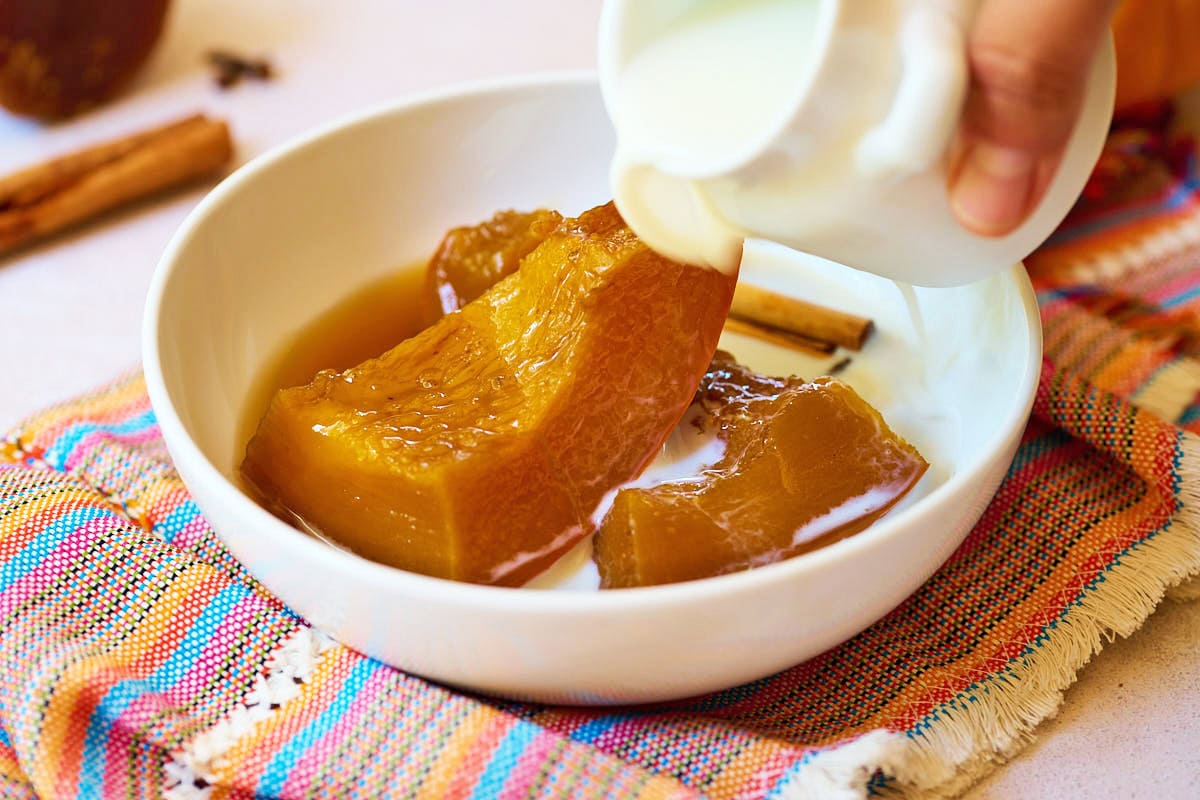
Calabaza en tacha, also known as calabaza en dulce, is a spiced Mexican candied pumpkin perfect for fall. The pumpkin is simmered in a sweet piloncillo (a traditional, unrefined cane sugar found in Latin groceries) syrup spiced with cinnamon, clove, and orange peel. It is sweet, tender, and infused with warm spices, while the syrup cooks down until thick and caramel-like. Serve it hot with a splash of cold milk or cold with a dollop of whipped cream.
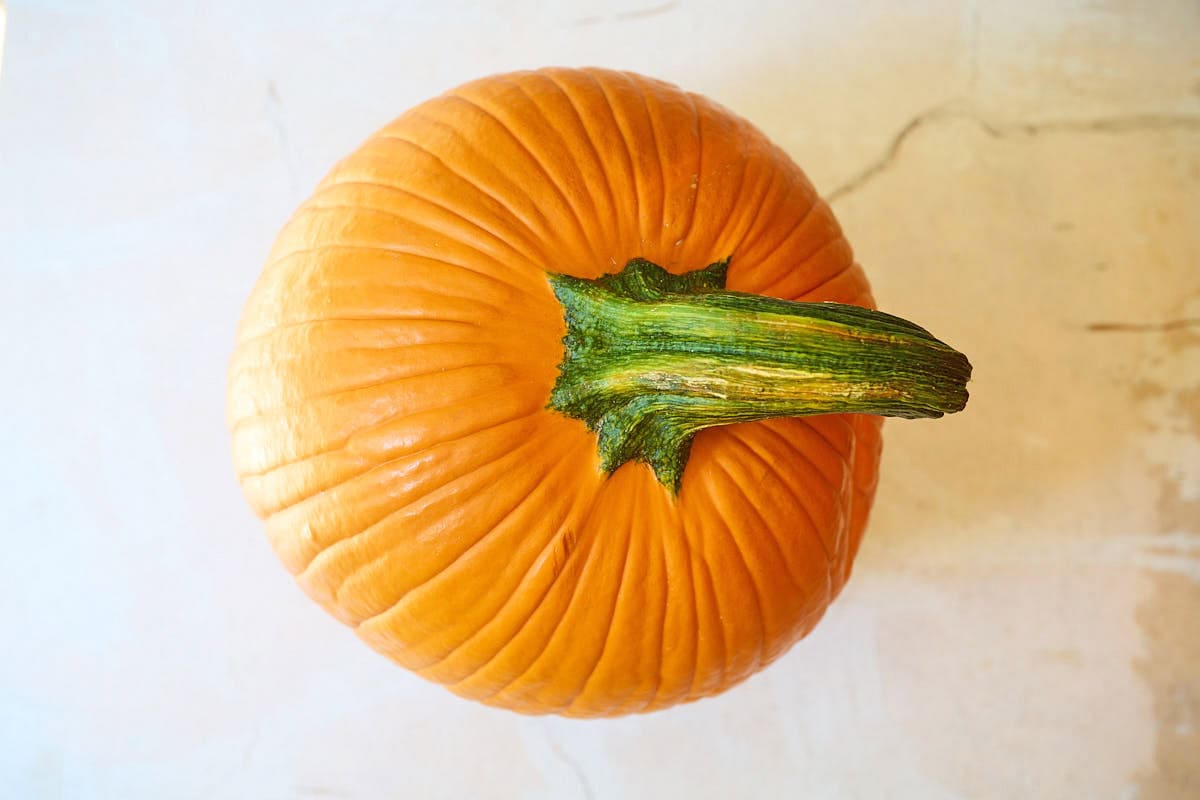
This is a key dish in Mexico’s Dia de los Muertos celebrations. The recipe varies according to the region, with some adding guavas, tejocotes (hawthorn apple), or sugar cane. It is traditionally made with calabaza de castilla (Cucurbita moschata), but you can use almost any pumpkin — especially the bright orange varieties used to make jack-o’-lanterns. New York is consistently among the top three pumpkin producers in the country, so here, too, the taste is appropriate for the region.
The applications are endless. Use the cooked pumpkin to make the filling for empanadas, mash some into your oatmeal or overnight oats, pour the syrup to sweeten your morning coffee, or put the puree into pumpkin muffins or pumpkin bread. The best part is you can take the jack-o’-lantern that might otherwise end up in a landfill and, instead, bring it back to the fruit it is — nourishing for the body and seasonal for the senses.
Mexican Candied Pumpkin
Ingredients
- 1 small (4-5 lbs.) carving, sugar, cinderella, or fairytale pumpkin
- 1 pound piloncillo (2 cones)
- 1 Ceylon cinnamon stick
- 2 whole cloves
- 1 strip orange peel
- ¾ cup water
To Serve:
- 1 cup whipped cream
- 1 cup your favorite milk
Instructions
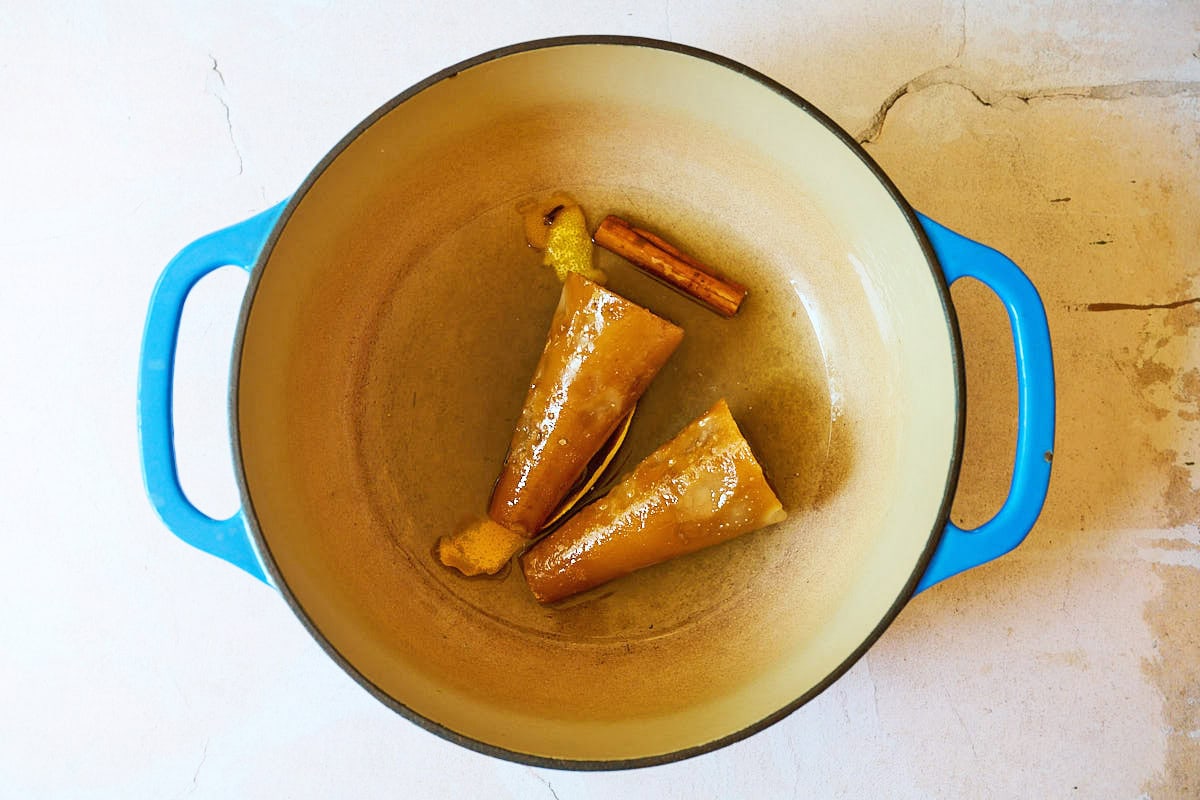
- Place the piloncillo, water, cinnamon, cloves, and orange peel in a large pot or Dutch oven set to low heat. Cover and let the piloncillo slowly dissolve, stirring frequently.
- In the meantime, rinse the pumpkin well to remove any dirt. With a small knife, cut a circle around the stem of the pumpkin — almost like you are beginning to carve a jack-o-lantern. Remove the stem and pull out the seeds and flesh attached to it. Leave the rest of the seeds and flesh inside.
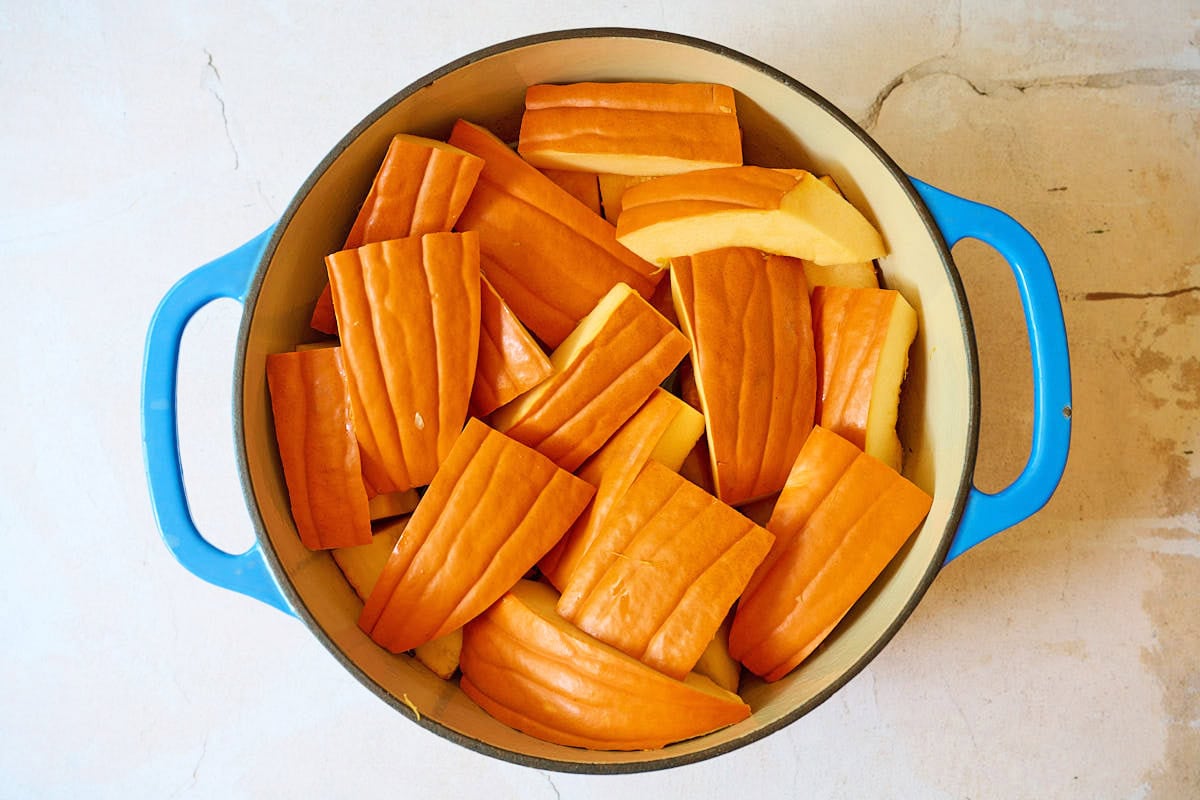
- Following the natural vertical grooves of the pumpkin, cut it into wedges from top to bottom. The wedges should be about 2 ½ in. wide x 3 in. long. You don’t need to remove the seeds, but you can if desired. Score the skin of the pumpkin wedges with a small knife to help them absorb the syrup.
- Once the piloncillo has completely dissolved, remove the pot from the heat and layer the pumpkin wedges skin side down on the bottom of the pot. Once you have covered the bottom of the pot completely, add a second layer of pumpkin wedges flesh side down, so that the pumpkin is touching flesh to flesh.
- Cover the pot and set it to medium-low heat. Let the pumpkin simmer for 1 hour. Don’t worry about not having enough liquid in the pot. The pumpkin will release a large quantity of water as it cooks.
- Check your pumpkin — if it’s soft and the color is brown from the piloncillo, your pumpkin is done. If it’s not completely soft, cook for an additional half-hour.
- Take off the heat and let cool. Serve hot with a splash of milk or cold with coconut whipped cream.
- If you have leftovers, you can store them in the fridge for up to three days in an airtight container. You can also freeze for up to three months.