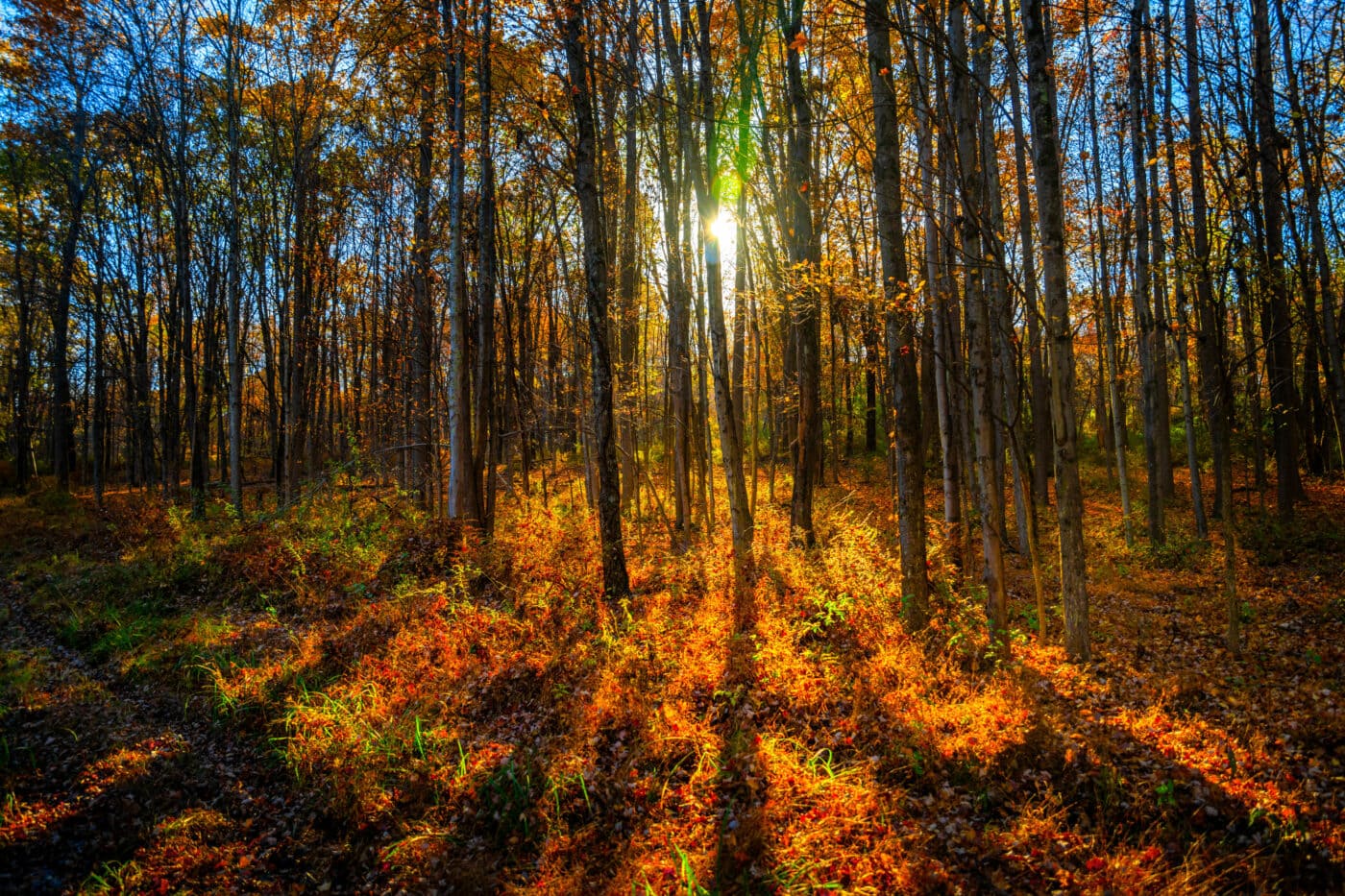


Sun floods through the trees in short angles as the earth peers away, towards the dark part of the universe. Winter can be lonesome. In these cold days, every interaction is meaningful because of how spare it is. Witch hazel finds opportunity in this, the quietest time without competition.
Hamamelis virginiana is native to the Northeastern U.S. and blooms from October into December. Witch hazel is part of the Hamamelidaceae family, which has some kin in China and Japan — but most of this family is native to North America. As summer turns to autumn, the light green, toothy leaves turn to warm yellow ovals. If you see witch hazel blooming in January and February, these are Hamamelis vernalis. Together they bloom through winter, one picking up where the other left off.
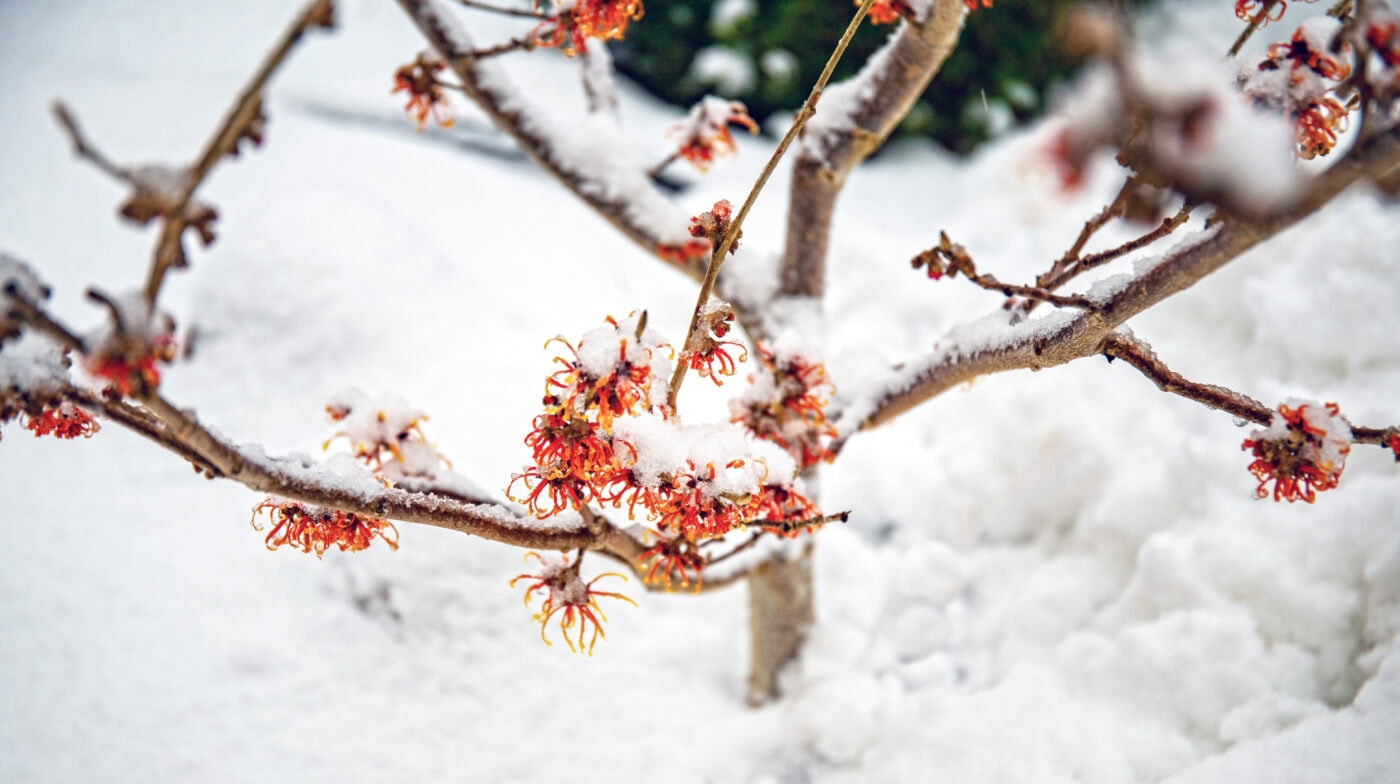
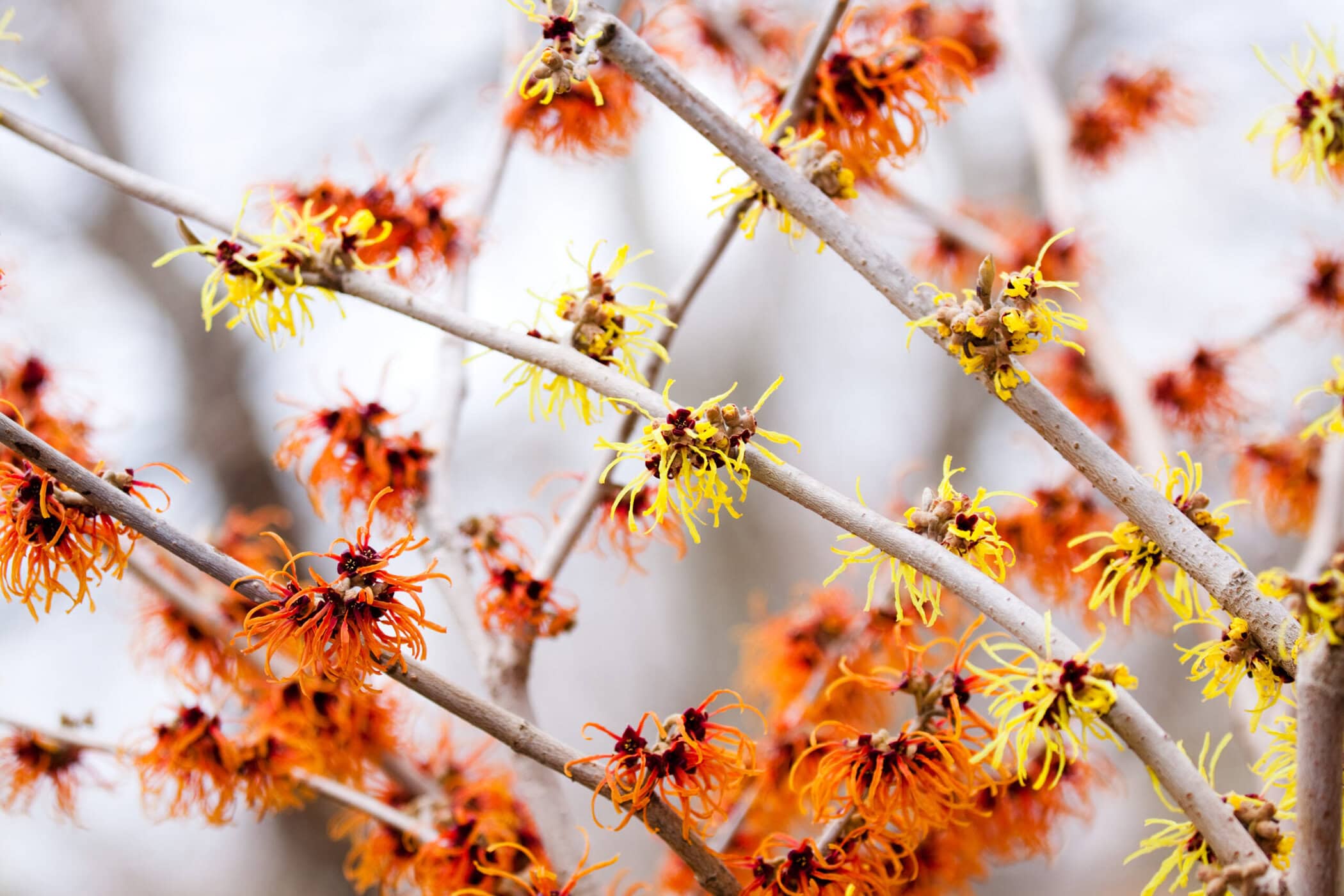
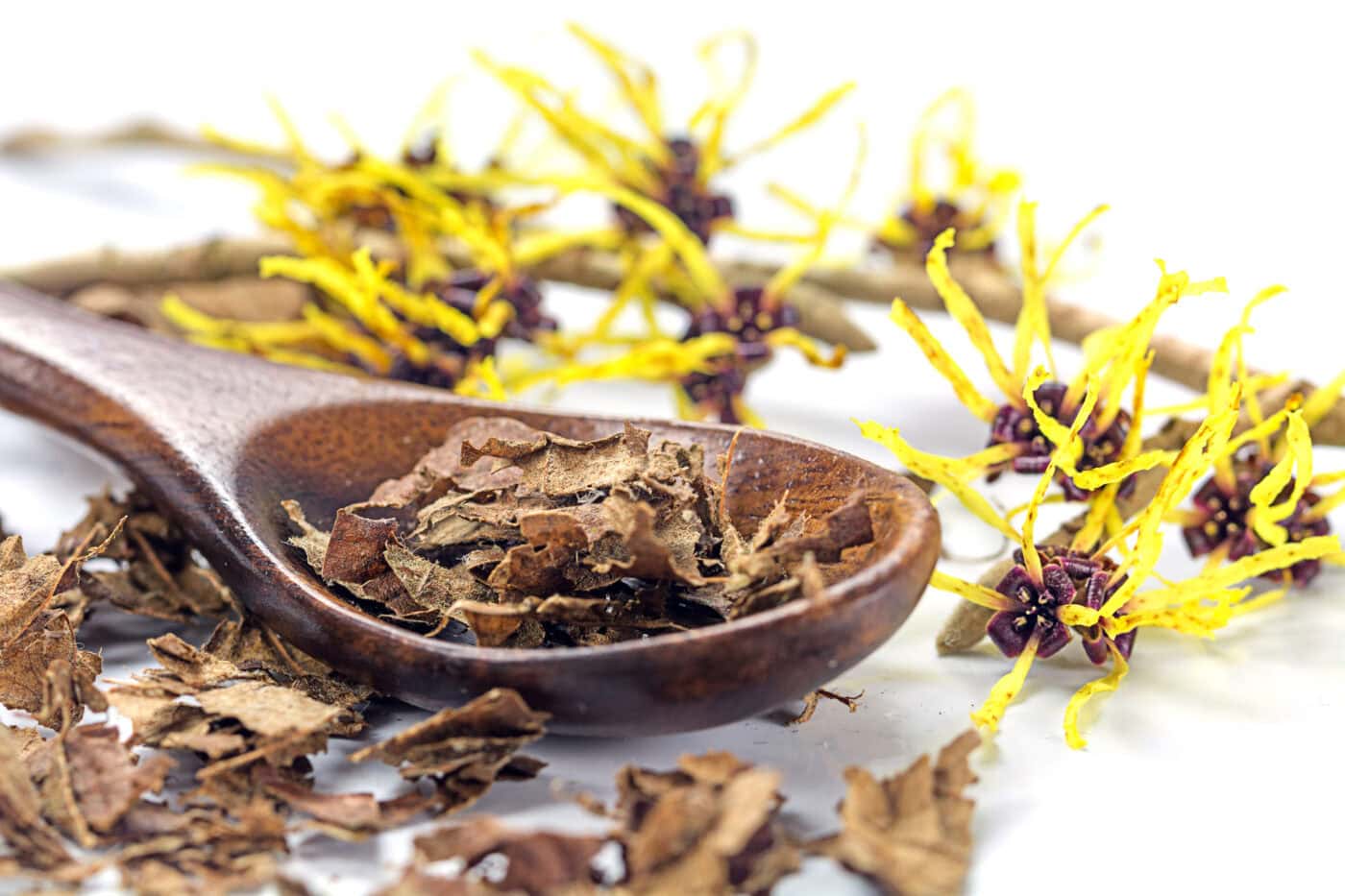
Four tiny yellow petals unfurl from all over the witch hazel like wrinkled naked fingers that close over the tiny cuplike pistil in the cold and reopen if the temperature rises. Through the cool air, it releases its subtle warm scent brought on by eugenol and carvacrol essential oils. This small warm aroma is a lifeline for the wayward bee, though the dagger moth is the tree’s first companion and larval host. The caterpillar of this moth looks like the flowers themselves — yellow and fuzzy in premonition of the plant’s winter bloom. When they metamorphose, they are jaggedly marked, like granite. When witch hazel flowers appear, the long-ripening fruit swell at the same time, round with an end that looks like puckered lips.
The medicinal qualities of witch hazel are well known. It is full of tannins, so it has wound-healing astringent properties. Witch hazel is the one of the few medicines that keeps its botanical name on the pharmacy shelf. Of all of the herbs, witch hazel is one of the few recognized by the FDA as a medicine. Long before, it was used as a poultice by the many Indigenous groups around the Northeast, where witch hazel is native, to reduce inflammation and to reduce fevers.
Being a forest shrub, witch hazel grows in rich and acidic soil that is created where woodland refuse lands and moulders. From this mixture, the trunk comes out in a fan of crooked branches that break into Y shapes, and the shrub itself grows no more than eight feet tall, emerging from a knot of branches at the base. Witch hazel is not picky about the type of forest it grows in as long as water is close by. It will even grow in the dark of a hemlock forest — some of the most ancient known in the Hudson Valley.
The origin of the name witch hazel does seem to have a foot in magic. One theory is that it comes from the cone-shaped galls that leaf gall aphids create, which look like tiny witch hats on the leaves. Another is the plant’s traditional use as a dowser, or “witching stick.” In Europe, hazel trees were used for the divinatory dowsing, to show where water (or for the very superstitious, precious metals) lay underground using a Y-shaped rod. And they began using witch hazel for that same purpose.
Regardless of the name, there is something nearly divinatory about witch hazel. It reveals something that may be invisible. The ways of groundwater are not always clear. If you see witch hazel, know there’s always water underneath.