


It was a hand-me-down, but I couldn’t bring myself to throw away my beloved, threadbare sundress. A subtle repair wasn’t an option. But when I arrived at the Ellenville Repair Cafe and saw Mollie Ruth sewing blue zigzag stitches across a pair of yellow pants — already patched with an orange owl, a red amoeba-splotch, and denim — I knew I was in the right spot. I had found the creativity and resourcefulness needed to extend my dress’s life.
We chatted about the history of my dress, why I loved it so much, and how bicycling likely caused the unique fabric to wear out in the back. After sorting through a box of scraps, we decided to cut up a pair of discarded medical scrubs to make a new panel, covering the tear and strengthening the dress. Mission accomplished.
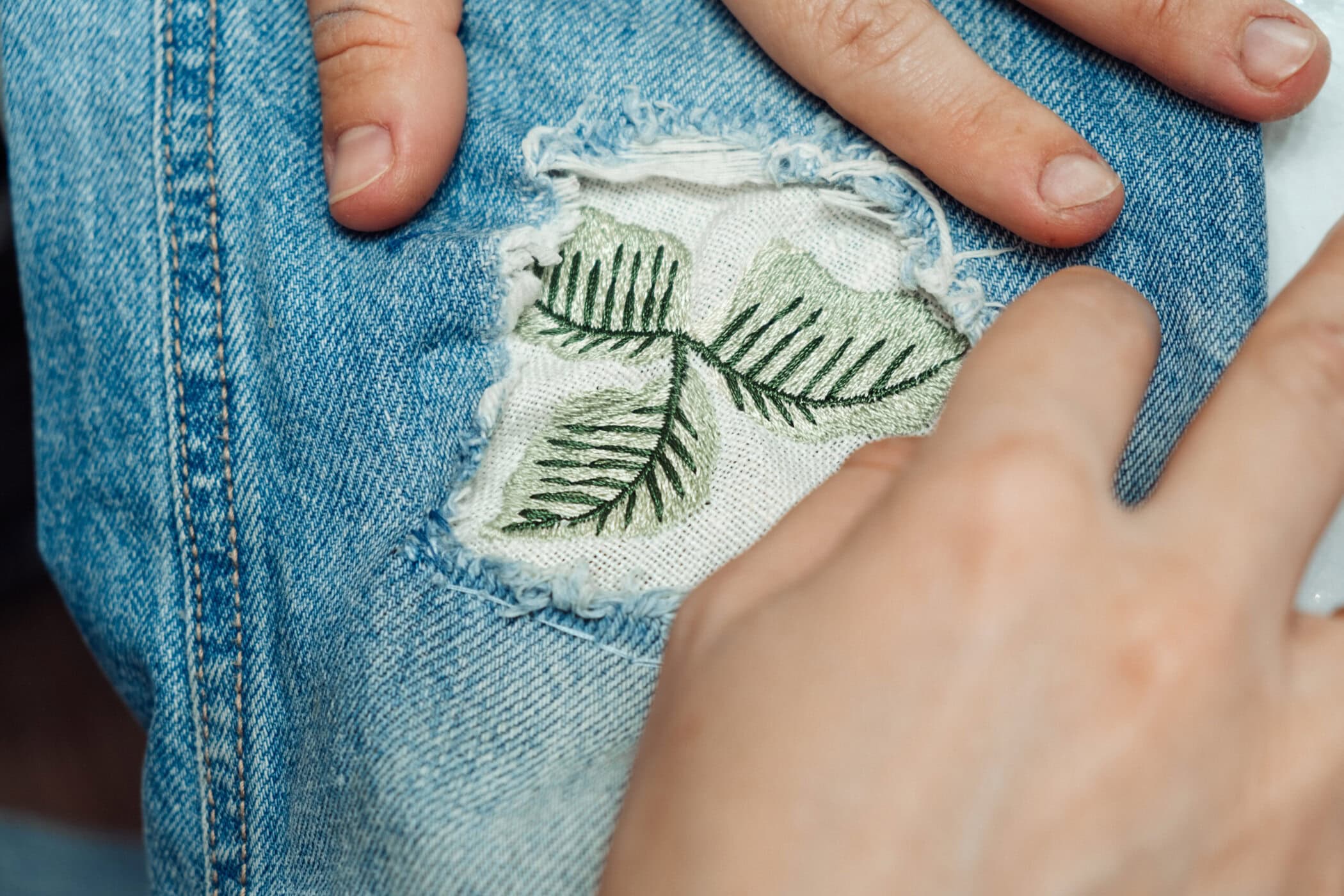
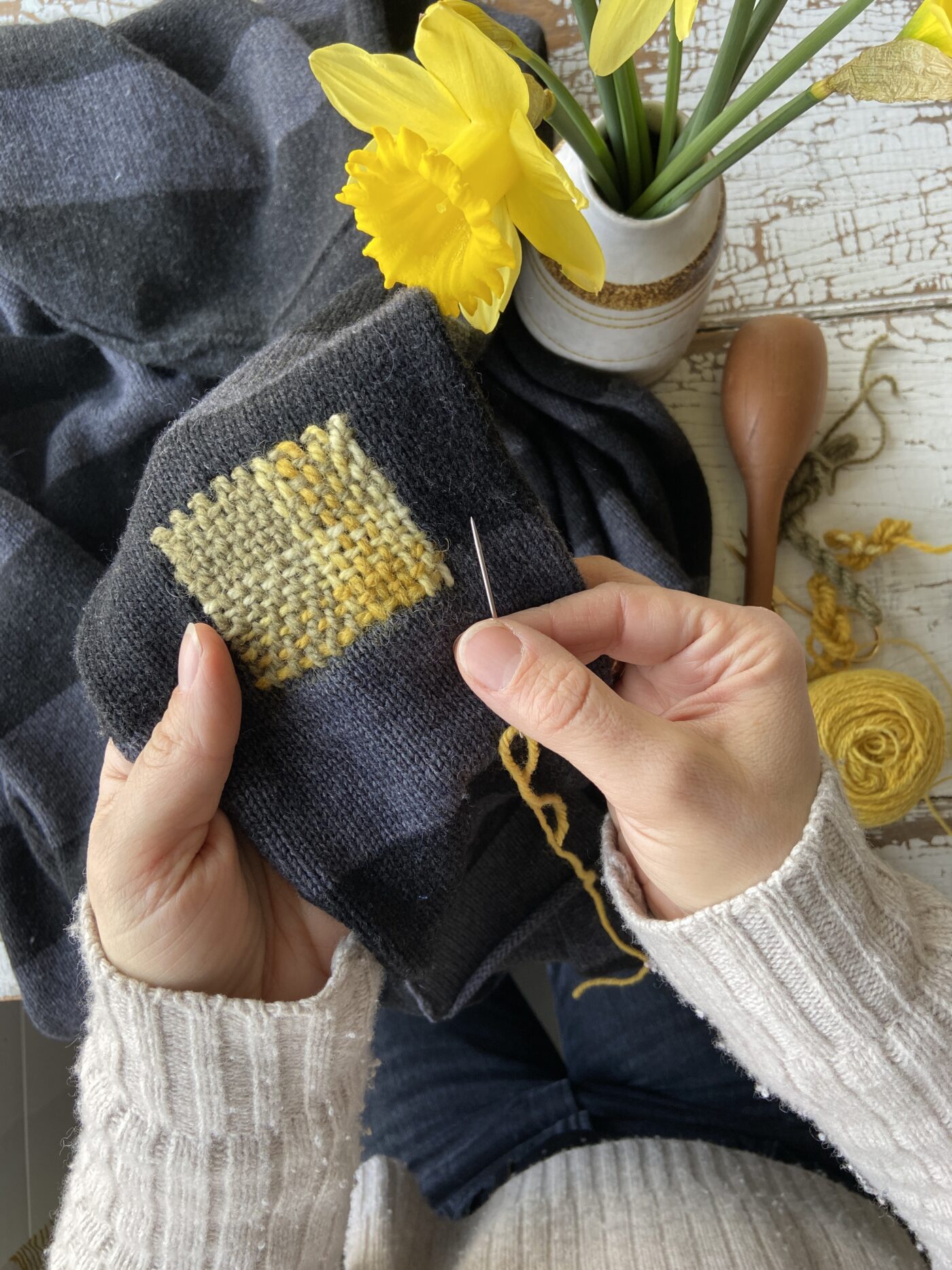
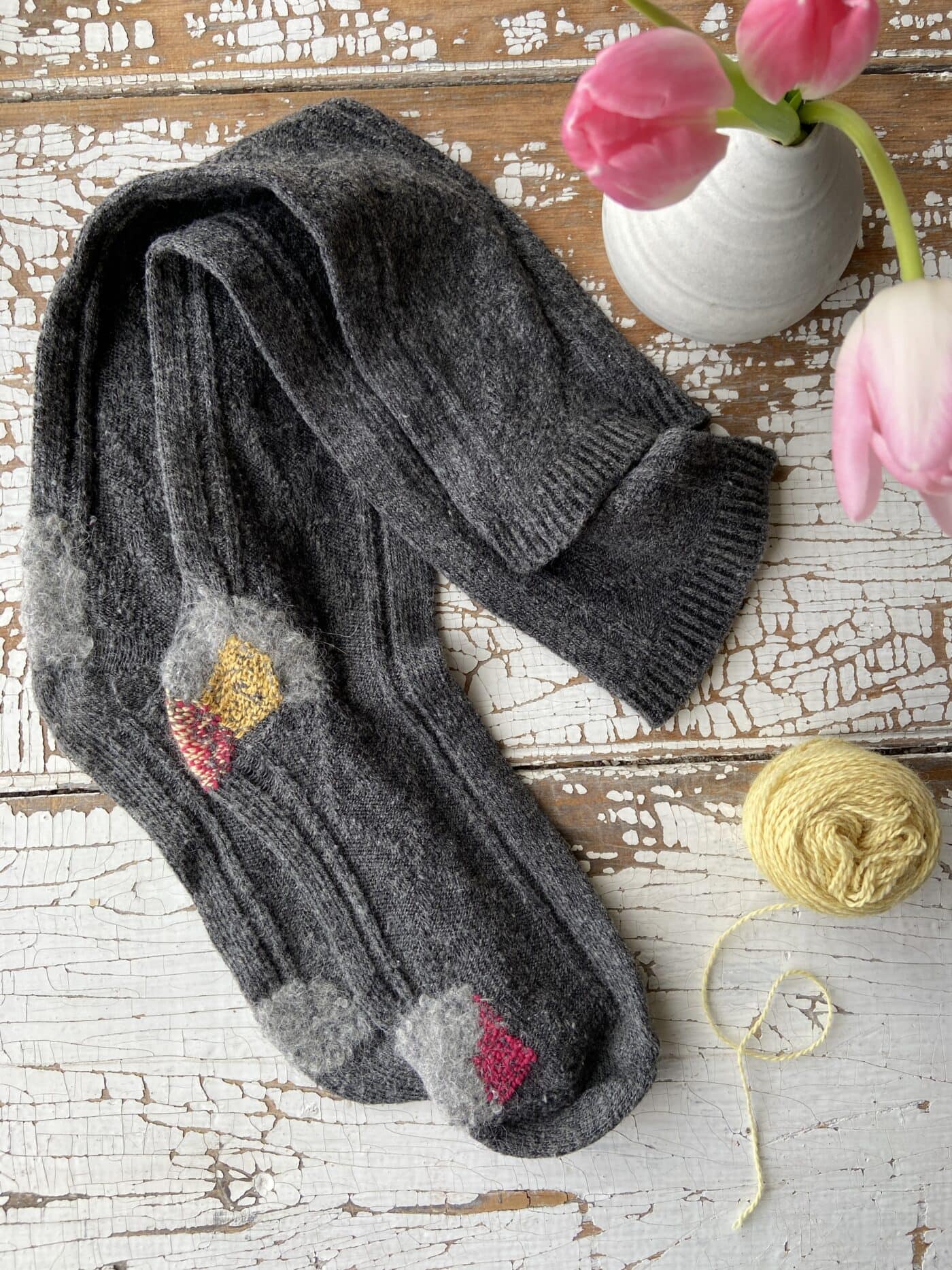
Visible, creative, loud, and proud mending is a surging trend here in the Hudson Valley. In places like libraries and bookstores, rock-climbing gyms and individual homes, damaged textiles are being transformed into treasured, one-of-a-kind pieces through creative, decorative techniques like embroidery, patchwork, and visible stitching. Whether to push back against fast fashion, to embrace philosophies like kintsugi (the Japanese art of highlighting cracks) or tikkun olam (the Jewish concept of repairing the world) — or to simply make personal fashion statements — the visible-repair movement is on a definite upswing.
“I’d take a strip of denim and sandwich it on both sides, or there’s a suede moccasin you could cut and use,” I overheard Andrea Andalis, education program coordinator at the Women’s Studio Workshop, suggest to a participant attempting to repair a broken shoe at the workshop’s recent Meet and Make: Mend with a Friend night.
“All supplies are for the taking and we can all help each other,” Andalis announced while standing by tables filled with ready-to-be-repurposed materials, sewing tools, paints, stencils, and books, including Mending Matters by Germantown’s Katrina Rodabaugh.
Observing 30 people of all ages and skill levels sharing resources and personal stories — turning flaws into intentional design elements — revealed exactly why this trend is growing. Stitching together mends our social fabric, connecting us to one another, the environment, and our own health.
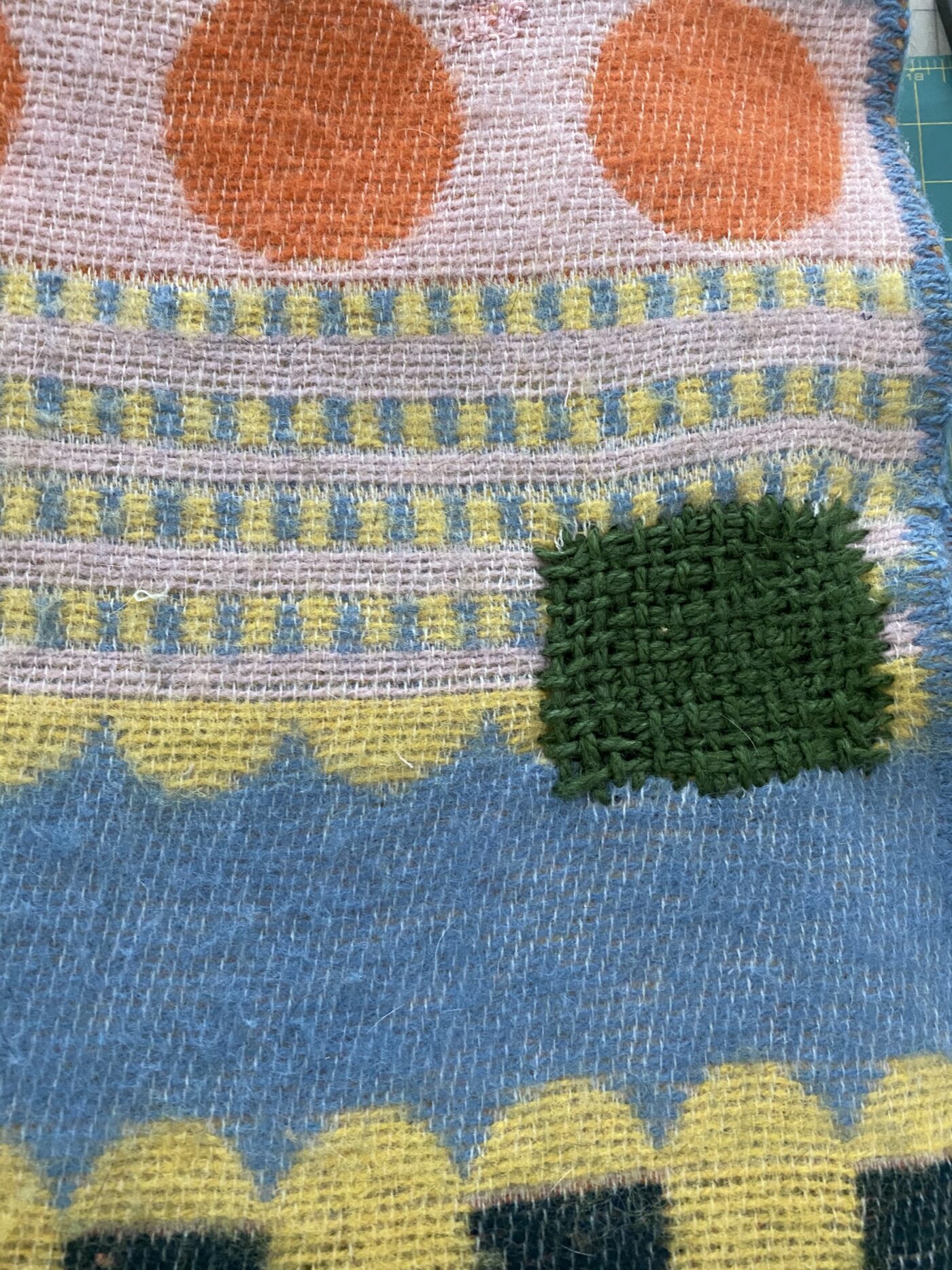
As a quiet rebellion against fast fashion, mending prolongs the life of items, while doing it visibly delivers a message about throw-away culture and consumerism. Stitching and repairing is a way of “sticking it to the man,” according to Rachel Barclay, who teaches sashiko — a traditional and increasingly popular Japanese hand-stitching technique — at Beetle and Fred in Beacon and at The Quilt Tree in Nyack.
“If mends are visible, people see them, notice them, and ask about them. You can feel great about what you’ve created and also know you’re inspiring others,” says Cal Patch, who makes all of her own clothes and teaches visible mending and sewing in the Hudson Valley and online. “Mending is an ethos,” she adds. “It’s my religion.”
Patch and other local teachers emphasize that no previous skills are necessary to get started, and that each stitch brings improvement. Simple intuition and vibes were a primary source of aesthetic for many menders at the workshop event; some aimed for designs that were as asymmetrical as possible, while others based their work on available resources.
Patagonia, a leader in closing the garment loop by encouraging repair over replacement, recently partnered with Mustangs Bouldering in Kingston to teach approximately 30 climbers how to mend gear by stitching personal repair-kit pouches, complete with colorful thread.
“In a world where it’s so easy to discard and buy new, it’s refreshing to give old things a new life. Things mean more when they’re with you longer. An old beat up bag that has been on tons of trips is much cooler than a brand new one,” says Ivan Vargas, co-owner of the gym.
The mending movement is stitching people together, across different age groups and within local communities. “Part of the idea for our event was to get people to talk to others in their community,” Andalis says. While some tables filled with groups of friends who knew each other, others came on their own, hoping to make new connections while doing something productive.
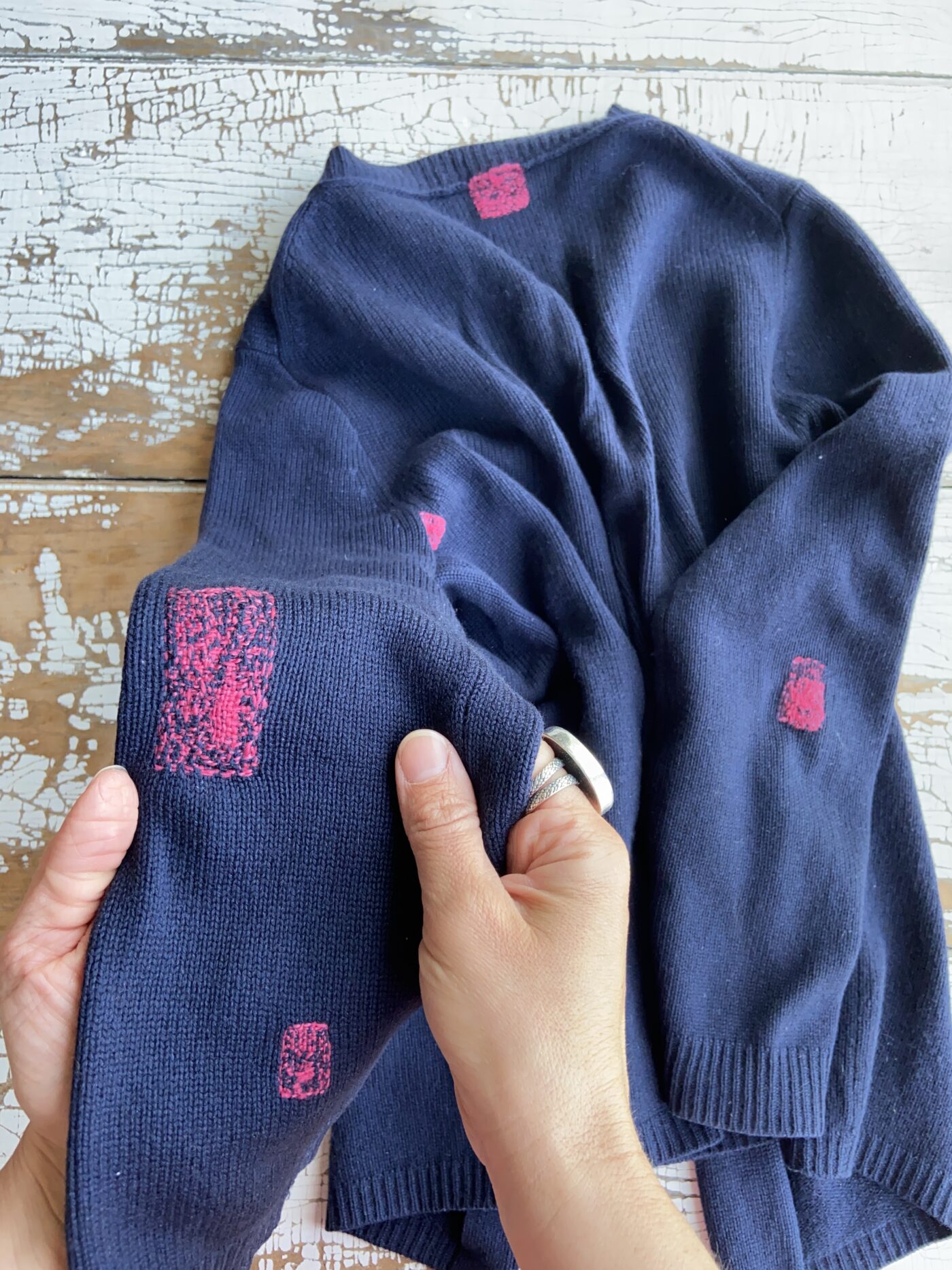
From new friendships and job connections to inspiration, empowerment and validation, the byproducts of sharing scissors and stories at communal mending events are part of the lure. Barclay loves hearing people say they’re going to copy each other and then seeing drastically different outcomes. But some of her greatest satisfaction comes from witnessing the shared sense of what she refers to as “peopleness.”
“When we come together in community to repair our garments, there’s no shame,” she says. “You make yourself vulnerable by showing how you wore out your pants or how you gained weight and blew out your armpits, and then realize almost everyone is dealing with something similar,” she said.
Whether to save money, prevent waste, or make a creative statement, the move towards repairing is linking generations. Opportunities to learn techniques online — including centuries-old traditions like sashiko and boro — are proliferating, turning both novices and experienced stitchers into visible menders.
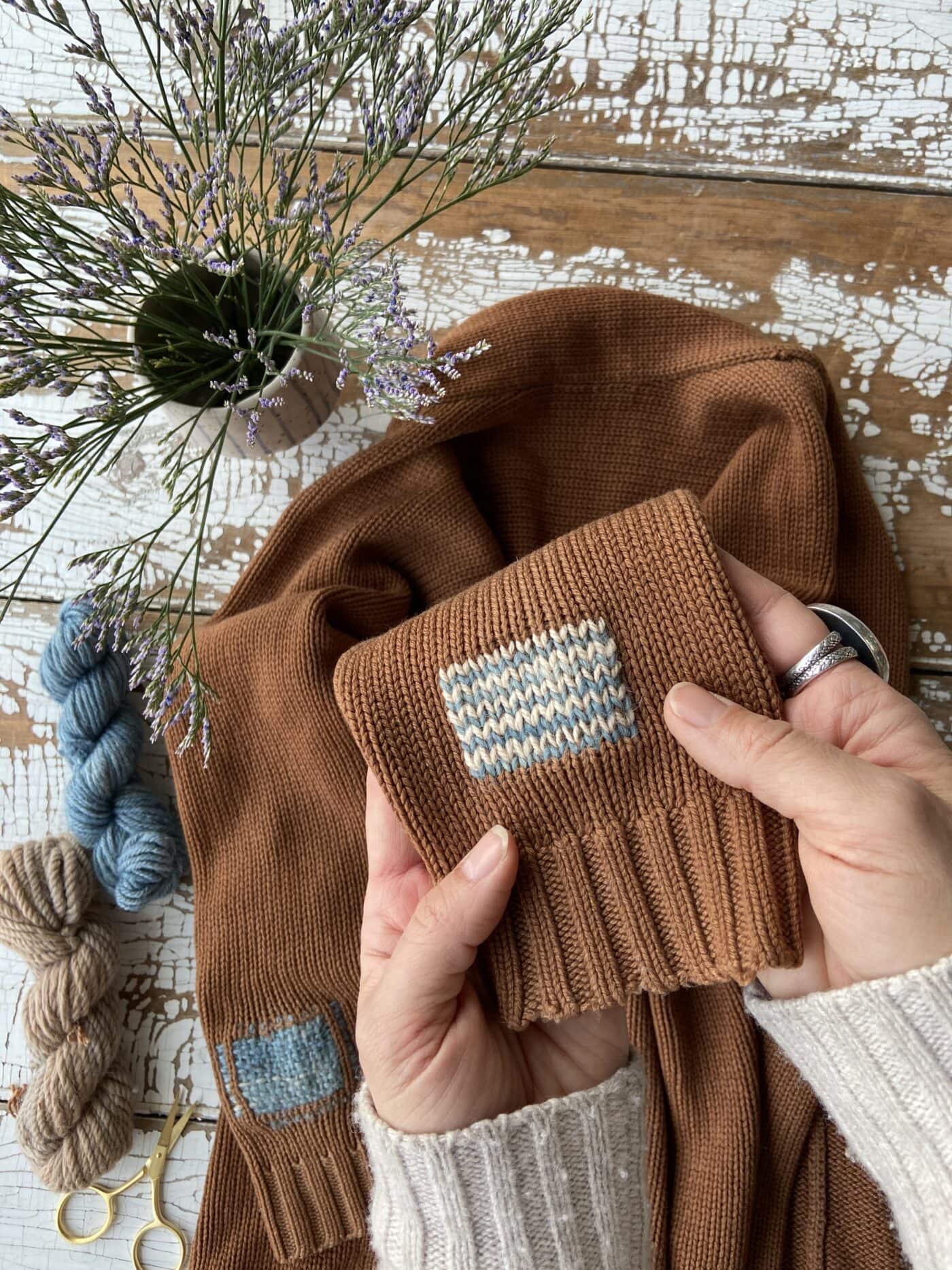
“The reason I started is because it’s accessible and easy to get into,” says Andalis. “A lot of my supplies were passed down to me, and I love that. I inherited a lot of embroidery supplies from an older lady who ran a fiber club in a nursing home, and now I can use them to teach others,” she said.
Kisook Suh, a Tarrytown-based textile conservator for the Metropolitan Museum of Art, and Julia Gloninger, a regenerative farmer based in West Saugerties, both learned to mend and stitch invisibly from their parents. “When it comes to visible mending, there are so many techniques to choose from. Many of us just learn the different styles from social media and adopt them quickly,” Suh says. She was one of 20 artists who reimagined vintage skirts as part of Wool Skirts: An Exhibition of Legacy, Stewardship, and Transformation.
As a farmer, Gloninger experiences frequent rips in her pants’ knees and pockets. “I learned how to make mending into an art form, and I try to only use reclaimed materials,” she says.
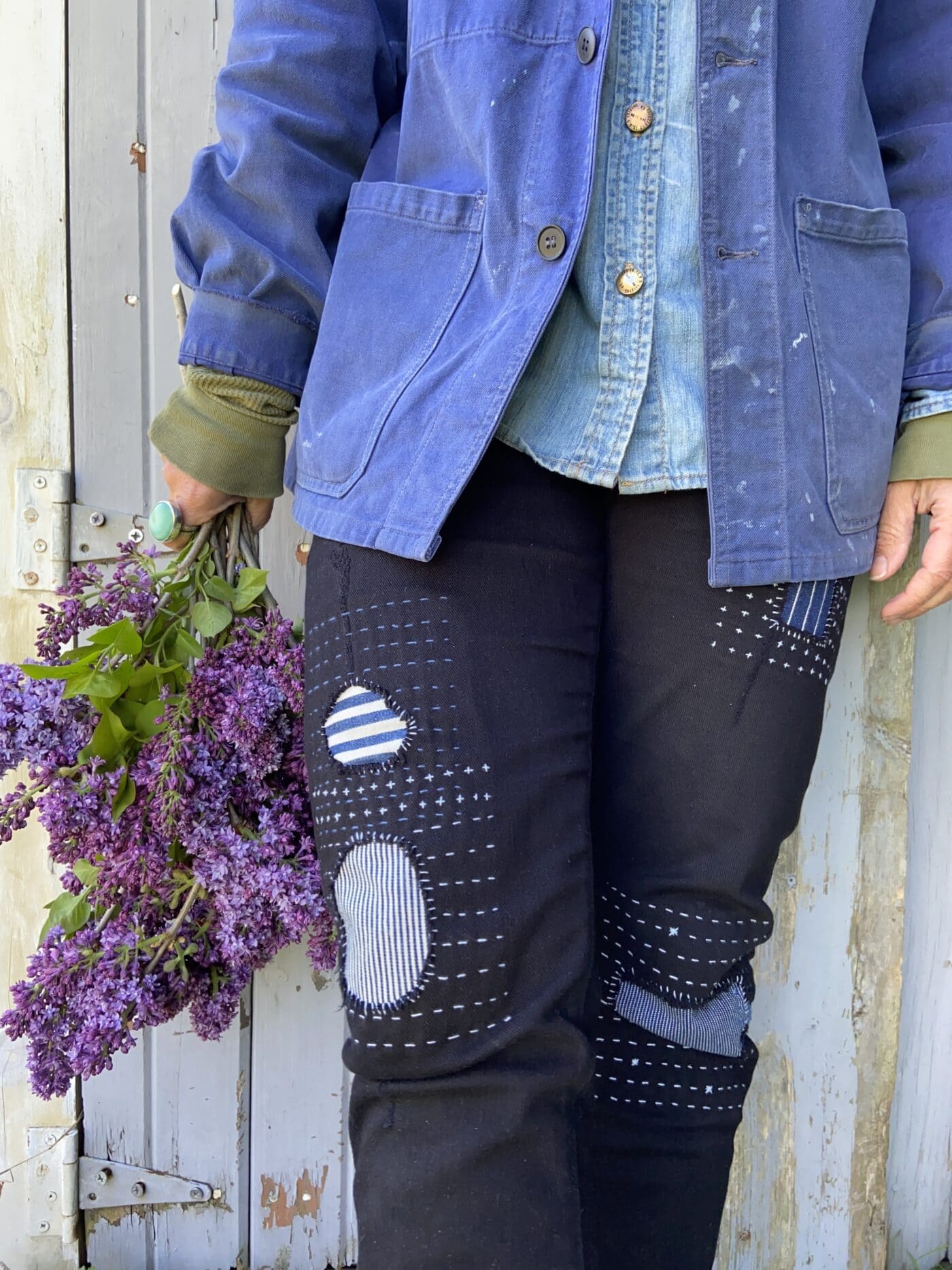
Mending can also be emotionally and physically cathartic. “The mere act of slowing down and caring for an object can bring a sense of calm,” says Helen Stubblefield, a participant at the Women’s Studio Workshop event.
For Barclay, sewing by hand helped alleviate anxiety and gave her a sense of purpose. “It changed my life and has been a catalyst to so many things,” she says. “There’s something that happens to your brain when you’re doing something with your hands … you crave to do it.”
Kate Sekules, a doctoral student at Bard Graduate Center, is the author of MEND! A Refashioning Manual and Manifesto. The instigator of a yearly #MendMarch challenge on Instagram, Sekules suggests that mending is not just trendy but here forever.