


This summer, a key player on the U.S. Men’s National Team during soccer’s World Cup will be 2022 captain and Hudson Valley native Tyler Adams. The 27-year-old midfielder is currently part of the Premier League club AFC Bournemouth. His love for the game started not far from where he grew up in Wappingers Falls, on a field near his grandmother’s house at Martz Field (where the pitch is now named for him). “Growing up in Dutchess County, I’ve seen firsthand how soccer can bring people together and inspire young players to dream big, Adams has said.
It is not a coincidence that the captain of the U.S. men’s team is a Hudson Valley native. The region has a long history with the beautiful game.
First Games
For thousands of years, humans from all around the world have played games kicking balls, from ancient China to Mesoamerica. But the modern game of soccer, with 11-player teams, was codified in 1863 in London, when the Football Association was formed. One of the earliest games in the United States was played just three years later in Waukesha, Wis., between Carroll College and locals from the town.
In the early years of soccer in the United States, historians say, the game was mostly played by Scottish and Irish immigrants in local leagues in the Northeast. New Rochelle FC was the first team from the Hudson Valley to participate. In 1895, it agreed to join the National Association Football League, which mostly included teams from New York City, like the Red Stars of Harlem, and from New Jersey, like Scottish-American AC. Its time in the league was controversial, however. Members of the New Rochelle team demanded Saturday matches — an impossibility for most teams whose members worked six days a week. The team never showed up to its games on Sundays, so it was suspended before the season ended.

For much of its history, the game was played by amateurs, many of them immigrants. Yet some players and moments were captured by local newspapers during the first decades of the 20th century — snapshots of the game in the region.
For example, in November 1911, the Poughkeepsie Eagle-News reported on enthusiasts gathering to practice, hoping a team could be formed. In April 1914, Kingston’s Daily Freeman advertised a game between the Lace Mills, an amateur team made mostly of Scottish and English immigrants and connected to the Kingston Lace Curtain Mills factory, against other town residents.
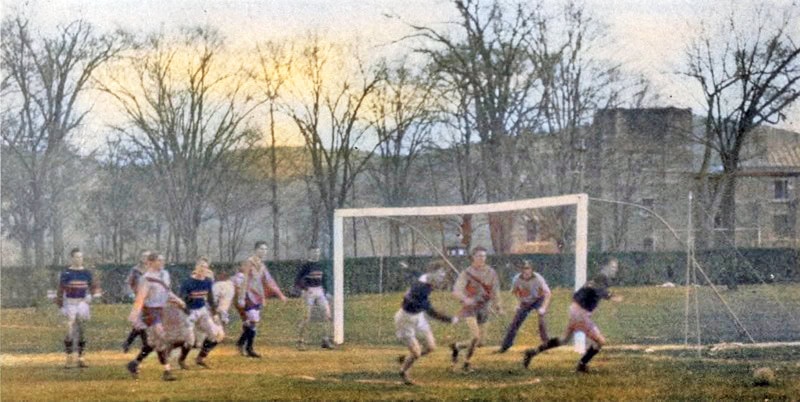
And in the fall of 1917, a professor of history introduced soccer at the New York Military Academy in Cornwall, N.Y.
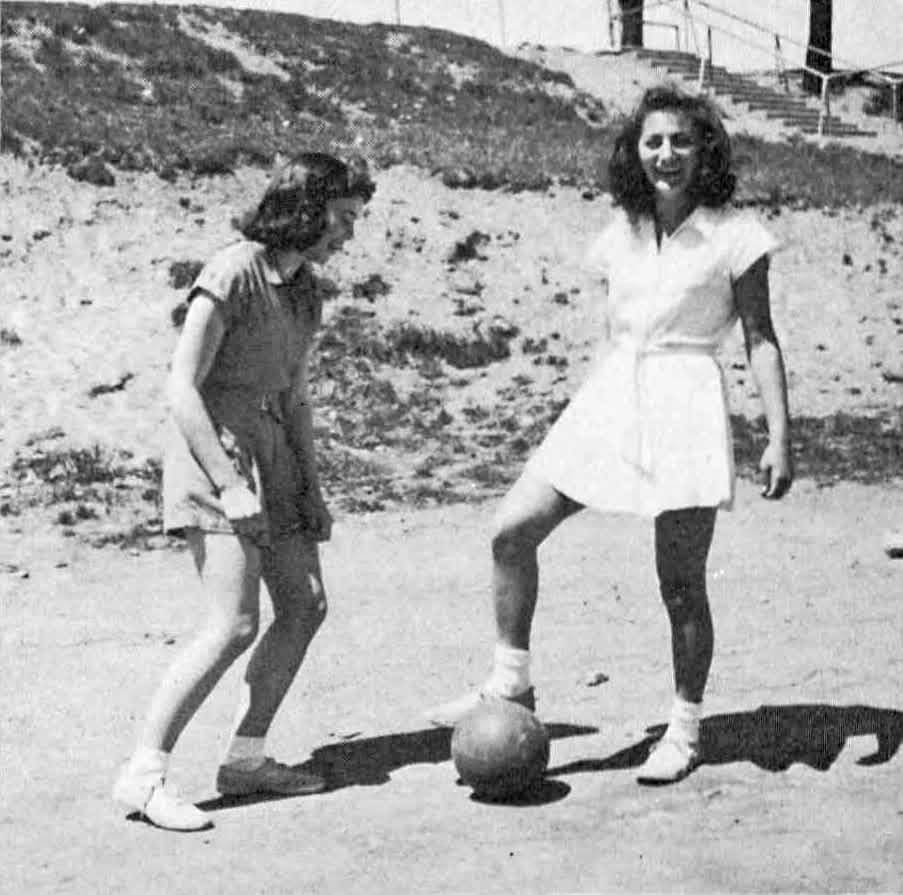
Other highlights include early documented evidence of women playing the beautiful game. Marion Hubbard, the assistant physical director of the Poughkeepsie Public Schools, started a girls’ soccer league, the Poughkeepsie Eagle reported in October 1922. Six schools participated, each with a team of juniors and another of seniors. Women, of course, soon became integral to the game on winning teams from Kingston to New Paltz.
Local Powerhouse
Ivy League schools like Columbia, Cornell, and Harvard had soccer teams and competitions in the early 20th century. The real powerhouse of the area was the New Paltz Hawks at SUNY. Founded in 1959, the team became one of the best in the region and country during the 1960s. In 1965, they had a perfect season and won the NCAA College Division Atlantic Coast Championship.
During their best years, the Hawks were led by coach Al Miller, who later managed the Philadelphia Atoms, and star player Gene Ventriglia, who earned the nickname “the Godfather of Soccer.” Born in Naples, Italy, Ventriglia moved to the Hudson Valley at 14 and became one of SUNY New Paltz’s most celebrated athletes. After graduation, he played two seasons with the U.S. national team, competing in the 1967 Pan-American Games. After retiring as coach of the women’s team at West Point, he returned to coach at his alma mater from 2011-2016. Another noteworthy player was Heinz Ahlmeyer, Jr., who died in 1977, one day into his tour of Vietnam War duty. To this day, the school pays tribute with an annual soccer game.
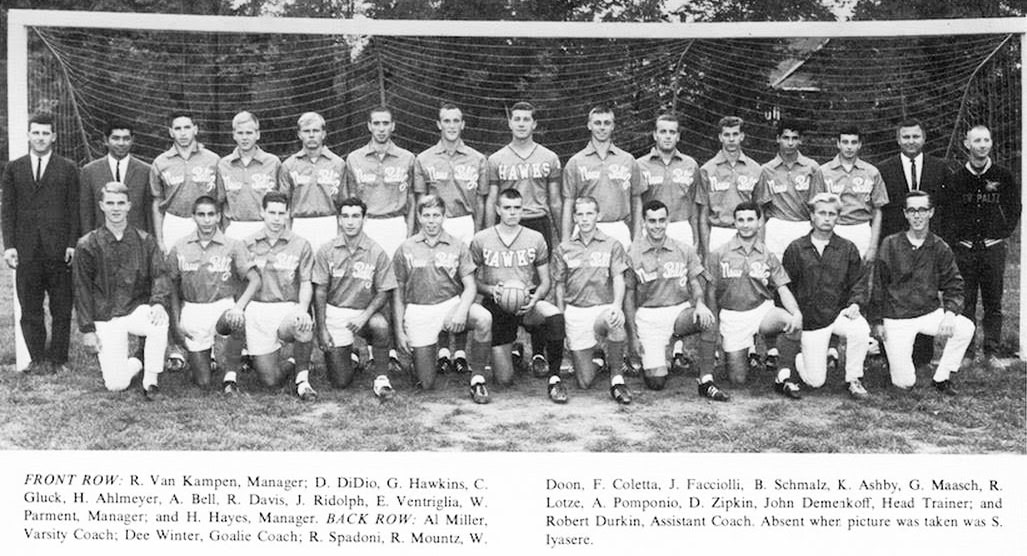
Alan Dunefsky is a 1969 New Paltz alum who spent his career working with the athletics and alumni organizations. He was a student when the Hawks won the championship during the magical 1965 season. “Soccer was the big sport,” he remembers, just like all students go to college games today. “ I remember everybody went to all the soccer games.”
The passion for the game stayed with Dunefsky. In 1974, he and the coach of the Hawks watched the 1974 World Cup in West Germany at the house of a German who had a satellite dish. He traveled to New York City to see Pelé play with the New York Cosmos. This summer during the World Cup, he will be supporting both the Red Devils, as his wife is from Belgium, and the U.S. men’s national soccer team. “Tyler Adams, he’s a big hero in the Hudson Valley,” Dunefsky adds.
New Grounds
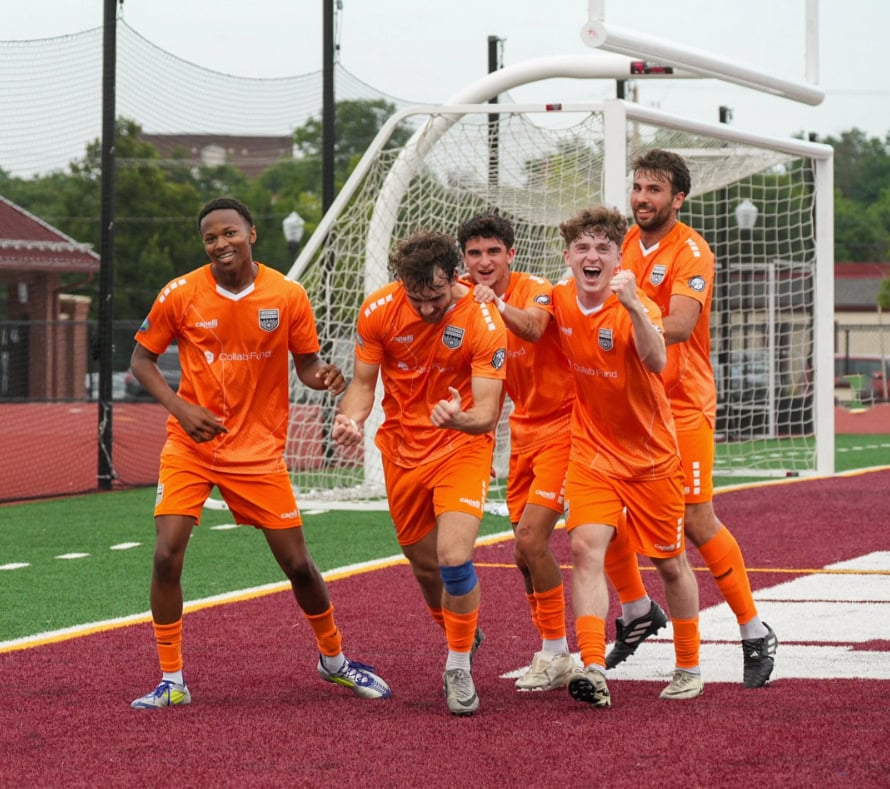
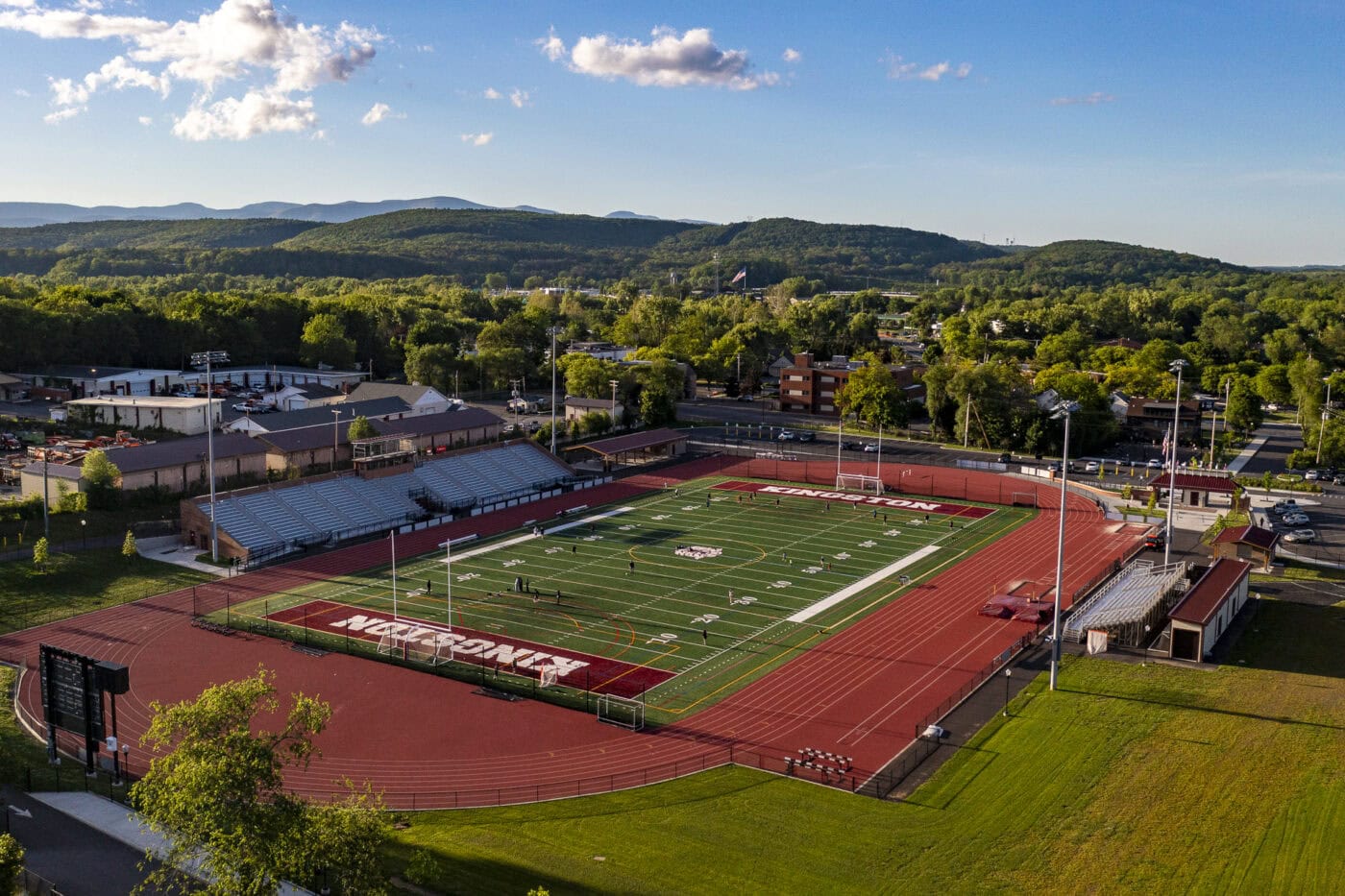
In recent decades, soccer has gained popularity in the U.S. According to a survey from the The Economist in 2025, 10% of Americans say soccer is their favorite sport. Local teams like Kingston Stockade FC, founded in 2015, offer new opportunities for players and fans. Dennis Crowley, team chairman, wanted both a local team to cheer for and a place to develop some of the extraordinary talent he saw in different pickup teams across the region.
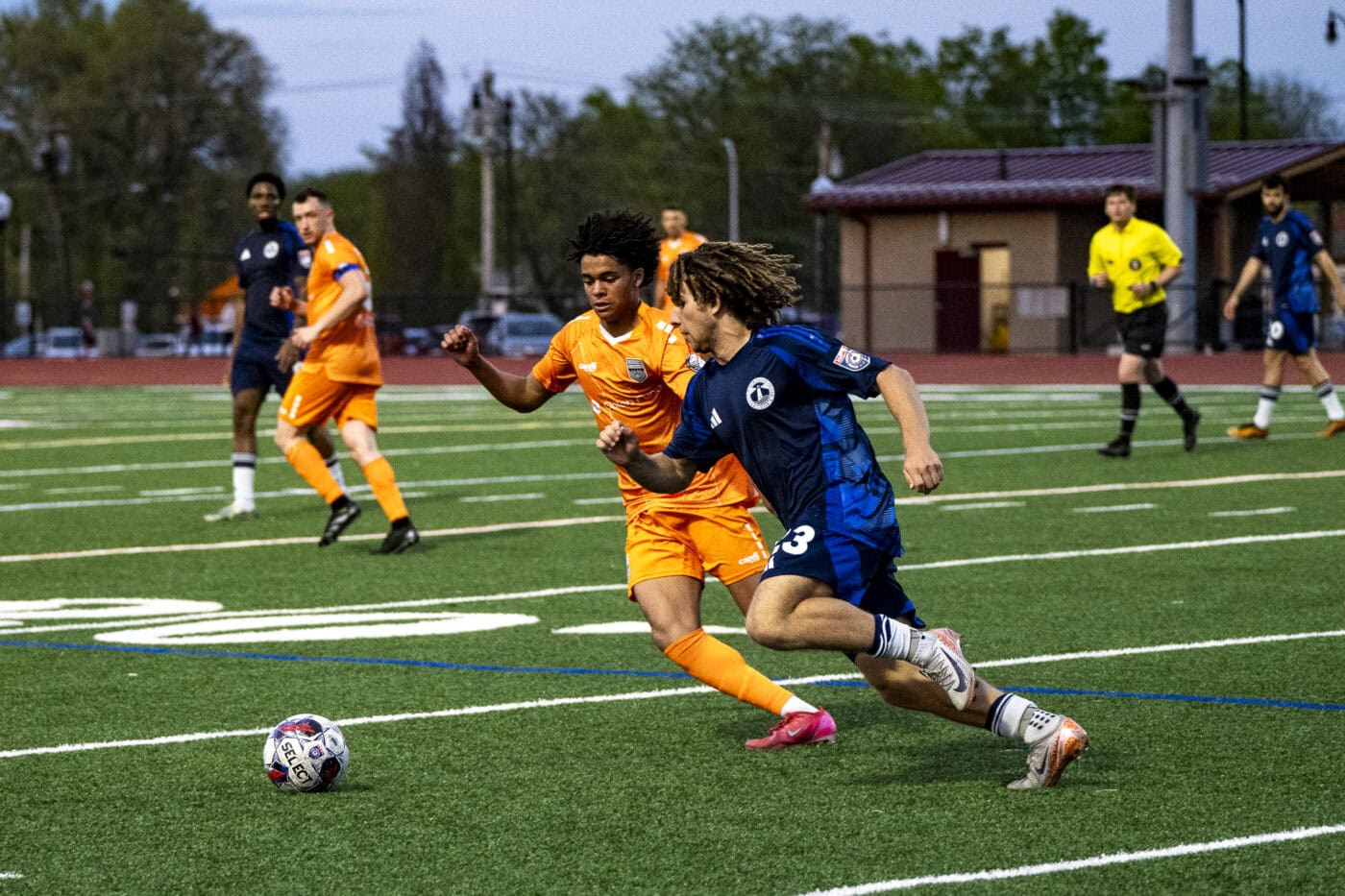
More importantly, he believes that small clubs like Kingston Stockade FC can be a small step to help the U.S. men’s team win a World Cup. Crowley says that if more small clubs were created, there would be more fans, players, and opportunities. Some of the team’s highlights include winning the Atlantic White Conference Championship in 2017 and playing in the U.S. Open Cup. Additionally some of their players have been signed to professional teams. “We made fans, we made players, we inspired kids to play,” says Crowley, “and that’s pretty cool.”
More importantly, the team is a celebration of the community and the culture of Kingston and the Hudson Valley, says Crowley. They aim to have affordable tickets and a family ambience, so every game is an excuse to come together. “That’s what soccer is supposed to be,” Crowley says, “and that’s what soccer is like around the world.”