


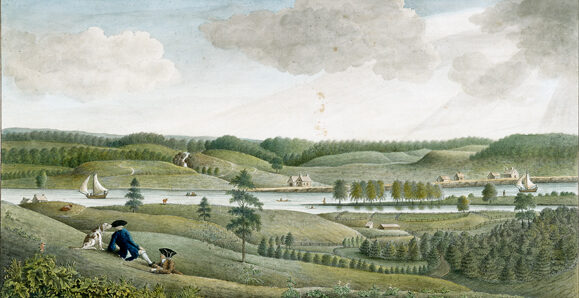
This summer, the United States is celebrating the 250th anniversary of the Declaration of Independence from Great Britain.
On July 2, 1776, after several years of conflict between American colonists and the British government, the Continental Congress voted for independence, which was formally adopted two days later. A bloody war would follow, and although it spread across the continent, the Hudson River and Hudson Valley played a key role in the Revolutionary War.
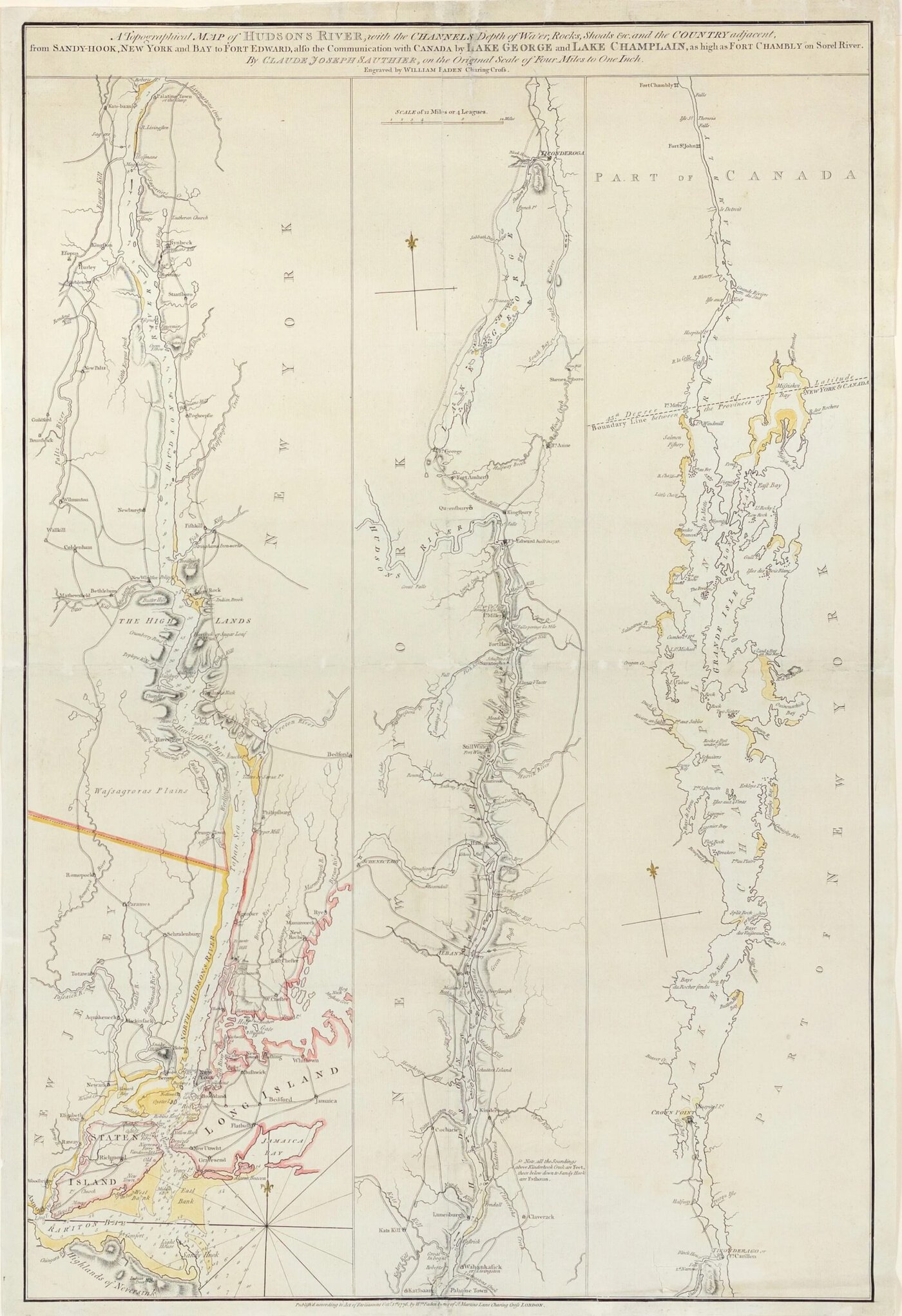
Even before the declaration, both sides saw control of the waterway and surrounding territory as vital to victory. For example, in a letter to the President of the Congress written on May 9, 1776, George Washington, commander-in-chief of the Continental Army, explained his belief that for the British “no place seemed of more importance in the execution of their grand Plan than possessing themselves of Hudson’s River.” He then proposed moving troops from Boston, which the British had evacuated in March 1776 after Washington’s forces besieged the city, to protect the Hudson River and what is now New York City.
Washington’s instincts were correct. Nearly a year earlier, Major Gen. John Burgoyne, who was also a well-known dramatist, wrote in a letter to King George III about some of his ideas for the upcoming war in June 1775. He wrote that if the colonies had “to be subdued by arms, there must be a large Army of British and foreign troops to begin their operation in the Hudson’s River.”
Their goal was to divide and conquer the rebellious colonies, split the Continental Army, and isolate New England, which was seen by the crown as the center of the revolution.
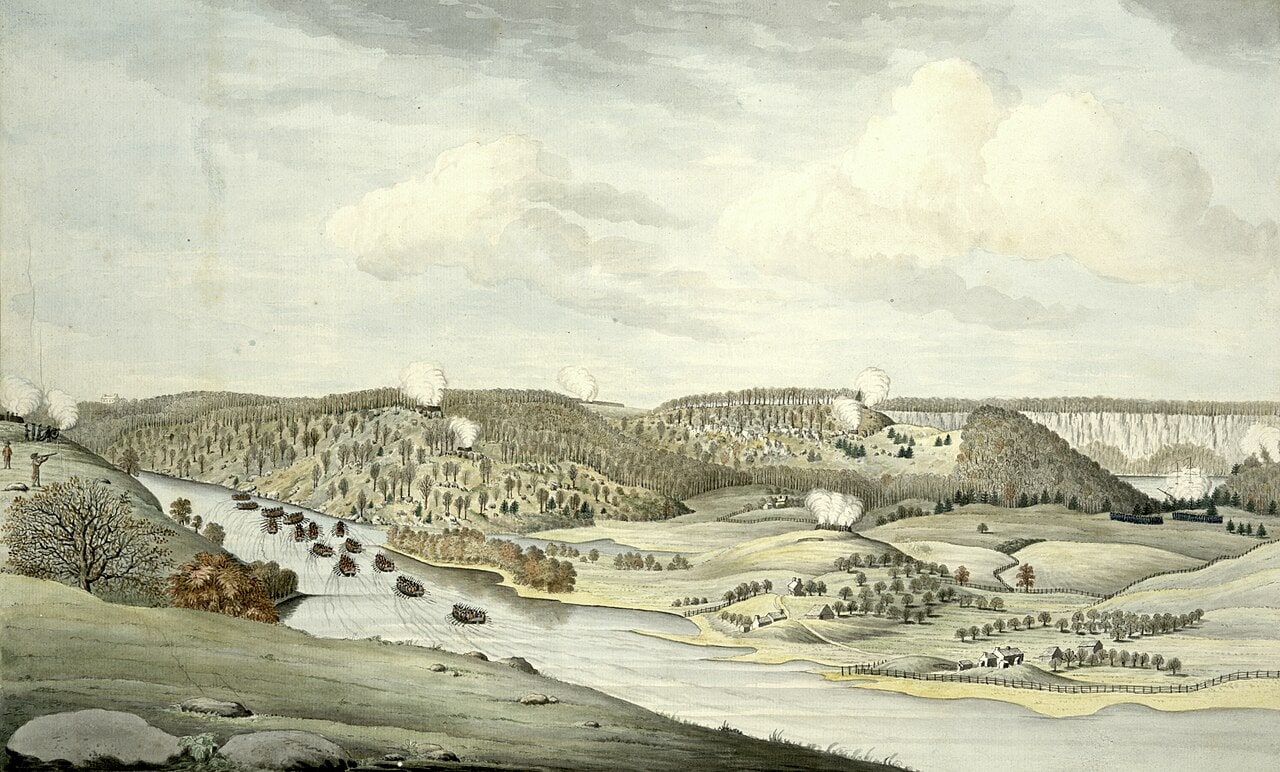
In the summer of 1776, the British moved to take New York City. In the war’s largest battle, with more than 30,000 soldiers fighting, the British army outflanked the Continental Army in the Battle of Brooklyn. It was a crushing defeat for Washington, who had to escape to Manhattan by crossing the East River in the middle of the night, the first of many close escapes for the Continental Army commander.
A few weeks later, the British forces landed on the island and entered New York City unopposed. Gen. Henry Clinton was so surprised by the easy victory that he reported in a letter that conquering the city “to my great astonishment was effected without loss.” A few weeks later, the patriots suffered another loss at Fort Lee, which forced Washington to lead the army to retreat. Clinton reported in his letter that, despite the losses, the colonists were determined to gain independence.
After losing control of New York City and the lower Hudson, the Continental Army quickly defended the rest of the valley. In a letter Washington wrote to the President of Congress from Princeton, N.J., on Dec. 2, 1776, he described both the army’s many losses and its upcoming campaigns. Among his priorities was protecting the upper Hudson. “The remainder of the Troops, I conceived necessary to guard the several passes through the Highlands,” he wrote. Fishkill and Peekskill became militia gathering points, and forts were built or fortified. During the Revolutionary War, Washington spent more time in the Hudson Highlands than in any other area.
River Defenses
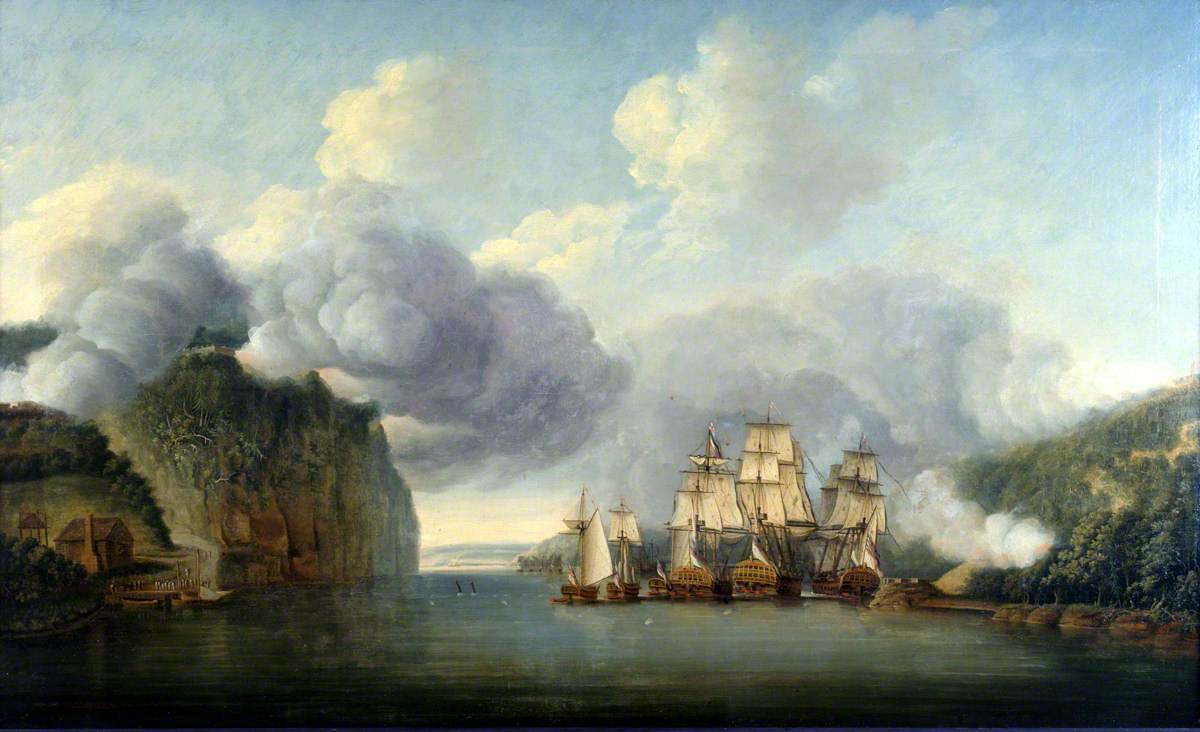
The Continental Army was not the only one that worked to protect the Hudson River and Hudson Valley. Two weeks after the Declaration of Independence, the Convention of Representatives of the State of New York created a secret committee to defend the Hudson. They decided to construct three river obstructions to stop British ships from sailing upriver.
Among its key members were George Clinton, who later became the first governor of New York; John Jay, who later co-authored the Federalist Papers and became the first U.S. chief justice; and Robert R. Livingston, who helped draft the Declaration of Independence. In total, they oversaw the construction of three defensive structures in the Hudson River, including wood barriers and metal chains.
The first was built in the summer of 1776 at Fort Lee between the Palisades and Northern Manhattan. The second was built during the winter of 1776-77 between Plumb Point and Pollepel Island, today better known as Bannerman Island (where the ruins of Bannerman Castle can still be seen). Both consisted of sunken “chevaux de frise,” a medieval defense featuring a log frame and iron-tipped spikes designed to pierce ship bottoms.
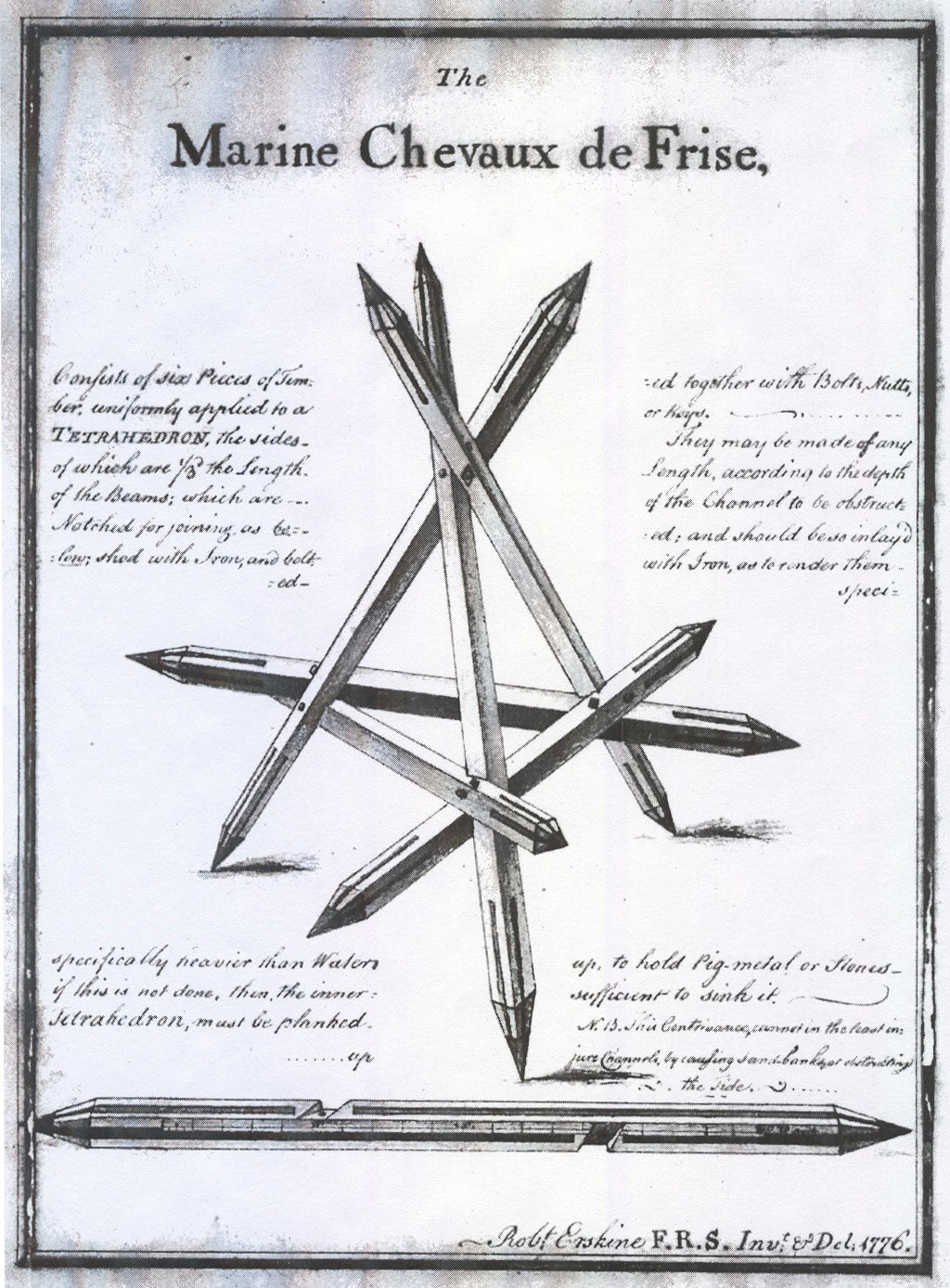
The spikes and chains did not stop the British, however. After the fall of Fort Lee, the chain was dismantled. There is no evidence that the Pollepel Island chain functioned, since it didn’t stop the British Navy from sailing into Kingston and burning it in 1777. In 2004, archaeologists reported in Naval History Magazine that they identified remnants of chevaux de frise near Bannerman Island. The third river obstruction was a gigantic metal chain built in 1778 at West Point.
A few months after the Declaration of Independence, things looked bleak for the Continental Army. They had lost control of the lower Hudson and were scrambling to survive the winter. Yet neither side abandoned the struggle for the river. As the war progressed, the tides would turn for the Continental Army, and the Hudson Valley would see many important battles and campaigns that led to the new nation’s independence.