Forests are important for many reasons. They help keep our air and water clean, offer relief from rising temperatures, and store carbon to help counter climate change. Larger forests also support more species of plants and animals and are more resilient to storms, drought, and diseases. For many of us, forests are a source of recreation, inspiration, and tranquility.
Despite these wide-ranging benefits, Hudson Valley forests have been threatened by humans throughout our country’s history. After much of the land was cleared by colonists, forests regrew in areas only to be lost to development in the recent decades — creating even more permanent changes to the landscape.
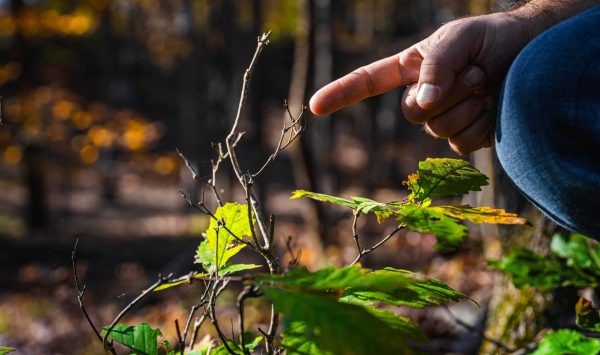
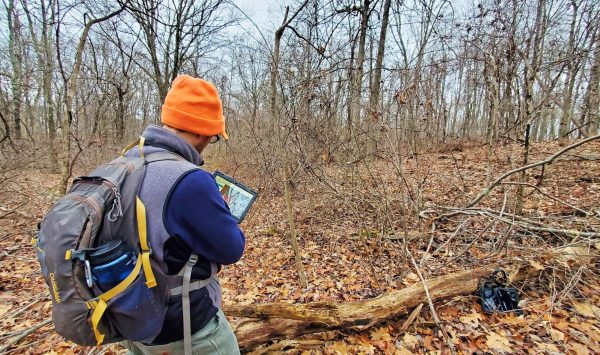
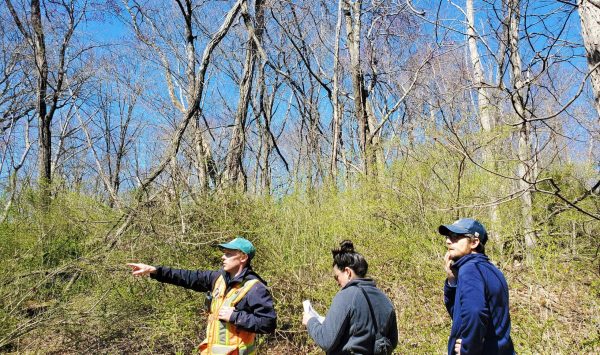
Scenic Hudson is collaborating with partners to meet the moment and ensure the future of our region’s precious forests. This includes addressing a number of challenges that impede forests’ ability to regenerate with the next generation of trees: invasive plants that crowd out native species and cause ecological harm, pests and diseases that cause widespread tree deaths, an overabundance of deer that eat plants before they can regrow, and dense canopies that block light from reaching the forest floor.
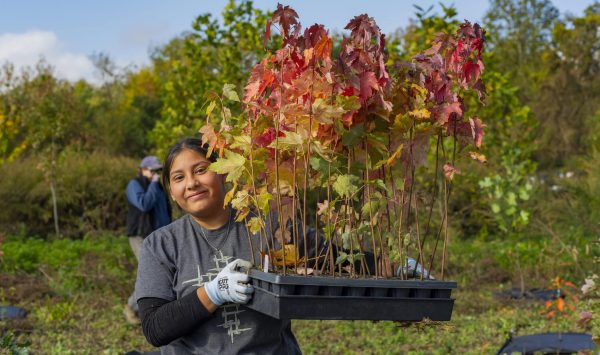
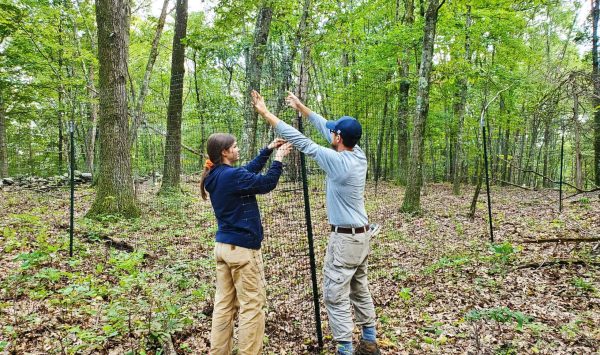
At Esopus Meadows Preserve, for example, we’re advancing a restoration project to tackle several of those hurdles. We’re removing invasive shrubs, fencing out deer, and taking down dying and non-native trees to allow tree seedlings a chance to become tomorrow’s forests.
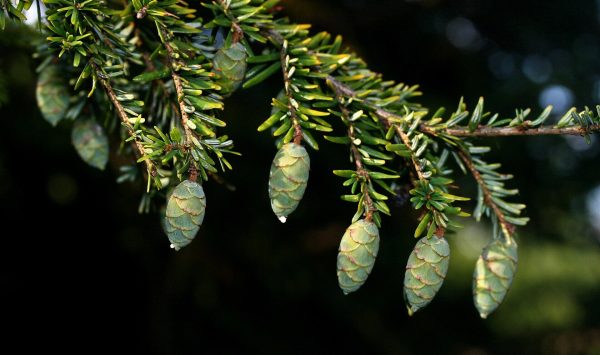
Nearby in Black Creek Preserve, we’ve stabilized creek banks and trails by treating select hemlock trees for an invasive insect pest, hemlock woolly adelgid.
To the north at Mawignack Preserve, we’re working to restore forest in an abandoned agricultural field that has become overgrown with invasive mugwort. This will reconnect neighboring forest fragments, increase biodiversity (the variety of plants and animal life), and improve resiliency to flooding in the downstream Village of Catskill.
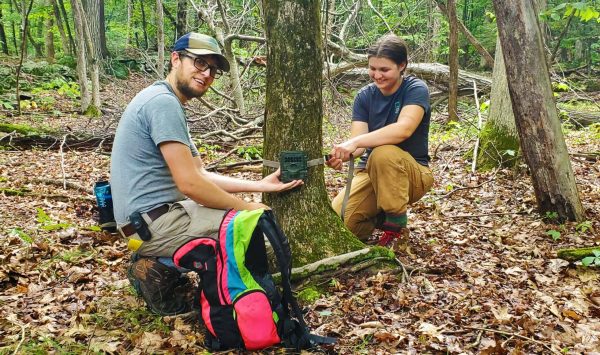
We’re also innovating to better understand the scope of land lost to development across the Hudson Valley, which is one of the leading threats to biodiversity. We’re developing a tool to quantify the loss of forests and farms over the last four decades that will help regional and local stakeholders figure out the right balance between conservation and housing, economic, and agricultural needs.