Bees and butterflies bring much more than a flutter of color to a garden. Over 85% of the world’s flowering plants and about a third of food crops depend on pollinators to reproduce.
We’re combining our expertise in park management and science to give pollinators more places to eat, drink, nest, and rest across the Hudson Valley.
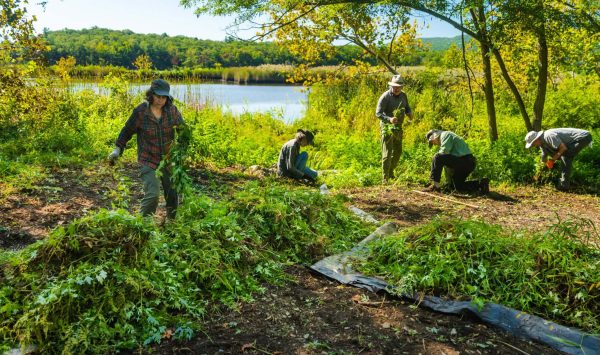
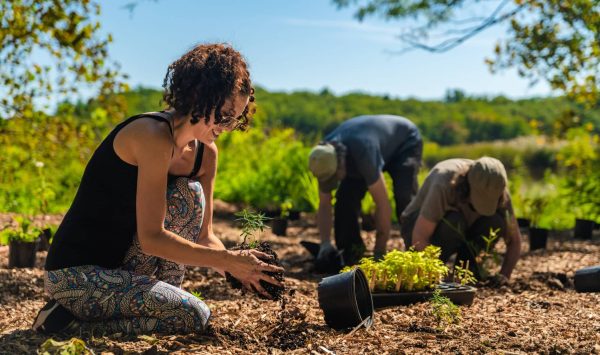
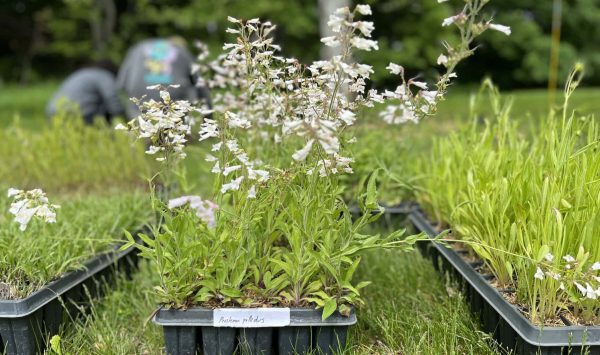
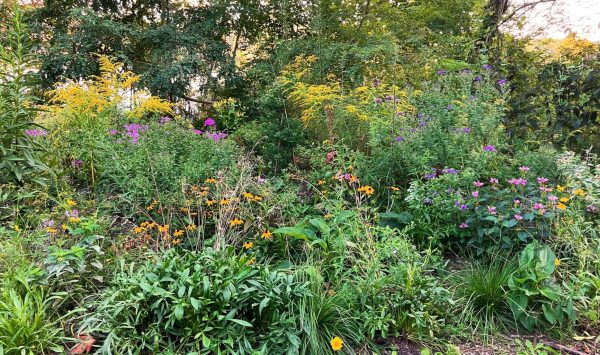
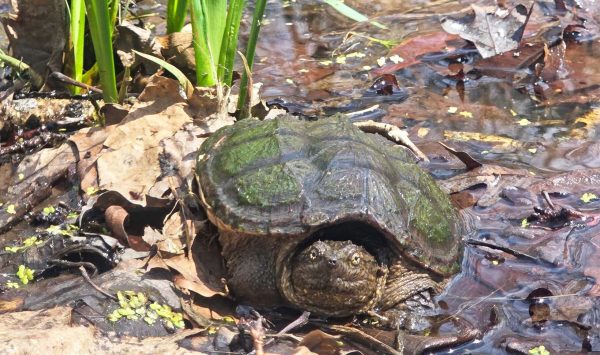
At West Point Foundry Preserve, we’ve been collaborating with a dedicated group of volunteers since 2019 to grow and expand the park’s pollinator gardens. These bustling habitats support a thriving community of monarchs, swallowtails, and other pollinators, as well as the turtles and wildlife who call the waterfront home. We’ve also identified areas of lawn that are not actively used by human visitors so they can be converted to pollinator habitat — an initiative that we plan to expand to other parks.
Further north at Poets’ Walk Park, we’re using “conservation mowing” to maintain open meadows that would naturally become shrubland without our help. This technique creates patches of diverse habitats across the park, promoting higher biodiversity (variety of plant and animal life) than would be possible if the entire park were just shrubs and trees alone. It’s the kind of work that requires careful planning and care: we time the mowing to minimize disturbance to pollinators, keep mowers 8 to 10 inches above the ground to minimize risk to wildlife, and avoid prime breeding season for ground-nesting birds.
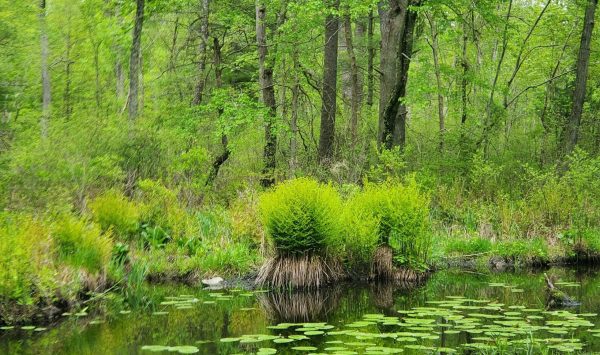
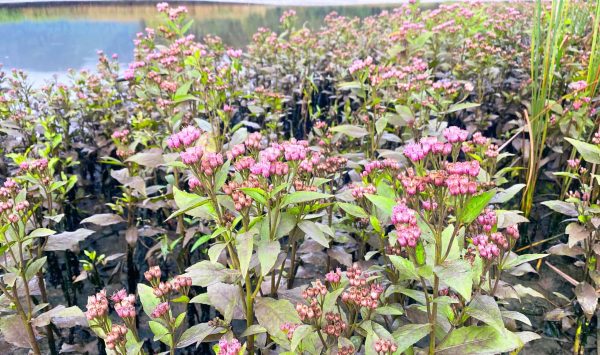
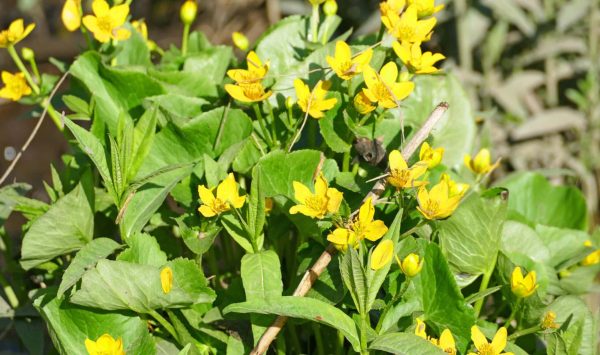
Wetlands are another critical source of habitat that we’re working to protect. They’re important not only for plants and wildlife — providing breeding grounds for many species, from fish to birds and dragonflies — but also help reduce flooding, filter water, and replenish drinking water supplies.
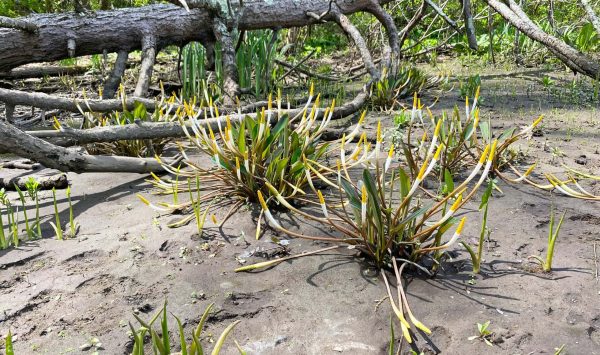
The Hudson Valley is home to many freshwater tidal wetlands that are globally rare and highly diverse. We’ve studied how these tidal wetlands will react to sea level rise along the Hudson River Estuary in the face of our changing climate. As a result, we’re taking steps to ensure wetlands have space to adapt — like relocating a trail at Esopus Meadows Preserve to support their migration further inland and conserving parts of the Binnenkill floodplain along the Hudson.
We’re also working with Audubon New York to conserve and manage the vibrant RamsHorn-Livingston Sanctuary and its surrounding landscape, a forested tidal swamp critical for migratory birds. The sanctuary is home to a MOTUS tower — one of many towers across the world that tracks migratory bird flyovers — in collaboration with Audubon and the New York State Department of Environmental Conservation.
Our parks and properties also feature many unique wetland habitats that we’re working to protect, including circumneutral bog lakes (spring-fed habitats with near neutral pH that can host vegetation from both acidic bogs and more calcium-rich marshes, supporting rare species) and vernal pools (small temporary wetlands that form in the hollows of the rugged landscape, which amphibians and invertebrates depend on for breeding).